















Xemxija collapse raises renewed concern over construction safety
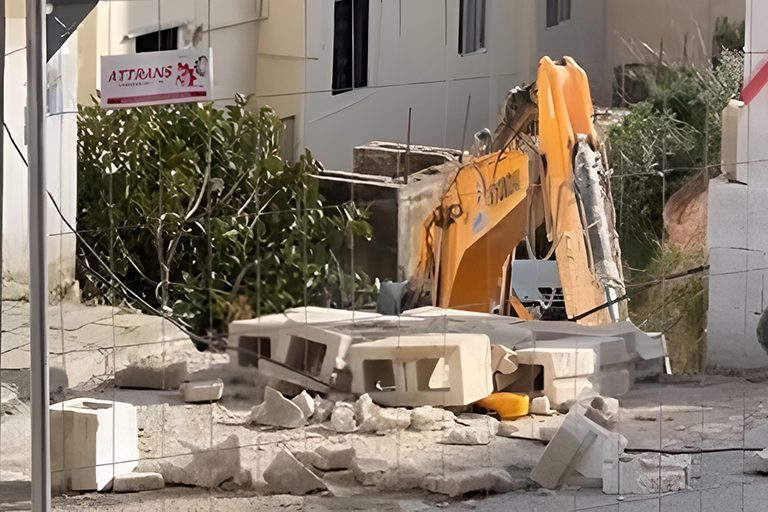
A second ground collapse adjacent to ongoing roadworks in Xemxija has intensified concerns among residents and local stakeholders, particularly given the scale and complexity of the development project underway. The incident, which occurred within a relatively short period following a similar collapse earlier in March, has prompted renewed scrutiny of construction practices, regulatory oversight and the inherent geological challenges of the site.
The affected site forms part of what is expected to become the largest mixed use development ever undertaken in Xemxija. The project is being spearheaded by Polidano Group and involves multiple stakeholders, contractors and associated entities operating across subdivided portions of land.
Location and scope of the development
The development is situated between Triq Raddet ir-Roti and Triq is-Simar, an area known for its constrained urban layout and sensitive ground conditions. Plans for the site include two high rise mixed use blocks reaching up to eleven storeys, alongside a seven level underground car park. The scale of the project reflects broader development trends in Malta, where demand for residential and commercial space continues to drive vertical expansion.





















However, the site is also characterised by a substantial layer of blue clay, a geological formation widely regarded as structurally unstable. This condition presents significant engineering challenges, particularly when excavation and deep foundation works are involved. Industry experts have previously noted that such terrain requires careful planning, continuous monitoring and specialised reinforcement techniques to mitigate risks.
Details of the collapse and immediate response
The most recent collapse occurred while officials from the Building and Construction Authority and the Occupational Health and Safety Authority were present on site. Their attendance was part of ongoing monitoring efforts linked to the earlier incident.
Eyewitness accounts indicate that a section of the road gave way, exposing underlying clay layers and creating a visible void near residential properties. Residents living in close proximity gathered at the site, expressing concern over both immediate safety and the longer term stability of the area.
Officials stated that the contractor initiated remedial measures promptly, including the compaction of displaced clay using heavy machinery. Plans were also outlined to install concrete piles designed to provide structural support to the affected roadway. At the time of reporting, no confirmed timeline had been provided for the completion of these reinforcement works.
Project ownership and stakeholder structure
The specific section of the site where the collapse occurred is understood to be managed by Trivium Projects Ltd, a joint venture involving developer Joseph Portelli and Kurt Polidano of Polidano Group.
In addition, both individuals are shareholders in JKSM Projects Ltd, alongside Silvan Mizzi and Mark Cini. The involvement of multiple entities reflects a layered ownership and operational structure that is not uncommon in large scale developments, though it can complicate accountability and coordination.
It is important to note that no formal findings of wrongdoing have been publicly confirmed in connection with the collapse. Investigations and regulatory assessments remain ongoing.
Resident concerns and public reaction
Residents in the surrounding area have voiced unease regarding the recurrence of such incidents within a short timeframe. Many have questioned whether sufficient preventative measures were implemented following the first collapse in March and whether current safeguards adequately address the risks associated with construction on unstable ground.
Several residents who overlook the affected site indicated that they were not fully reassured by explanations provided on site. While officials emphasised that there was no immediate danger, the visible scale of the collapse and its proximity to residential buildings contributed to ongoing apprehension.
Authorities confirmed that a state appointed architect had assessed the situation and determined that evacuation was not necessary. Officials further stated that, had any immediate risk been identified, precautionary evacuation measures would have been implemented without delay.
Regulatory oversight and planned actions
The incident has also drawn attention to the role of regulatory bodies in overseeing construction activity in sensitive areas. The presence of the Building and Construction Authority and the Occupational Health and Safety Authority at the time of the collapse underscores the importance of continuous supervision, particularly for complex projects involving challenging terrain.
Local political representatives have also become involved in the response. Rachel Williams, a Nationalist Party representative on the St Paul’s Bay local council, visited the site shortly after the incident. Addressing residents, she acknowledged their concerns and confirmed that a meeting between the local council and the Building and Construction Authority had been scheduled for 8 April.
Williams further suggested that a temporary suspension of ongoing construction works in Xemxija should be considered until additional safety measures are reviewed and implemented. Such a proposal reflects broader calls for precautionary approaches in areas where geological and structural risks are elevated.
Geological challenges and engineering considerations
The presence of blue clay beneath Xemxija presents a well documented challenge for developers and engineers. This type of soil is known for its tendency to shift and lose stability under certain conditions, particularly when exposed through excavation.
In projects involving deep foundations or underground structures, engineers typically rely on techniques such as piling, retaining walls and soil stabilisation to maintain structural integrity. The effectiveness of these measures depends on accurate geological assessments, careful execution and ongoing monitoring.
Repeated incidents, even if contained, can raise questions about whether existing mitigation strategies are sufficient or whether additional precautions may be required. It is ultimately the responsibility of project stakeholders and regulatory authorities to ensure that all necessary measures are taken in accordance with applicable standards and guidelines.
Broader implications for urban development in Malta
The events in Xemxija highlight broader tensions within Malta’s development landscape. On one hand, there is sustained demand for new residential and commercial spaces driven by population growth and economic activity. On the other hand, there are legitimate concerns regarding environmental sustainability, infrastructure capacity and public safety.
Large scale developments in densely populated or geologically sensitive areas require a careful balance between economic objectives and risk management. Incidents such as the recent collapse serve as reminders of the importance of maintaining that balance through robust planning, transparent communication and effective oversight.
Conclusion
The second collapse at the Xemxija construction site has brought renewed focus to the complexities and risks associated with major development projects in challenging environments. While initial assessments indicate that there is no immediate danger to residents, the recurrence of such incidents within a short period has understandably heightened public concern.
As investigations continue and remediation efforts progress, the situation underscores the importance of rigorous safety standards, clear accountability and proactive engagement with affected communities. Ensuring that development proceeds responsibly is essential not only for the success of individual projects but also for maintaining public trust in the broader construction sector.
Moving forward, the planned meeting between local authorities and regulators may provide an opportunity to review current practices and consider whether additional safeguards are necessary. In a context where both development pressures and safety expectations remain high, careful oversight and measured decision making will be critical in addressing the challenges highlighted by this incident.
FAQs
What caused the collapse in Xemxija?
The exact cause has not been officially confirmed, though the presence of unstable blue clay and ongoing excavation works are considered contributing factors under review.
Was anyone injured in the incident?
There have been no confirmed reports of injuries related to the collapse.
Is the site currently safe for residents?
Authorities have stated that a state appointed architect confirmed no immediate danger to nearby residents at the time of assessment.
Who is responsible for the construction project?
The project involves multiple entities including Polidano Group and Trivium Projects Ltd, with several shareholders participating.
Why is blue clay considered risky?
Blue clay is structurally unstable and can shift under pressure or when exposed, making construction more complex.
What actions were taken after the collapse?
Contractors began reinforcing the area and plans were announced to install concrete piles to stabilise the road.
Has construction been halted?
There has been a call for temporary suspension, but no official confirmation of a full halt has been issued.
What role do regulators play in this situation?
Regulators such as the Building and Construction Authority and Occupational Health and Safety Authority oversee safety compliance and site monitoring.
Will there be further investigations?
Ongoing assessments and reviews are expected to determine the cause and ensure compliance with safety standards.
What happens next for the project?
Future actions will likely depend on regulatory findings, engineering assessments and decisions made following the scheduled meeting with authorities.

Ash
I like to keep it short. I am a writer who also knows how to rhyme his lines. I can write articles, edit them and also carve out some poetic lines from my mind. Education B.A. - English, Delhi University, India, Graduated 2017.
Related Posts



Rising debt in Malta sparks worries over fiscal policy
April 3, 2026