Xemxija residents seek EU action on development

A growing number of residents in the quiet seaside locality of Xemxija have launched an “urgent” appeal to the European Commission’s Directorate-General for the Environment. Their appeal concerns a proposed large-scale development by the controversial developer known as iċ-Ċaqnu, formally Charles Polidano, whose projects have often attracted criticism for their scale and environmental impact.
The residents’ complaint is not just another local planning objection. It represents a broader alarm over what they see as a fundamental breach of both Maltese planning policy and European environmental law. They fear that if this project proceeds, it could set a dangerous precedent, allowing large-scale developments to be forced into residential zones in clear violation of existing local plans.
A project of unprecedented scale for Xemxija
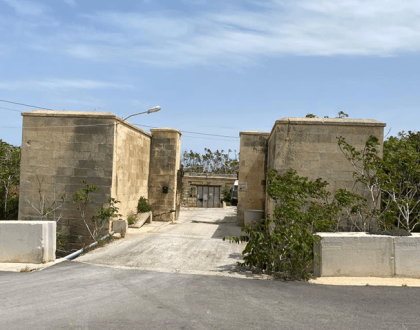
According to the initial documents submitted to the Planning Authority (PA), the proposed development would rise between Triq Raddet ir-Roti and Triq is-Simar, a narrow stretch of land overlooking Xemxija Bay. The plan outlines two mixed-use high-rise blocks and a massive underground car park spread over seven floors, accommodating approximately 1,800 vehicles.





















The application further includes designated “commercial areas” with spaces for leisure, retail, and food and beverage outlets. Above these, the development would host a residential complex comprising 124 dwellings across six floors. However, internal documents and earlier submissions, some of which were revealed in reports by The Shift, suggest that the project may in reality reach as high as 11 storeys — far beyond the height limits prescribed for the area.
Adding to the scope, plans also include a hotel component, although the details surrounding it remain fragmented. According to residents, this piecemeal submission process appears to be a deliberate strategy, preventing the full picture from being revealed and assessed by the public or even by local councils. The St Paul’s Bay Local Council, under whose jurisdiction Xemxija falls, has already described the proposal as a “savage development” in a formal objection submitted to the Planning Authority.
Residents appeal to the European Commission
Faced with what they perceive as the near certainty of local authorities approving the project, the residents of Xemxija have turned to the European Commission’s Directorate-General for the Environment for intervention. Their letter expresses grave concern about potential breaches of Maltese and EU environmental legislation, particularly the Local Plan for Xemxija, the EU Habitats Directive, and the Environmental Impact Assessment (EIA) Directive.
“The site is designated for low-rise villa development, not large-scale commercial or high-density projects. This represents a clear violation of the Local Plan and undermines legally binding planning policies,” the residents stated in their letter.
The Local Plan explicitly restricts construction heights in Xemxija to a maximum of 17.5 metres or four storeys. The proposed project, by contrast, appears to exceed that limit multiple times. Residents argue that approving such a development would fundamentally alter the character of the locality and irreparably damage both the skyline and the community’s quality of life.
Moreover, the area in question is classified as an Archaeological Site, meaning that any form of development should be preceded by rigorous archaeological studies. To date, no such studies have been made public, leading residents to believe that the authorities have neglected their legal obligations under national heritage protection laws.
Potential breaches of EU environmental law
The residents’ appeal also cites potential breaches of two key European Union directives: the EU Habitats Directive and the EIA Directive. These laws mandate that any major project likely to have a significant effect on protected habitats or ecosystems must undergo a comprehensive environmental impact assessment before any form of approval or construction begins.
According to the residents, “the Planning Authority appears to have processed or is considering approving this project without a full environmental impact assessment, which would constitute a breach of EU law.” They further requested that the European Commission investigate whether Malta has failed to enforce its obligations under these directives.
Specifically, the group is asking the Commission to examine whether the Planning Authority or the Environment and Resources Authority (ERA) breached EU environmental standards by allowing the project to proceed without proper assessment and by failing to ensure compliance with habitat protection rules. They are also urging the Commission to require Malta to suspend all works on site until such obligations are fully met.
The European Commission’s likely stance
While the European Commission typically refrains from intervening in what may appear to be domestic planning matters, it does have the authority to act when there are indications that EU law may have been breached. The residents’ submission requests that the Commission provide a list of potential measures it could take in this case, including formal inquiries or infringement procedures.
At the time of publication, a request for comment sent to the Commission’s press unit had not received a response.
Early works and growing frustration
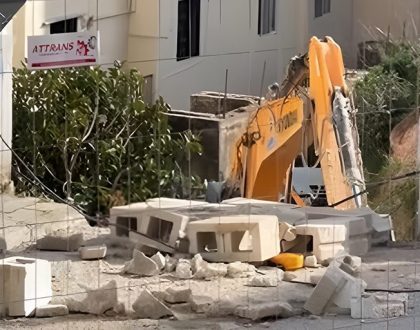
The dispute over the Xemxija project did not emerge overnight. Preliminary activity on the site reportedly began as early as last summer, even before any formal permit had been granted. Video footage shared by local residents shows heavy machinery clearing the area and uprooting mature carob trees, sparking widespread anger in the community.
When questions were submitted to the Environment and Resources Authority regarding the tree uprooting, the agency replied that no specific permit was required for the clearance works. This response further fuelled public frustration, as residents interpreted it as an example of leniency towards powerful developers.
Altering the road network and reshaping the locality
A crucial component of the proposed development involves a separate planning control application submitted by Polidano’s company. The application seeks to “remove the schemed passageway from the middle of the site and to create two passageways on the side of the site and to amend the delineation of Site A and B.”
According to the St Paul’s Bay Local Council, this modification would effectively merge two originally distinct sites into one massive development footprint. In its objection letter, the council wrote: “The concept presented in the local plan – having two distinct sites – is being circumvented to create one much larger site, with the newly proposed roads bordering the existing third-party villas.”
Such changes, the council argued, would exacerbate traffic congestion, overwhelm local infrastructure, and transform the neighbourhood’s character beyond recognition. The council also highlighted geological risks, noting that the area is known for its significant clay layer. Disturbing this natural foundation could lead to structural movement affecting nearby homes and villas.
The long shadow of previous developments
The controversy surrounding Polidano’s Xemxija project is not isolated. The site itself has a long and complicated history. Back in 2012, Polidano had partially constructed a smaller building along the shoreline and left it in shell form. Although the structure remained unfinished for years, the Planning Authority eventually sanctioned it a decade later. According to the most recent plans, that building is now set to be converted into 47 apartments, two penthouses, 34 garages, and several commercial units that will be directly connected to the proposed high-rise towers behind them.
Residents fear that this pattern – of beginning works without full approval, leaving incomplete structures for years, and then obtaining retroactive sanctioning – is becoming a strategy to push through controversial developments that might otherwise face rejection.
Calls for accountability and transparency
Local residents are not only opposing the development but are also demanding greater transparency from the authorities. They argue that the current process of submitting fragmented applications prevents both citizens and public entities from understanding the full scope of the project.
In their appeal, they urge the European Commission and Maltese regulators to require the developer to submit one comprehensive Environmental Impact Assessment and one unified application covering all components of the project. Without this, they contend, the process cannot be said to meet the standards of good governance or environmental law.
Balancing development and community welfare
The Xemxija case underscores a growing tension in Malta between economic development and environmental conservation. While developers often argue that such projects bring jobs and investment, residents counter that they come at the cost of livability, heritage, and natural landscapes.
Xemxija’s residents maintain that they are not opposed to development per se but to the disregard of planning rules that were established to protect the area’s character. “We are simply asking that the law be respected,” one resident commented during a recent community meeting. “We are not against progress, but it must be lawful, transparent, and sustainable.”
A test case for environmental governance
The coming months will determine whether the European Commission takes up the residents’ request. Even if the Commission does not intervene directly, the case has already intensified public scrutiny over how major projects are approved and monitored in Malta.
For the residents of Xemxija, this issue has evolved beyond a single development. It represents a test of whether planning and environmental laws can effectively protect communities from developments that may be inconsistent with the public interest.
Conclusion
The proposed Xemxija development has become emblematic of the growing conflict between unrestrained urban expansion and the need to safeguard Malta’s remaining natural and cultural landscapes. What began as a seemingly routine planning application has evolved into a national debate over transparency, environmental accountability, and the limits of private development in public spaces.
For the residents of Xemxija, this struggle is not only about opposing one particular project but about upholding the integrity of the country’s planning system and the rule of law. Their appeal to the European Commission reflects a deep-seated frustration with local institutions that, in their view, have consistently failed to enforce their own regulations or to adequately protect community interests.
As the case awaits further review, it stands as a litmus test for both Maltese authorities and European oversight bodies. It will demonstrate whether the enforcement of environmental and planning laws can withstand political and commercial pressures, or whether the voices of small communities will continue to be overshadowed by the ambitions of powerful developers.
Ultimately, the outcome will shape more than the skyline of Xemxija—it will determine the precedent for how Malta balances progress with preservation, economic growth with environmental stewardship, and private profit with the collective rights of its citizens.
FAQs
What is the proposed Xemxija development project?
The project involves two high-rise mixed-use buildings, a seven-storey underground car park, commercial spaces, and residential units.
Who is iċ-Ċaqnu?
iċ-Ċaqnu is the nickname of Charles Polidano, a well-known Maltese developer whose projects have often been the subject of environmental and planning controversies.
Why are Xemxija residents opposing the project?
Residents argue that the proposed development violates the Local Plan, exceeds permitted height limits, and threatens the area’s environment and archaeology.
What is the Local Plan for Xemxija?
It is a legally binding planning policy that designates the area for low-rise villa development with a height limit of four storeys or 17.5 metres.
Has the project received official approval?
As of now, the development is still under a “screening request” phase, meaning final approval has not yet been granted.
Why did residents appeal to the European Commission?
They believe Maltese authorities have failed to enforce EU environmental laws and hope the Commission will intervene to ensure compliance.
What environmental laws are potentially being breached?
Residents cited the EU Habitats Directive and the EIA Directive, which require impact assessments before approving large projects.
What response has the European Commission given so far?
No official response had been received from the European Commission’s press unit by the time of publication.
What is the stance of the local council?
The St Paul’s Bay Local Council has strongly objected to the project, calling it a “savage development” and warning of geological and infrastructural risks.
Could the project still be modified?
Yes, since it is under a screening process, the final scope, scale, and design of the project may still evolve based on assessments and objections.

Anna Amstill
I am an avid Blogger and Writer with more than 6 years of experience with Content Writing. An Online Marketing expert specializing in Blog writing, Article writing, Website content, SEO specific Keyword content and much more. Education B.A. - business management, York University, Canada, Graduated 2016.