

















How payment systems shape gambling regulation
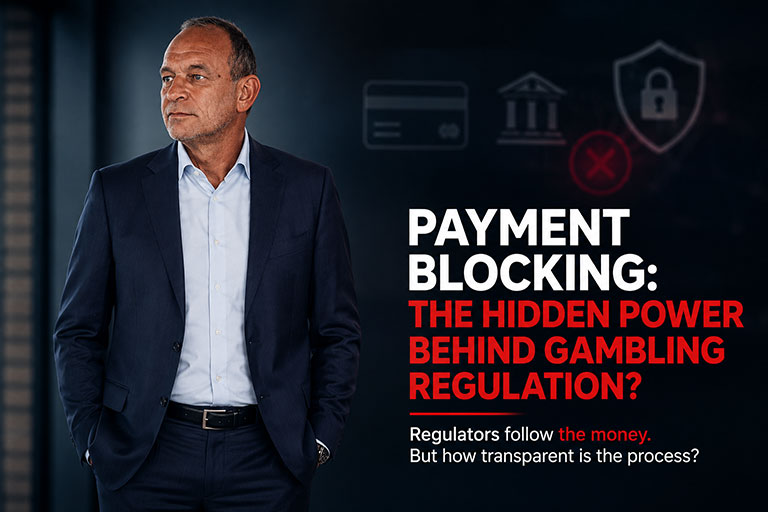
Modern gambling regulation is no longer only about licences, websites, advertising and enforcement letters. Increasingly, the real pressure point sits somewhere less visible: the payment chain. If a gambling operator cannot receive deposits or process withdrawals reliably, its market access becomes fragile, even if its website remains technically reachable. This makes payment systems one of the most powerful but least publicly understood enforcement tools in the modern gambling market.
In Germany, this issue sits directly within the wider debate around illegal online gambling and channelisation. The official whitelist published by the Gemeinsame Glücksspielbehörde der Länder is intended to show which operators hold permission under the Glücksspielstaatsvertrag 2021. In practical terms, however, a public list alone cannot prevent consumers from finding or using unauthorised gambling sites. That is why regulators increasingly look beyond the gambling operator itself and focus on the surrounding infrastructure.
Payment blocking is not a new idea. What has changed is its importance. Online gambling depends on card schemes, banks, e-wallets, acquiring banks, payment processors, open banking providers, crypto ramps and other financial intermediaries. Each of those actors can become a control point. If the regulator cannot immediately remove an offshore website, it may still disrupt the money flow that makes the website commercially useful.









The Evidence
The German framework expressly treats payment blocking as part of the enforcement toolkit against unauthorised gambling. The GGL has publicly stated that its instruments include Zahlungsunterbindung, meaning payment blocking, alongside other measures such as action against illegal offers and network blocking. In one public communication concerning Lottoland, the regulator stated that several payment service providers had ended cooperation with the relevant group and would exclude future business with illegal gambling providers. See the GGL’s own statement here: GGL forciert Kampf gegen illegale Glücksspielangebote von Lottoland.
This matters because it shows that financial infrastructure is not merely a back-office issue. It is part of regulatory execution. The regulator may issue notices, publish lists or communicate legal positions, but the practical effect often depends on whether banks and payment firms implement controls. A gambling site can continue to exist online while still becoming commercially weaker if deposits become harder, slower or less trusted.
The wider European direction points in the same direction. The European Commission’s 2014 Recommendation on online gambling consumer protection addressed the need for safer online gambling environments, player identification and responsible account controls. It did not create a harmonised EU licensing regime, but it reflected a policy view that online gambling supervision cannot be separated from digital account infrastructure. In practice, that logic has only strengthened as gambling, fintech and cross-border payments have become more interconnected.
The United Kingdom offers another example of the same trend, although through a different regulatory culture. The UK Gambling Commission provides consumer-facing information on how players can block gambling payments with their bank. That is not the same as regulator-led payment blocking against illegal operators, but it shows the same underlying principle. Financial access can be used as a behavioural and supervisory control point.
The Consequences
The first consequence is that payment firms are no longer neutral pipes in the gambling ecosystem. Banks, processors and card schemes increasingly carry a compliance burden that looks closer to regulatory gatekeeping. They must identify whether merchants are licensed, whether activity targets restricted markets and whether transaction flows create AML, fraud or consumer protection concerns. That may be reasonable from a public-interest perspective, but it also raises difficult questions about consistency and transparency.
The second consequence is that payment blocking can alter market structure without the same visibility as licensing decisions. A regulator refusing a licence is usually a visible administrative act. A payment provider terminating merchant services may be less visible, even where regulatory pressure or risk assessment played a role. The public may see the outcome, but not always the process behind it. That creates a serious transparency issue in a market where access to payments can decide whether an operator survives commercially.
The third consequence concerns proportionality. Payment blocking can be effective because it targets the economic function of illegal gambling, not just its public appearance. Yet the same effectiveness means it must be used with care. A broad or unclear payment-blocking approach could affect lawful operators, affiliates, technology suppliers or consumers caught in disputed classifications. A narrow approach may leave unauthorised operators able to move between processors, currencies and jurisdictions.
This is where regulatory process becomes important. If payment blocking is to become a central enforcement mechanism, the public should understand how targets are selected, what evidence is required, how affected parties can respond and how errors are corrected. Otherwise, financial infrastructure becomes a shadow enforcement system. It may be efficient, but efficiency alone is not enough in a regulated market that depends on legal certainty.
There is also a channelisation question. If payment controls make unauthorised gambling harder to access, they may support the licensed market. That channelisation question also intersects with how gambling comparison websites shape player choice in Germany. If they are uneven, slow or easy to bypass, they may simply push players towards alternative payment methods, crypto channels or less transparent intermediaries. That would not necessarily improve consumer protection. It could move risk into areas that are harder for regulators, banks and consumers to monitor.
Our Conclusion
Payment blocking deserves more attention in the gambling regulation debate. It is not just a technical compliance tool. It is becoming one of the main ways in which regulators try to shape market access, consumer behaviour and enforcement outcomes. In a digital market, following the money may sometimes be more effective than following the website.
That does not mean payment blocking is wrong. On the contrary, it may be one of the few realistic tools available against offshore or unauthorised operators that ignore national licensing systems. But it does mean the process should be clearer. Regulators should be able to explain how payment restrictions are applied, how they measure success and how they prevent unintended consequences for consumers and lawful market participants.
A serious gambling regulatory system cannot rely only on public blacklists, search visibility or enforcement announcements. It also needs to understand the financial rails beneath the market. The real question is whether those rails are being supervised in a way that is transparent, proportionate and consistent. That is where the next stage of gambling regulation may quietly be decided.
FAQs
What are payment systems in gambling?
Payment systems are the financial networks and services that enable players to deposit funds and withdraw winnings from online gambling platforms, including banks, card networks, e-wallets and payment processors.
Why are payment systems important for gambling regulation?
Payment systems help regulators limit access to unlicensed gambling operators by disrupting financial transactions, making it more difficult for illegal operators to accept deposits and process withdrawals.
What is payment blocking?
Payment blocking is a regulatory measure that prevents financial institutions or payment providers from processing transactions linked to unauthorized or illegal gambling operators.
How does payment blocking affect illegal gambling operators?
Payment blocking can significantly reduce an operator's ability to generate revenue by restricting customer deposits and withdrawals, even if the gambling website remains accessible.
What role do payment service providers play in gambling compliance?
Payment service providers must assess whether gambling operators are licensed, comply with local laws and meet anti-money laundering and consumer protection requirements before processing transactions.
Can payment blocking improve consumer protection?
Yes. Effective payment blocking can reduce consumer exposure to illegal gambling websites and encourage players to use licensed operators that follow regulatory standards.
Does payment blocking eliminate illegal gambling?
No. While payment blocking can make illegal gambling more difficult, some operators may attempt to use alternative payment methods, cryptocurrencies or offshore financial services.
Why is transparency important in payment blocking?
Transparent procedures help ensure that payment restrictions are applied fairly, affected businesses understand the reasons for decisions and errors can be corrected through proper processes.
How does Germany use payment systems in gambling regulation?
Germany's gambling regulator uses payment blocking as part of its enforcement strategy against unauthorized gambling operators alongside measures such as network blocking and public operator lists.
What is the future of payment systems in gambling regulation?
Payment systems are expected to become an even more important enforcement tool as regulators increasingly focus on financial infrastructure to support licensed markets and strengthen consumer protection.

Michael Schmitt
Michael Schmitt is the founder of TRIDER.UK and Editor of Malta Media. He writes about iGaming, gambling regulation, corporate structures, financial services and market integrity, combining investigative journalism with nearly three decades of experience in corporate services and international business.
Related Posts

Finland receives 75 applications for gambling licenses ahead of 2027 launch
September 25, 2026

OKTO PAYMENTS appoints Marcos Techera to lead LatAm operations and growth
September 22, 2026

Irish Bookmakers Association warns as Ireland considers gambling tax rise
September 21, 2026
Germany’s gambling blocking system struggles with obvious targets
September 19, 2026
Gambling Commission reports growth across Great Britain’s gambling market
September 18, 2026

BetComply strengthens compliance team with three experienced appointments
September 16, 2026

Euromat study finds Europe’s illegal online gambling market worth €12bn
September 16, 2026
Betting and Gaming Council warns of illegal betting risk at St Leger
September 16, 2026
Dutch iGaming operators face shifting demand as offshore interest grows
September 16, 2026