

















GGL faces scrutiny over competitor evidence in Bet3000 licence case
Competitor evidence and regulatory power: a dangerous combination?
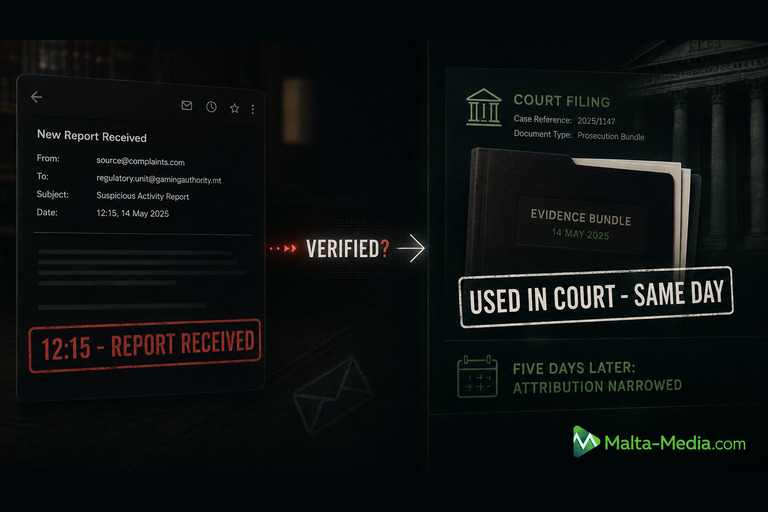
At 12:15 on 26 July 2024, an email reached named officials at Germany's national gambling regulator. Its sender, Dr Damir Böhm, said information had been received from within the circle of betting intermediaries. Players were allegedly being told that they could deposit money in betting shops that were no longer active under Bet3000 and use those funds on tipgo.eu. The email ended with a careful suggestion: perhaps the GGL could verify the information using its own means.
Later that same day, the GGL placed the material before the Administrative Court in Halle. Its filing described the relevant proposition as having been made credible through Dr Böhm's findings and said that continuing activity in the shops was proven, with a video also being submitted. Five days later, Dr Böhm wrote again and stated that there were no indications available to him that the alleged instruction had come from Bet3000 itself.
That sequence is uncomfortable, but it needs to be described accurately. Dr Böhm's email did not cause the original licence revocation because the GGL had revoked IBA Entertainment Limited's permission two days earlier, on 24 July. What the email entered was the urgent litigation that followed, when Bet3000 was asking the court to restore the suspensive effect of its challenge and the authority was defending immediate enforcement.










This article does not allege that Dr Böhm acted improperly, engineered a regulatory decision or supplied information he knew to be false. The civil courts protected his right to report what he had been told. The question is how the authority separates a competitor's useful lead from evidence on which state power can safely rely.
The licence was already gone when the email arrived
The chronology matters because it prevents an easy but inaccurate accusation. On 24 July 2024, the GGL revoked IBA Entertainment's permission to organise and broker sports betting in Germany and ordered the decision to take immediate effect. IBA challenged the revocation the following day before the Administrative Court in Halle and sought interim protection. Dr Böhm's email followed on 26 July, after the administrative decision had been made and after the urgent court process had begun.
The email therefore cannot honestly be described as the trigger for the revocation. It did, however, arrive at a moment when the commercial effect of that decision was being tested. In proceedings under §80 of the Administrative Court Procedure Code, the court can restore the suspensive effect of a challenge where immediate enforcement has been specially ordered. Material used at that stage can influence whether an operator remains outside the market while the main dispute continues.
That distinction makes evidential discipline more important. A licence case can take years, while immediate enforcement affects the business on day one. Shops stop operating under the brand, customer relationships are disrupted and franchise networks seek alternatives. An allegation introduced during the interim phase can reinforce the decision's practical effect without having caused it.
The GGL was entitled to defend its order and to bring new information to the court's attention. A regulator would be negligent if it ignored credible evidence of continuing gambling activity connected with a recently revoked permission. The issue is the route by which credibility was established and whether the court could clearly distinguish what Dr Böhm had reported from what the GGL had independently verified.
The original email was careful about what it did not know
Dr Böhm's first email was not written as a witness statement from somebody claiming to have seen the alleged conduct. It said that information had been received from within the circle of betting intermediaries. That wording identified the account as indirect from the beginning. It also referred to players allegedly being told what to do rather than asserting that the sender had personally heard the instruction.
The invitation to verify was equally important. “Perhaps you can verify this using your own means” is not the language of a person presenting a completed investigation. It is the language of a source passing on a lead and placing responsibility for establishing the facts with the public authority. The email supplied a direction of travel, including the tipgo.eu address, but it did not identify the shop, the customers or the original speakers in the text quoted by the courts.
The Regional Court in Bochum later treated the email in exactly that cautious way. In its September 2024 judgment, it concluded that Dr Böhm had repeated statements received from others, had not adopted them as his own proven facts and had expressly characterised the matter as an initial suspicion by asking the GGL to check it. The court found no basis for restraining him from communicating the report to the authority.
That is a sensible result for any regulatory system. Market participants must be able to report suspected misconduct without completing the authority's job first. A competitor may notice unusual activity sooner than a consumer or civil servant because its franchisees, customers and commercial teams are exposed to the market every day. The right to report is not the problem. Confusing the report with verification would be.
The GGL's filing changed the evidential temperature
The language used later that day was materially stronger. According to the civil judgments, the GGL told the Administrative Court that the proposition had been made credible through the documented findings of Dr Böhm, who was described as having no direct or indirect legal relationship with the applicant. The filing went on to say that deposits, access and participation on TipGo were being brokered through shops formerly integrated into IBA's organisation and that continuing activity in those shops was proven.
The German phrase “glaubhaft gemacht” belongs to the procedural world of interim relief. It does not mean that a fact has been finally proven after a full trial. In urgent proceedings, it supports a provisional assessment made before the complete evidential record is available. Even so, the phrase gives the material a procedural weight that the original email did not claim for itself.
The available record does not provide a minute-by-minute account of what the GGL did between receiving the email and filing its submission. It may have examined the linked site, reviewed the accompanying material, checked internal records, spoken to somebody involved or assessed a video. Malta Media has not seen an internal verification note and cannot say that no work occurred.
The September 2024 Bochum judgment made a striking observation. While deciding the injunction application against Dr Böhm, it characterised the GGL as having introduced the email on the same day, apparently without checks of its own, and said any authority misjudgement could not be attributed to the sender. This was not a finding of administrative unlawfulness, but it placed verification squarely with the regulator.
The gap should be auditable. The first description says: this is what we were told, please verify it. The second says the matter was credible and continuing business proven. A sound evidential bridge may exist, but the public documents do not show it.
Five days later, the attribution narrowed
On 31 July 2024, Dr Böhm sent a further email after the GGL requested more information. He said the matter appeared to concern one betting intermediary who, after the closure of the business, had taken up another stationary offer and directed players to the stated website. He added that efforts were being made to identify that intermediary.
The central clarification was explicit: there were no indications available to him that the instruction had originated from within Bet3000. This was not a complete withdrawal of the earlier suspicion. It did not say that no shop had taken deposits or that tipgo.eu had not been used. It changed the attribution from something that could be read as part of Bet3000's continuing organisation to conduct apparently associated with an individual intermediary.
That difference is potentially significant in a licensing dispute. A systemic instruction from an operator and unilateral conduct by an independent shop owner are not the same allegation, even where the customer experience looks similar. The regulatory responsibility, available evidence and relevance to the operator's reliability may all change once that distinction is made.
The documents reviewed for this article do not establish when or how the GGL placed that clarification before the Administrative Court. Malta Media is not asserting that the authority withheld it. The point is that any system using rapidly developing competitor information needs a visible correction chain so that a narrowed allegation travels through the process as quickly as the original one.
The civil courts protected the right to report
IBA pursued civil proceedings against Dr Böhm, first seeking an interim injunction and later bringing a main action. Those cases provide important protection for people who communicate concerns to regulators. They also remove one possible distraction from the present analysis because the courts did not treat the original email as a prohibited competitive attack.
In September 2024, the Regional Court in Bochum considered it likely that Dr Böhm had written against the background of his role as a director of Tipwin Limited. It recognised a competitive relationship between Tipwin and IBA and rejected the suggestion that the email was wholly detached from that commercial position. At the same time, it found that the email conveyed an initial suspicion received from others, expressly requested verification and was not an unlawful statement of established fact.
The court also considered a sworn affidavit saying some Tipwin franchisees had relayed what they heard. It noted inconsistencies over their description and whether one shop or several were involved, but treated them as peripheral. The judges accepted that reports had been received before the email and considered the source-protection explanation plausible.
The Higher Regional Court in Hamm dismissed IBA's appeal in December 2024. A further Bochum judgment in August 2025 dismissed the main claim and stressed that authorities depend on reports from interested parties, including competitors with a legitimate interest in suspected misconduct even where their own competitive position may also benefit. That principle is important and should not be diluted simply because the underlying market is hostile.
Those judgments did not approve the regulator's evidential process
The civil decisions answered whether Dr Böhm could be restrained or held liable for communicating the suspicion. They did not conduct a judicial audit of the GGL's internal verification steps before its same-day filing. They did not decide whether every factual description used by the regulator was correct and they did not establish that the later clarification was handled perfectly within the administrative case.
In fact, the logic of the judgments places the responsibility precisely where it belongs. Dr Böhm was entitled to pass on an initial suspicion. The GGL, not the source, decided how to classify it, whether to corroborate it, which words to use before the court and how much evidential weight to request. The September 2024 court expressly separated any GGL misjudgement from the person who had sent the lead.
It is also true that IBA had an opportunity to respond to the email in the administrative proceedings. The Higher Regional Court noted that the operator had used that opportunity. But a target's ability to challenge an allegation after it enters court is not a substitute for careful classification before the authority introduces it. Procedural response rights and regulatory verification serve different purposes.
The courts therefore did not close the policy question. They clarified it. Interested parties may speak and regulators may listen, but the state owns the transition from allegation to evidence. That transition needs stronger safeguards when the source is a direct competitor and the consequences for the target are immediate.
The source's commercial position cannot be ignored
Dr Böhm occupied several roles. The judgments identify him as a lawyer, a journalist and a senior executive of Tipwin, with the 2025 decision describing him as the company's CEO and a member of the presidium of the German Sports Betting Association. The 2024 court considered the email likely to have been sent, at least in part, against the background of his Tipwin function.
None of those roles proves dishonesty. A direct competitor can be completely accurate and still have a commercial interest in the result. The two ideas are not contradictory. Tipwin's market knowledge may have made the information more useful, while its competitive position made independent verification more important.
The economics explain why. Betting-shop locations, franchise relationships and established customer habits carry substantial value. When a major brand loses market access, its customers and shop partners do not disappear. Rival operators may gain opportunities without having caused the regulatory action and without doing anything improper. That foreseeable benefit is enough to require the authority to document the source's interest.
A source-interest declaration is not an accusation and should not become a reason to suppress reports. It is basic evidential hygiene. The file should show who supplied the information, in which capacity, whether the account was first-hand or indirect, what commercial relationship existed and which parts the authority later reproduced independently. That protects the target, the source and the regulator at the same time.
The general administrative-law model puts fact-finding with the authority
Germany does not need to invent a new legal philosophy to handle competitor reports. The federal Administrative Procedure Act expresses the familiar ex officio principle: an authority investigates the facts, determines the nature and extent of that investigation and considers all material circumstances, including those favourable to the affected party. That general model does not allow a public authority to outsource the factual picture to whichever market participant writes first.
The federal model also gives authorities a broad evidential toolkit under Section 26. It includes obtaining information, hearing parties, witnesses and experts, requesting written or electronic statements, obtaining documents and files and conducting inspections. In a gambling case, comparable fact-finding could include website tests, payment records, Safe Server information, shop inspections, account logs and direct questions to the operator or intermediary.
The federal model generally requires an affected party to be heard before an adverse act, subject to urgency exceptions. Here the competitor email arrived after the revocation. The issue was therefore how new and developing material should be presented during urgent judicial review, not whether it had been heard before the original order.
Section 80 of the Administrative Court Procedure Code recognises both sides of that pressure. A challenge normally has suspensive effect, but an authority can specially order immediate enforcement in the public interest and the court can restore suspension on application. Speed is built into the system. Nothing in that urgency converts second-hand intelligence into an authority's own finding without an identifiable verification step.
The GGL asks ordinary tipsters for detail and evidence
The GGL's public reporting portal provides a useful benchmark. It invites reports about illegal gambling, irregularities involving licensed online gambling, advertising and suspected money laundering. The authority asks users to answer the five basic questions: who, what, when, where and how the alleged breach can be proven. It encourages screenshots, photographs, videos, correspondence, complete URLs and other background material.
The portal says the GGL may contact a reporter when more detail is needed and that every concrete suspicion is examined thoroughly. Confidentiality may prevent feedback about the outcome. That is a sensible intake model.
A direct email from an influential industry figure should not be subject to a lower standard than a portal submission from an ordinary player. There is nothing inherently suspicious about using known officials rather than the public form, particularly where proceedings are already active. The safeguard is consistency: the same questions about source, detail, corroboration and uncertainty should apply whether the report arrives anonymously, through a lawyer or from the CEO of a competitor.
What a competitor-evidence protocol should contain
Malta Media could not identify a published GGL protocol specifically explaining how information from commercial competitors is classified, independently tested and approved for use in urgent litigation. The absence of a public document does not prove that no internal procedure exists. A short published methodology would nevertheless remove much of the suspicion that grows whenever interested-party material moves quickly through a confidential system.
Record the source, role and interest
The intake record should identify whether the source is a consumer, employee, franchisee, lawyer, trade association, supplier or competitor. Where one person occupies several roles, the file should record all of them rather than selecting the least commercially sensitive description. It should also state whether the information is first-hand, second-hand or derived from an anonymous chain.
This would not discredit the source. It would allow the decision-maker to calibrate the next step. Information from a rival with direct market access may deserve rapid attention, while its economic interest justifies a stronger requirement for independent corroboration before the authority uses it to support coercive action.
Preserve the original level of certainty
The exact language of the report should follow the information through the file. “We have been told” should not silently become “our findings show”. “This may be happening” should not become “this is proven” unless the authority records what changed the evidential status. Every court submission should distinguish the source's allegation, the source material supplied and the regulator's own verified conclusion.
That discipline is especially important in translation, summarisation and urgent drafting. A cautious email can become more definite simply because a lawyer compresses it into one sentence. Version control should make the change visible and show who approved it.
Reproduce the material independently where possible
A regulator does not have to distrust every screenshot, but it should try to reproduce the underlying event. In the July 2024 case, that could have meant identifying the relevant shop, testing tipgo.eu, tracing the alleged payment flow, checking whether the shop remained operational and examining technical or supervisory records available to the GGL. If a video was relied upon, the file should state who created it, when, where and what it actually established.
Independent verification does not always produce a binary answer. The authority may confirm that a website was accessible while remaining unable to identify who gave an instruction in a shop. The record should preserve that distinction rather than allowing one verified element to carry the unverified attribution with it.
Separate intake from litigation sign-off
Where competitor material is about to enter urgent court proceedings, a second official should review the evidential description. The question should be simple: what has the authority independently established, what remains attributed to the source and what alternative explanation has been considered? A short sign-off could prevent a useful lead from acquiring more certainty through drafting than the evidence supports.
This does not require a committee meeting or weeks of delay. A regulator able to file within hours can also create a one-page verification record within hours. The more severe the consequence being defended, the more important that record becomes.
Make corrections travel as fast as allegations
Later information should trigger an automatic review of every place where the original allegation was used. If a source narrows the attribution, the case team should record whether the change affects the administrative theory and notify the court promptly where the original material is already in litigation. The same should happen when a screenshot is disproved, a witness withdraws or technical data produces an innocent explanation.
The purpose is not to punish the first reporter for an evolving account. Investigations develop. A correction protocol protects honest sources because it shows that refinement is expected rather than treated as evidence of deception. It also ensures the target is not forced to fight a version of the allegation that the source no longer supports.
Give the target enough information to respond meaningfully
Source protection may be necessary, particularly where people fear retaliation. The Bochum court accepted Dr Böhm's explanation that identifying informants could expose them to risk. Confidentiality does not require the authority to leave the target unable to understand the essential case. The shop, date, transaction path, website and conduct alleged can often be described without naming a vulnerable customer or employee.
The affected operator should be able to identify the systems and records needed to answer the claim. Meaningful disclosure improves accuracy because the target may hold the fastest route to disproving or confirming what happened. It also reduces the chance that urgency becomes a one-sided evidential advantage.
Publish the methodology, not the confidential file
The GGL does not need to expose complainants, investigative methods or pending evidence. It can publish the categories used for competitor reports, the minimum corroboration expected before formal reliance and the steps taken when later clarification arrives. Aggregate information could show how many competitor submissions were received, how many were independently substantiated and how many were closed without action.
That would protect the authority when accusations of selective enforcement arise. Instead of asking the market to trust an invisible process, the GGL could point to a standard that applies to every operator. Transparency about methodology is possible even when individual cases remain confidential.
Speed is not the enemy; undocumented certainty is
Gambling supervision sometimes requires immediate action. A live illegal offer can take deposits while officials debate, a technical failure can expose players and evidence can disappear. No serious proposal should force the GGL to wait for a final expert report before alerting a court to a credible risk.
The alternative is not silence. The authority can file quickly and describe the material accurately: a competitor-linked source has reported a specific suspicion, the following elements have been checked, these elements remain unverified and further enquiries are under way. Courts dealing with interim relief understand provisional evidence and can decide what weight it deserves.
The danger begins when the urgency of the situation is expressed as certainty about the evidence. A state authority has more power than the source because its words can preserve immediate enforcement, influence a court and shape the public interpretation of a case. Speed should shorten the timetable, not erase the difference between intelligence and proof.
The market has moved on, but the process question has not
The licensing position has changed since July 2024. The GGL's official whitelist, updated on 14 August 2026, lists Tipwin for online and stationary sports betting, IBA for stationary betting and bet3000.de under I.B.C. Sportsbetting Limited from 22 April 2026. Those entries do not resolve the historical litigation, but the brands remain within the regulated market.
This is not merely an old personal dispute. The same problem can recur whenever one licensee reports another, an association supplies intelligence about a member or a platform provider reports a customer. Competitors will continue to generate useful complaints in Germany's tightly regulated market.
The GGL should use July 2024 as a process case study: what was checked before the filing, how was the email classified, what did the video show and when did the clarification reach the court? Procedural answers need not compromise the underlying case.
If the file shows a robust verification bridge, the GGL should say so and end the speculation. If the bridge was weak, the authority should improve it before the next licence dispute. Either outcome would be more credible than leaving the market to infer a standard from court extracts and competing allegations.
Commercial rivalry and regulatory power must remain visibly separate
Competitor information is not dirty evidence. It is often the most informed evidence available at the beginning of an investigation. Dr Böhm had the right to tell the GGL what he had been told and the civil courts repeatedly protected that right. The original email itself was careful, indirect and expressly invited the authority to verify the allegation.
The state, however, is not merely another participant in the market argument. It can revoke permissions, defend immediate enforcement and place allegations before a court with the authority of a public institution. Once the GGL adopts material for those purposes, the source's right to report no longer answers the central question. The regulator must be able to show where its own assessment began.
The standard should be uncomplicated: listen widely, record the interest, preserve uncertainty, verify independently and correct the record quickly. That protects the operator, honest complainants and the regulator from becoming an accidental instrument of commercial rivalry.
The chronology does not prove collusion, favouritism or unlawful conduct by the GGL. It shows second-hand information from a direct competitor's senior executive moving into urgent litigation within hours, then being narrowed days later. That is enough to demand a transparent safeguard. The danger is regulatory power that cannot show when a competitor's tip became the state's evidence.
FAQs
What is the main issue raised about the GGL in the Bet3000 case?
The central issue is how the GGL handled information supplied by a senior executive connected to a direct competitor and how that information moved from an initial, second-hand suspicion into urgent court proceedings. The article argues that regulators should clearly document the point at which a competitor's report becomes independently verified regulatory evidence.
Did Dr Damir Böhm's email cause the GGL to revoke Bet3000's licence?
No. The GGL revoked IBA Entertainment Limited's permission on 24 July 2024, while Dr Böhm's email was sent on 26 July. The email therefore arrived after the licence decision and became relevant to the urgent litigation concerning immediate enforcement rather than causing the original revocation.
What did Dr Damir Böhm report to the GGL?
Dr Böhm reported information he said had come from within the circle of betting intermediaries. According to the report, players were allegedly being told they could deposit money in betting shops no longer operating under Bet3000 and use those funds on tipgo.eu. His email asked the GGL to verify the information using its own means.
Why does the article question how the GGL described the information in court?
The original email was framed cautiously as indirect information requiring verification. Later that day, the GGL's court filing reportedly used stronger language, describing the matter as having been made credible and saying continuing activity in the former shops was proven. The public documents reviewed do not show the complete evidential bridge between those two descriptions.
Did Dr Böhm later change or clarify the allegation?
Yes. On 31 July 2024, Dr Böhm said there were no indications available to him that the alleged instruction had originated from within Bet3000. His clarification appeared to narrow the issue towards the conduct of an individual betting intermediary rather than an instruction attributable to Bet3000 itself.
What did the German civil courts decide about Dr Böhm's report?
The civil courts protected Dr Böhm's right to communicate the suspicion to the regulator. They found that he had presented information received from others as an initial suspicion and had expressly asked the GGL to verify it, rather than presenting it as an established fact.
Did the civil court judgments approve the GGL's verification process?
No. The civil proceedings focused on whether Dr Böhm could be restrained or held liable for reporting the suspicion. They did not conduct a full audit of the GGL's internal verification process or determine whether every factual description used by the regulator in the administrative proceedings was correct.
Why is the source's commercial relationship relevant to regulatory evidence?
Dr Böhm was identified in the judgments as holding several roles, including a senior position at Tipwin, which competed with IBA. The article stresses that a competitor can provide accurate and valuable information while still having a commercial interest in the outcome, making independent corroboration particularly important.
What safeguards does the article propose for competitor evidence?
The proposed safeguards include recording the source's role and commercial interest, preserving the original level of certainty, independently reproducing evidence where possible, separating information intake from litigation approval and ensuring later corrections reach courts as quickly as the original allegations.
What is the current licensing position of Bet3000 and IBA Entertainment?
GGL whitelist updated on 14 August 2026 lists Tipwin for online and stationary sports betting, IBA Entertainment for stationary betting, and bet3000.de under I.B.C. Sportsbetting Limited from 22 April 2026. The current GGL whitelist also identifies I.B.C. Sportsbetting Limited with bet3000.de and lists IBA Entertainment Limited separately.

Michael Schmitt
Michael Schmitt is the founder of TRIDER.UK and Editor of Malta Media. He writes about iGaming, gambling regulation, corporate structures, financial services and market integrity, combining investigative journalism with nearly three decades of experience in corporate services and international business.
Related Posts


Lilith Wittmann thinks my Video is a Criminal Threat!
October 16, 2026
