

















Stake blocks Irish access as GRAI steps up unlicensed betting enforcement
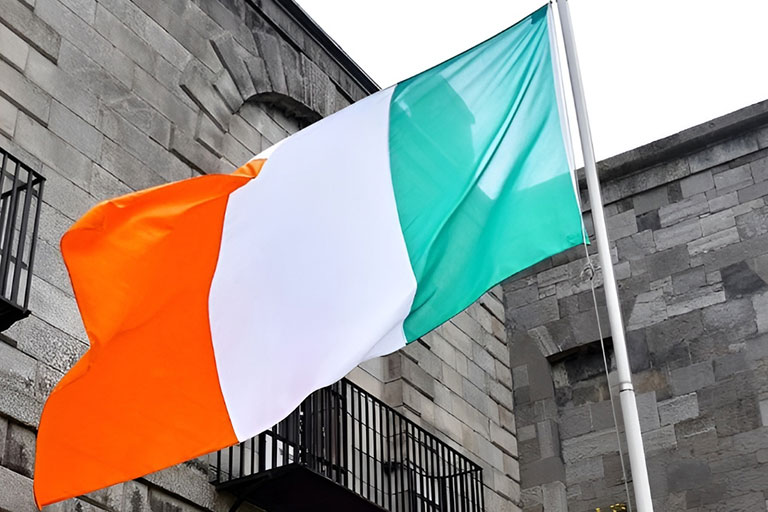
Stake has blocked access for users in Ireland as the Gambling Regulatory Authority of Ireland (GRAI) intensifies enforcement under the country’s new remote betting licensing framework. The development marks another step in Ireland’s transition toward a more structured gambling regulatory system and highlights the practical consequences for operators that are not licensed to provide remote betting services to Irish consumers.
The restriction followed engagement between Stake and the GRAI. The regulator has been increasingly active since the first phase of Ireland’s new licensing regime took effect on 1 July 2026. Under the new framework, operators offering remote betting to customers in Ireland are required to operate within the licensing system established under the Gambling Regulation Act 2024.
The move involving Stake has attracted attention because the international gambling platform had remained accessible to Irish users for several years. Reporting has identified Stake as the major international gambling platform referred to by the GRAI in connection with recent interventions, although the regulator has not publicly named the operator involved.








Stake restricts access for Irish users
Stake operates internationally through Medium Rare N.V., a Curaçao-based company. Its official website states that the platform supports customers in more than 169 countries and provides sports betting, casino products and other gaming services.
Following the recent regulatory engagement, users located in Ireland have faced a geo-block on access to the platform. Rather than limiting only sports betting services, the reported restriction applies across the wider website.
That distinction is significant because Ireland’s new licensing framework is being introduced in phases. Remote betting licensing has entered operation ahead of the broader rollout for other categories of gambling. As a result, an operator may face different regulatory requirements depending on the specific product it offers.
The decision by Stake therefore illustrates how a platform can respond to regulatory expectations by preventing access from a particular jurisdiction rather than continuing to serve customers while seeking to resolve the licensing position.
Ireland strengthens remote betting regulation
Ireland’s Gambling Regulation Act 2024 established the legal basis for a new national framework covering gambling, betting, gaming and certain lottery activities. The GRAI has responsibility for licensing, supervision and enforcement under the new regime.
Remote betting licences became a central part of the new framework from 1 July 2026. The system is designed to provide greater oversight of operators serving Irish consumers while introducing requirements relating to consumer safeguards and regulatory compliance.
Among the measures associated with the new system are age and identity verification requirements, obligations concerning the payment of winnings and restrictions on the use of credit cards for gambling. The legislation also provides the regulator with enforcement powers directed at prohibited or unlicensed gambling activity.
The GRAI’s wider statutory role includes monitoring compliance and taking measures to stop prohibited gambling activities. This means the regulatory focus is not limited to companies that voluntarily enter the licensing process. It also extends to operators that may attempt to provide services to Irish consumers without the necessary authorisation.
Enforcement extends beyond licensed operators
The GRAI has made clear that enforcement against unlicensed gambling is an important part of its regulatory responsibilities. Its approach includes interventions involving remote operators as well as other forms of gambling activity that fall within Irish law.
Recent regulatory activity has also involved prediction market platforms. The regulator has indicated that it considers certain prediction market services capable of falling within the scope of betting regulation where users are placing stakes on outcomes.
Two major prediction market platforms have been widely reported as having restricted access from Ireland following regulatory engagement. Their inclusion in the wider enforcement discussion demonstrates that the GRAI is assessing services according to the nature of the activity offered rather than simply relying on traditional definitions of bookmakers.
For international operators, the lesson is that serving Irish customers can carry local regulatory implications even where the business is incorporated and licensed elsewhere.
The role of geo-blocking in compliance
Geo-blocking has become one of the most direct ways for gambling operators to demonstrate that they are no longer accepting customers from a particular jurisdiction.
In practical terms, geo-blocking can restrict website access based on a user’s geographic location. It may also prevent account registration, deposits or betting activity from users identified as being in a restricted market.
For regulators, this can provide a straightforward mechanism through which an offshore operator removes its services from a jurisdiction. For businesses, it may allow them to avoid continuing conduct that could be considered inconsistent with local licensing requirements.
The reported Stake restriction is notable because the platform did not simply narrow its Irish offering to a single product category. The wider access restriction indicates a more comprehensive withdrawal from the market.
Licensing numbers show a changing market
Ireland’s licensing landscape has developed rapidly since the beginning of July. The public register was reported to contain 33 licence objects by 11 September 2026, although licence objects and unique licence holders are not necessarily the same thing.
This distinction matters because one company can hold more than one licence or operate through different legal entities and trading names. It is therefore important to distinguish between a licensed brand, the legal entity holding the licence and the particular activity authorised by that licence.
The first phase of the regime remains focused on betting. Ireland’s broader transition toward licensing other forms of remote gambling is expected to develop separately, meaning the legal position for casino and other gaming products should not automatically be treated as identical to the position for remote betting.
For consumers and operators, checking the exact activity covered by an Irish licence is therefore more useful than relying solely on the presence of a company name within a general regulatory register.
Potential consequences for unlicensed operators
Ireland’s new approach creates a stronger incentive for offshore businesses to assess their market access. Operators that do not intend to obtain an Irish licence may instead choose to withdraw customers from the jurisdiction.
The GRAI has statutory enforcement powers and can take action where gambling activity is provided in breach of the applicable law. The Gambling Regulation Act also establishes penalties and other regulatory measures that increase the potential consequences of non-compliance.
From an industry perspective, this may encourage greater separation between regulated and unregulated market access. Businesses wishing to remain active in Ireland will need to pay increasing attention to licence conditions, consumer protection duties and the technical controls used to manage geographic access.
The effect may also be visible in payment systems, affiliate marketing and advertising. Even when a website remains technically accessible, supporting services can create additional compliance considerations when an operator is not authorised to target Irish customers.
What the Stake development means for Ireland
The Stake development comes at an important stage for Irish gambling regulation. The country is moving away from an older licensing structure toward a centralised model in which the GRAI has a more comprehensive role in licensing and enforcement.
For the market itself, the consequences could be substantial. Licensed operators may face a more clearly defined competitive environment while offshore businesses must determine whether they are prepared to meet Irish regulatory requirements or withdraw.
The increasing use of geo-blocking also provides consumers with a visible sign that regulatory boundaries are becoming more clearly enforced. A platform that was previously available in Ireland can now be removed from the market without the need for a lengthy consumer-facing transition.
At the same time, the implementation of the new regime is still developing. Ireland is introducing different licence categories on a phased basis and further regulations will shape how gaming and other remote products are treated.
A more defined regulatory boundary
Stake’s restriction of Irish access is best viewed as part of a broader regulatory transition rather than an isolated commercial event. The key change is the growing importance of Irish licensing status for any operator seeking to provide remote betting services to people in the country.
The GRAI now has a statutory mandate to supervise the market and intervene where gambling activity falls outside the applicable licensing framework. For operators, this creates a clearer requirement to determine whether their services can lawfully be offered in Ireland.
For consumers, the emerging system places greater emphasis on identifying whether a service is operating within the Irish framework for the activity being offered. The difference between a global platform and an operator authorised under Irish law is becoming increasingly significant.
Conclusion
Stake’s decision to restrict Irish access demonstrates how quickly the practical boundaries of Ireland’s new gambling regime are beginning to take shape. The development follows the introduction of remote betting licensing and comes as the GRAI expands its role in monitoring compliance and addressing activity that falls outside the country’s regulatory framework.
The broader significance lies in what the change suggests for the market ahead. International gambling platforms can no longer assume that an offshore licence or established global presence will by itself determine whether services can remain available to Irish customers. Market access is increasingly tied to the requirements of the jurisdiction in which consumers are located.
Ireland’s regulatory system is still evolving and further phases are expected to determine how other gambling products are licensed and supervised. That creates a period of adjustment for both operators and consumers. For companies, the direction is clear: local compliance and controlled market access are becoming central elements of doing business in Ireland.
For regulators, the Stake development provides another indication that enforcement can produce immediate changes in the availability of international gambling services. For the wider industry, it reinforces a broader European trend toward stronger national oversight, clearer licensing boundaries and greater scrutiny of offshore operators serving domestic consumers.
FAQs
Why did Stake block access for Irish users?
Stake blocked access for users in Ireland following engagement with the Gambling Regulatory Authority of Ireland as the country’s new remote betting licensing framework entered its enforcement phase.
Has the GRAI publicly named Stake?
The GRAI has not publicly identified the operator involved in its intervention. Reporting has linked the description of a major international gambling platform to Stake.
When did Ireland’s new remote betting licensing system begin?
The first phase of Ireland’s new remote betting licensing framework took effect on 1 July 2026.
What is the role of the GRAI?
The Gambling Regulatory Authority of Ireland is responsible for licensing, supervising and enforcing gambling activities covered by the new Irish regulatory framework.
Does Ireland currently regulate all online gambling products in the same way?
No. Ireland is implementing its new licensing framework on a phased basis, with remote betting introduced before the full framework for other remote gambling categories.
What does geo-blocking mean in online gambling?
Geo-blocking is a technical method used to restrict access to a website or service based on a user’s geographic location.
Does an offshore licence automatically allow an operator to serve Irish users?
No. An offshore licence does not automatically replace an Irish licence where Irish law requires local authorisation for the relevant gambling activity.
What other services have faced restrictions in Ireland?
Major prediction market platforms have also been reported as restricting access from Ireland following engagement with the GRAI.
How many GRAI licence objects were reported in September 2026?
The public register was reported to contain 33 licence objects by 11 September 2026, covering different licence activities and legal entities.
What should operators consider before serving Irish customers?
Operators should assess the exact Irish licence requirements for their products, confirm the legal entity involved and maintain effective controls over registration, payments and geographic access.

Claire
A highly motivated, results-driven, enthusiastic and ambitious writer. I can offer you well researched and high-quality article writing on any topic for your website or blog and can as well re-write your existing web content.
Related Posts

Evolution’s Asian trail did not disappear!
September 12, 2026

Germany intensifies enforcement against illegal online gambling operators
September 11, 2026

Evolution Files investigation challenges claims of full clearance
September 9, 2026
Juice launches globally with 100+ games from five former Stake studios
September 9, 2026

Evolution Spectrum Report findings raise fresh compliance concerns
September 9, 2026

GGL faces scrutiny over competitor evidence in Bet3000 licence case
September 4, 2026
ANJ sets stricter evidence guidance for online gambling fraud in France
September 2, 2026