


Affordability checks and data minimisation under GDPR

Affordability checks play a significant role in financial services, ensuring responsible lending and access to credit. Under the General Data Protection Regulation (GDPR), organizations must balance these checks with data minimisation principles, which mandate the collection of only necessary personal data. This blog post explores how businesses can effectively implement affordability checks while adhering to GDPR requirements, safeguarding consumer privacy, and promoting data responsible practices.
Key Takeaways:
- Affordability checks must comply with GDPR by ensuring that personal data collected is limited to what is necessary for the specific assessment.
- Data minimisation principles require businesses to evaluate whether the information gathered is vital for their purpose and avoid excessive data collection.
- Organizations should implement strict safeguards for personal data used in affordability checks to maintain compliance with GDPR standards.
Understanding Affordability Checks
Definition of Affordability Checks
Affordability checks are assessments that evaluate a consumer's ability to repay a loan or service. These evaluations involve analyzing various financial factors, including income, expenses, and other liabilities, to determine whether an individual can handle additional debt without jeopardizing their financial stability.
Importance of Affordability Checks in Financial Services
Affordability checks are important in the financial services sector as they promote responsible lending and protect consumers from over-indebtedness. By ensuring that lenders assess borrowers' financial situations, these checks reduce the risk of default and foster a sustainable financial ecosystem.










With statistics suggesting that around 24% of adults in the UK struggle with debt, the significance of conducting rigorous affordability checks cannot be overstated. These assessments protect consumers and serve as a regulatory measure that prevents the proliferation of unmanageable debts within society. A robust affordability assessment can shield lending institutions from potential financial losses due to defaults.
Common Practices in Affordability Assessments
Common practices in affordability assessments include the evaluation of income sources, monthly living expenses, existing financial commitments, and overall debt levels. Lenders often employ various methods, such as credit checks and income verification, to obtain a comprehensive view of a borrower's financial situation.
Typically, lenders utilize a combination of automated tools and manual evaluations to conduct affordability assessments. For instance, they may analyze bank statements to gauge spending habits or use credit scoring systems to assess risk levels. Adopting a holistic approach ensures that lenders have a thorough understanding of borrowers' financial health, allowing for informed lending decisions. This multi-faceted assessment helps in minimizing further borrower's financial distress while complying with regulatory standards.
Overview of GDPR
Principles of GDPR
The General Data Protection Regulation (GDPR) is anchored on several core principles designed to protect personal data. These include lawfulness, fairness, and transparency; purpose limitation; data minimization; accuracy; storage limitation; integrity and confidentiality; and accountability. These principles guide organizations in their processing of personal data, ensuring that individuals' rights are respected while facilitating responsible data usage.
Scope and Applicability
GDPR applies to all organizations that process personal data of individuals within the European Union (EU), regardless of the organization's location. This broad applicability means that businesses outside the EU must comply if they offer goods or services to EU residents or monitor their behavior.
The extraterritorial reach of GDPR is significant, impacting companies worldwide. For instance, American firms targeting EU customers or analyzing their online activity must adhere to GDPR standards, demonstrating the regulation's global influence. Organizations must implement compliance measures, like appointing data protection officers or establishing data processing agreements, irrespective of their physical location.
Key Terminology Related to Data Protection
Understanding GDPR requires familiarity with key terminology such as ‘personal data,' ‘data subject,' ‘data controller,' and ‘data processor.' Personal data refers to any information relating to an identified or identifiable individual, while a data subject is the person to whom the data relates. A data controller determines the purposes and means of processing personal data, whereas a data processor processes data on behalf of the controller.
Familiarity with these terms is important for compliance and operational clarity. For example, a financial institution (data controller) that collects customer data during affordability checks must ensure proper process protocols are followed, while third-party vendors (data processors) managing that data must align with GDPR requirements. Misunderstanding these roles can lead to compliance failures and legal repercussions.
Data Minimisation under GDPR
Definition and Significance of Data Minimisation
Data minimisation is a fundamental principle of the GDPR that mandates organizations to collect only the personal data necessary for specified purposes. This approach not only reduces the risk of potential data breaches but also aligns with privacy expectations, fostering trust between consumers and organizations.
Principles of Data Minimisation
The principles of data minimisation require that organizations only collect, process, and retain personal data that is adequate, relevant, and limited to what is necessary. This ensures that unnecessary data collection and storage are avoided, thus enhancing data protection and privacy.
To effectively implement these principles, organizations must conduct regular audits of their data practices, ensuring that they only retain information imperative for business operations. For example, a financial institution might limit data collection to income and expenditure details rather than accumulating all personal information of clients. Designing processes that automatically delete or anonymize data after its purpose is fulfilled can further strengthen adherence to data minimisation principles.
Challenges in Implementing Data Minimisation
Organizations face various challenges when implementing data minimisation, including resistance to change, legacy systems, and varying interpretations of necessity. These obstacles can impede the development of streamlined data policies that align with GDPR requirements.
For instance, companies with established data collection practices may find it difficult to adjust to stricter data minimisation standards, risking non-compliance. Legacy systems may not support the nuanced requirements of GDPR, thereby complicating data management efforts. Additionally, different departments within an organization may have differing views on what constitutes ‘necessary' data, leading to inconsistencies in policy enforcement. Addressing these challenges requires a coordinated effort across management, legal, and IT teams to foster a culture of data responsibility.
Interaction between Affordability Checks and GDPR
Balancing Affordability Checks and Privacy Concerns
Striking a balance between affordability checks and privacy concerns is vital for compliance with GDPR. Financial institutions must evaluate the necessity of data collected during affordability assessments, ensuring it aligns with the aim of protecting consumer rights while effectively assessing risk. This balance enables organizations to perform their due diligence without infringing on individuals' privacy rights.
The Role of Consent in Data Collection
Consent acts as a cornerstone for lawful data processing under GDPR, particularly during affordability checks. Organizations must obtain explicit consent from consumers before collecting and processing their personal data for financial assessments, ensuring transparency regarding how the data will be used. This requirement underscores the importance of integrating consent mechanisms in the data collection process.
Moreover, consent must be informed, specific, and freely given, which presents challenges for organizations aiming to gather necessary information. For example, in many instances, consumers may not fully understand the implications of providing consent, leading to potential issues with data validity. Companies should develop clear communication strategies to elucidate the data processing purpose, affirming consumer rights while maintaining effective affordability assessments.
Case Studies of Compliance Challenges
Several organizations have encountered compliance challenges when navigating the intersection of affordability checks and GDPR. Common issues include insufficient consent practices and inadequate data protection measures.
- Bank A faced a GDPR fine of €200,000 due to failure in obtaining proper consent for customer data processing.
- Company B was mandated to change its data processing policies after a report revealed that affordability checks lacked transparency and violated consumer rights.
- Lender C experienced litigation stemming from excessive data collection during affordability assessments, which led to regulatory scrutiny.
These case studies reveal significant lapses in compliance, highlighting the need for enhanced awareness regarding GDPR requirements. Continuous monitoring and adaptation of policies can aid organizations in avoiding costly penalties and legal entanglements, fostering trust with consumers. The evolving regulatory landscape must be met with proactive compliance strategies that align affordability checks with GDPR guidelines effectively.
Best Practices for Compliance
Strategies for Conducting Affordability Checks Within GDPR Framework
Financial institutions should adopt a risk-based approach to conduct affordability checks, ensuring that data processing is limited to what is necessary for decision-making. Utilizing anonymization techniques and avoiding excessive personal data collection can help align with GDPR principles. Additionally, establishing clear consent protocols for data sharing enhances compliance while maintaining customer trust.
Tools and Technologies Supporting Data Minimisation
Employing advanced data analytics tools can streamline the affordability check process, facilitating data minimization in accordance with GDPR. Technologies such as machine learning enable institutions to assess creditworthiness without accessing unnecessary personal information, thus ensuring compliance while maintaining efficiency in evaluation.
Data analytics platforms leverage algorithms to analyze patterns from minimal sets of data, allowing institutions to make informed decisions without excess personal information. These technologies can also incorporate real-time data feeds, ensuring that only relevant and necessary insights are gathered, thereby reinforcing adherence to data minimization principles mandated by GDPR. Furthermore, continuous monitoring of these systems helps ensure that any changes in regulations or practices are swiftly integrated into operational protocols.
Training and Awareness for Financial Institutions
Ensuring staff are well-versed in GDPR requirements is imperative for effective compliance in affordability checks. Regular training sessions can educate employees about data protection principles and the importance of minimizing data collection in assessments.
Implementing ongoing training programs and workshops fosters a culture of compliance within financial institutions. Tailoring these educational efforts to various departments, such as compliance, IT, and customer service, ensures a comprehensive understanding of data protection rights and obligations. Real-life case studies of GDPR infractions can also enhance the learning experience, encouraging employees to promote best practices in data handling during affordability checks.
Future Trends in Affordability Checks and Data Protection
Evolving Regulatory Landscape
The regulatory landscape for affordability checks is continuously evolving, reflecting heightened awareness around data protection. Authorities are increasingly emphasizing the necessity of data minimization and purpose limitation as a means to ensure consumer rights are preserved while enabling effective lending practices. New regulations are expected that will further define the boundaries of data usage, compelling financial institutions to adopt more robust compliance frameworks.
Potential Impact of Technological Advancements
Advancements in technology will fundamentally change how affordability checks are conducted, allowing for more efficient and effective data processing. Innovations like machine learning and artificial intelligence are streamlining data analysis, improving accuracy while reducing the need for extensive personal data collection.
These technological shifts offer promising opportunities for financial institutions to enhance affordability assessments without infringing on consumer privacy. For example, federated learning can enable algorithms to learn patterns from multiple data sources while keeping data decentralized, maintaining compliance with GDPR. This approach not only mitigates data risks but also enhances predictive capabilities, paving the way for more personalized and responsible lending practices.
Predictions for Consumer Privacy and Financial Services
The future of consumer privacy in financial services hinges on the balance between regulatory compliance and innovation. As privacy concerns grow, a shift towards more transparent data handling practices is anticipated, compelling institutions to adopt technologies that inherently respect consumer privacy.
As the industry moves forward, proactive strategies will become necessary. Companies may integrate privacy-by-design principles into their affordability checks and overall operations, ensuring that consumer data is protected from the outset. Increasing consumer awareness and demand for privacy will likely drive financial institutions to innovate responsibly, offering products that build trust without compromising personal data. This alignment of ethical practices with business objectives can create a competitive advantage in an evolving market landscape.
To wrap up
Taking this into account, affordability checks must align with the principles of data minimisation outlined in the GDPR. Organizations are required to collect only the imperative data necessary to assess an individual's financial capacity, ensuring that no excessive personal information is gathered. This not only upholds consumer privacy rights but also fosters trust between service providers and users. Compliance with these guidelines is imperative to navigate the complexities of financial assessments while safeguarding data protection mandates.
FAQ
Q: What are affordability checks in the context of GDPR?
A: Affordability checks refer to the process of assessing a consumer's financial capability to make repayments on a loan or credit product while ensuring compliance with GDPR regulations on data handling and privacy.
Q: How does GDPR impact the data collection for affordability checks?
A: GDPR mandates that only the necessary personal data for assessing affordability should be collected, ensuring that data minimisation principles are upheld to protect consumer privacy.
Q: What is data minimisation under GDPR?
A: Data minimisation is a principle under GDPR stating that only the data strictly necessary for a specific purpose should be collected and processed, limiting the amount of personal information held.
Q: How can businesses ensure they comply with data minimisation during affordability checks?
A: Businesses can comply by identifying the specific data needed for assessments, regularly reviewing their data retention policies, and eliminating any unnecessary or redundant data collection practices.
Q: What consequences can arise from failing to comply with data minimisation in affordability checks?
A: Non-compliance with data minimisation principles can result in legal penalties, fines imposed by regulators, and reputational damage to the business in addition to potential civil actions from consumers.

Anna Amstill
I am an avid Blogger and Writer with more than 6 years of experience with Content Writing. An Online Marketing expert specializing in Blog writing, Article writing, Website content, SEO specific Keyword content and much more. Education B.A. - business management, York University, Canada, Graduated 2016.
Related Posts

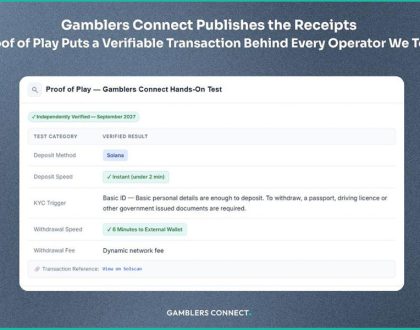
Gamblers Connect launches Proof of Play for transparent operator reviews
September 21, 2026

Ygam reports stronger impact as youth gambling harm prevention expands
September 14, 2026


Kongebonus launches complaints centre for Norway’s online casino players
September 8, 2026


Sweden launches gambling harm inquiry focused on children and young men
September 5, 2026

Mindway AI partners with Gaming1 to advance responsible gambling in NL
September 3, 2026