















Bank of Ireland adds gambling block for debit cards
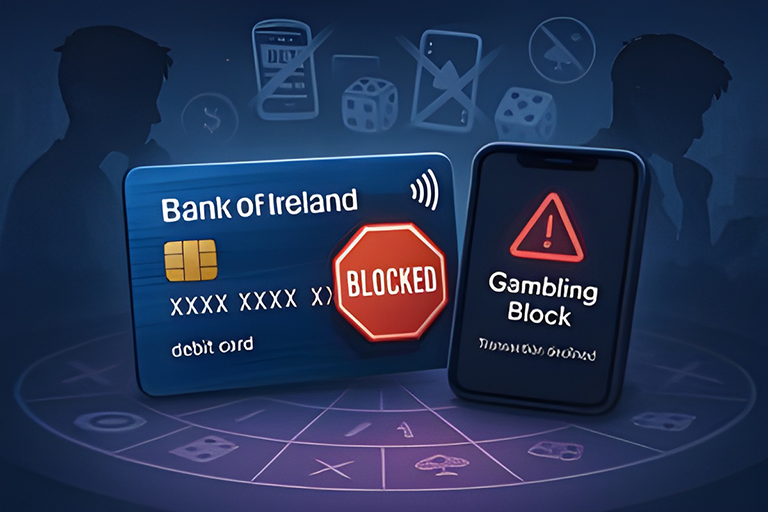
The Bank of Ireland has taken a major step toward supporting financial wellbeing by launching a new voluntary card-blocking feature. This tool lets customers block payments to gambling operators, giving them more control over their spending and helping to prevent potential gambling-related harm.
This latest development places the Bank of Ireland alongside other major financial institutions, including AIB, EBS, and Revolut, all of which have implemented similar tools aimed at curbing problem gambling.
A growing trend in financial protection
The newly launched card-blocking feature enables both personal and business account holders to restrict debit card transactions linked to gambling merchants. These include payments to online casinos, sports betting sites, lottery services, and virtual slot machines. The feature is set to be extended to credit cards in the near future, expanding the scope of protection for consumers who may be vulnerable to compulsive gambling behaviors.





















Customers must opt into the service, meaning it remains entirely voluntary. Once activated, the block is designed to be robust and comprehensive, preventing successful payments to known gambling operators. This move aligns with growing industry recognition that financial institutions have a role to play in addressing gambling-related risks.
Working alongside the Gambling Regulatory Authority of Ireland
Bank of Ireland’s latest initiative closely mirrors the objectives of the Gambling Regulatory Authority of Ireland (GRAI), the country’s newly formed national body tasked with overseeing and regulating gambling activities across the state. The GRAI has been actively promoting tools that support self-exclusion and greater consumer autonomy.
In addition to financial restrictions like the gambling block, the regulator is developing a National Gambling Exclusion Register. This register will provide a centralized platform through which individuals can voluntarily exclude themselves from all licensed gambling operators in Ireland.
According to the GRAI, these initiatives are essential steps in protecting vulnerable individuals from the potential harms of excessive gambling. The regulator has praised the Bank of Ireland’s move as a practical and meaningful contribution to a wider network of harm reduction strategies, which also include limiting gambling advertisements and providing gambling blocking software.
Rising concerns over online gambling among youth
One of the driving factors behind the introduction of such protective measures is the rise in online gambling, particularly among younger adults. Data from the first quarter of 2025 reveals a complex picture: while overall gambling expenditure declined by 2% year-on-year, gambling activity among individuals aged 18 to 25 surged by 19%.
The figures also reveal that 90% of all gambling transactions now take place online, with 99% of those transactions being funded via debit cards. This data not only highlights the increasing shift towards digital platforms for gambling, but also underscores the critical need for protective mechanisms that are adaptable to online environments.
Empowering consumers through financial tools
Áine McCleary, Chief Customer Officer at Bank of Ireland, emphasized that the launch of the gambling block is part of a broader strategy to enhance customers’ financial health. “This initiative we are launching is designed to help customers take positive steps to improve control over their finances,” McCleary stated.
She added, “It also furthers Bank of Ireland’s ambition to improve the financial wellbeing of our customers and communities, especially those going through difficult times.” The initiative underscores the Bank’s commitment to offering meaningful support to those facing financial vulnerability, and to being proactive rather than reactive in responding to social challenges.
Supporting those affected by gambling harm
The move has received strong support from organizations focused on gambling harm prevention. Oisín McConville of GamblingCare.ie commended the initiative, stating that the tool is a timely response to a growing issue.
“Measures such as this are very welcome, as we can see from the latest gambling spend insights that betting amongst younger people is on the rise,” said McConville. “In order to combat the scourge of problem gambling, a wide range of support is essential to prevent the issue from becoming overwhelming for those impacted. The introduction by Bank of Ireland of gambling blocks is another step in the right direction and will further safeguard their customers.”
Understanding the financial and societal effects of gambling addiction
Problem gambling has become a growing concern across Ireland and other parts of Europe. It can lead to severe consequences for individuals, including financial hardship, relationship breakdowns, mental health struggles, and in some cases, criminal behavior. Problem gambling imposes substantial burdens on society, affecting healthcare systems, social support services, and even placing strain on the criminal justice sector.
Ireland has historically faced criticism for having a relatively light-touch approach to gambling regulation. However, the establishment of the GRAI, coupled with recent legislative changes and the introduction of responsible gambling tools by financial institutions, signals a shift toward a more proactive and regulated environment.
The importance of voluntary self-exclusion tools
Voluntary self-exclusion mechanisms such as the gambling block introduced by the Bank of Ireland represent a critical component in tackling gambling harm. These tools empower individuals to make informed choices about their behavior, and offer a tangible way to act when someone feels their gambling habits may be spiraling out of control.
Unlike reactive measures that only intervene after harm has occurred, voluntary blocking features are preventative. They allow consumers to set limits and create friction between impulse and action — a key factor in reducing risky behavior.
Broader role of banks in consumer protection
Financial institutions are increasingly expected to play an active role in consumer protection, particularly as it relates to behavioral health and wellbeing. From gambling blocks to spending insights and budgeting tools, banks are developing services that go beyond traditional banking functions to support holistic financial wellbeing.
The Bank of Ireland’s initiative is part of a wider trend where the line between financial services and social responsibility continues to blur. Consumers, regulators, and advocacy organizations are increasingly looking to banks to design services that account for the real-world challenges faced by modern account holders.
What’s next for gambling regulation in Ireland?
As Ireland continues its journey toward more robust gambling oversight, several developments are on the horizon. The rollout of the National Gambling Exclusion Register will be a milestone, enabling individuals to self-exclude from all licensed platforms through a single interface.
At the same time, the GRAI is expected to continue advocating for more stringent ad restrictions, transparent data reporting from gambling companies, and partnerships with tech firms to block gambling access at the software level.
The future of gambling regulation in Ireland is one of tighter controls, greater transparency, and more emphasis on protecting the most vulnerable. Initiatives such as the Bank of Ireland’s gambling block are laying the foundation for a safer and more responsible gambling environment.
Conclusion
The Bank of Ireland’s introduction of a voluntary gambling block marks a pivotal step in addressing the growing concerns around problem gambling and financial vulnerability. By empowering customers with the tools to restrict access to gambling-related transactions, the bank is not only prioritizing financial wellbeing but also demonstrating its commitment to broader social responsibility.
As online gambling continues to rise—particularly among young adults—interventions like these are becoming increasingly essential. The move reflects a deeper understanding that financial institutions must play an active role in harm prevention, working in tandem with regulatory bodies like the Gambling Regulatory Authority of Ireland to promote safe and responsible behavior.
Looking ahead, the expansion of these tools to credit cards, alongside the implementation of the National Gambling Exclusion Register, signals a more comprehensive and proactive approach to consumer protection. While no single solution can eradicate gambling-related harm, the collective effort of banks, regulators, and support organizations is setting a stronger foundation for safeguarding individuals and promoting healthier financial habits across Ireland.
FAQs
What is the Bank of Ireland's new gambling block feature?
It is a voluntary tool that allows customers to block debit card transactions to gambling-related merchants, including online casinos and betting sites.
Who can use the gambling block feature?
The feature is available to all Bank of Ireland personal and business account holders and will be extended to credit cards in the near future.
How can customers activate the gambling block?
Customers must opt in through their banking app or by contacting customer support to activate the feature on their accounts.
Does the block cover all types of gambling?
Yes, it blocks payments to known gambling operators, including online casinos, lottery platforms, and betting websites.
Why is this feature important?
It helps vulnerable individuals avoid impulsive gambling behavior and promotes better control over personal finances.
Is the gambling block permanent once activated?
The block is voluntary and can typically be deactivated by the customer, though some banks include a delay before lifting to prevent rash decisions.
What is the Gambling Regulatory Authority of Ireland (GRAI)?
The GRAI is the national body responsible for regulating gambling in Ireland and promoting responsible gambling practices.
What trends prompted this initiative?
A significant rise in online gambling among young adults and a high percentage of gambling funded by debit cards led to increased demand for protections.
How does this feature compare to similar services from other banks?
Bank of Ireland joins AIB, EBS, and Revolut, all of which have introduced similar gambling block tools for their customers.
What other consumer protections are being introduced in Ireland?
The GRAI is working on a National Gambling Exclusion Register and advocating for stricter ad controls and better software-based blocking tools.

Paula Nancy
Hello and Welcome to my profile. I'm a UK based entrenched full-time Blogger, Journalist, columnist and a certified writer with many years of sound writing experience. If you need a high-quality and original content, I'm here to provide you with the best writing services.
Related Posts





Onlyplay launches Hot Dunk basketball slot with free spins
April 10, 2026




Italy reconsiders gambling ad ban to boost football funding
April 10, 2026