Capo Crudo operates illegally without paying fine

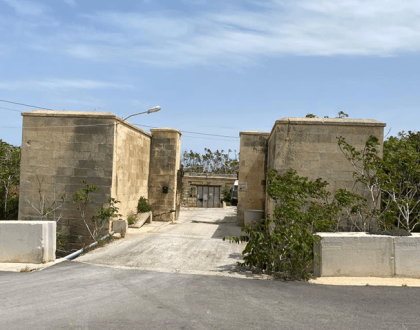
The former Marsamxett Regatta Club premises in lower Valletta—once a modest structure on the waterfront—has become a focal point of legal and political controversy. Since 2017, the site has operated as a high-end restaurant known as Capo Crudo, despite being developed without planning permission. The restaurant is owned and operated by businessmen Keith Seychell and Marvin Scicluna, who have maintained operations in the illegally converted premises for over eight years.
Enforcement notices ignored as daily fines accumulate
In 2017, the Planning Authority issued a formal enforcement notice against Seychell and Scicluna, ordering them to dismantle the unlawful development and pay a fine of €50 for each day they remained non-compliant. This mechanism is standard enforcement procedure under Maltese planning law. Nevertheless, in this instance, the measure has failed to produce the intended effect.
Rather than take direct action, such as physically removing the unauthorized structures as permitted by law, the Planning Authority opted for a lenient approach. It allowed the owners time to regularize their operations—a concession that critics say amounts to tacit complicity.





















As of 2023, the fine had accumulated to a total of €50,000. Despite the issuance of a judicial letter demanding payment, no funds have been remitted to the Authority. The establishment continues to operate as a full-service restaurant with premium pricing, offering unobstructed views of Marsamxett Harbour.
Use of public land without formal approval
Compounding the issue is the fact that Capo Crudo is built on public land. The parcel is administered by the Lands Authority, which appears to have taken no meaningful legal steps to recover possession or halt the ongoing commercial activity. This omission raises questions of institutional accountability and the rule of law, especially as the government has faced criticism for perceived favouritism in land and property matters involving politically connected individuals.
Political ties raise concern over selective enforcement
Keith Seychell, aged 45, is a real estate developer based in Marsaskala. He has long maintained a public persona that highlights his financial success and social lifestyle. His personal and professional ties with high-ranking figures in the Labour Party, including former Minister José Herrera and disgraced former Prime Minister Joseph Muscat, have drawn increased scrutiny.
Seychell and Herrera were previously business partners in real estate ventures. Ministers and senior government officials are also known to have frequented Capo Crudo, even after the enforcement notice was issued. These connections have led to allegations of selective enforcement and preferential treatment by public bodies.
Legal risk and public trust in regulatory enforcement
The failure of both the Planning Authority and the Lands Authority to enforce the law against Capo Crudo’s continued operation has wider implications. Legal experts have noted that such prolonged inaction undermines the public’s trust in the country’s regulatory framework. In principle, all developers—regardless of political affiliation—are subject to the same standards of lawfulness and enforcement. However, the Capo Crudo case presents a challenge to that ideal.
The legal framework empowers the Planning Authority to directly intervene and demolish or repossess structures that are non-compliant with approved plans. The prolonged failure to act on this mandate has prompted legal scholars and civic organisations to call for a comprehensive review of enforcement policies, especially in cases involving politically exposed persons.
The Capo Crudo case in broader development controversies
Seychell’s involvement in controversial development projects extends beyond Valletta. One notable example is the Metropolis Tower in Gżira. Touted in 2015 as a hallmark of modern urban development, the project was launched amid much fanfare by Joseph Muscat during his tenure as Prime Minister. Seychell was believed to be acting as the local representative of Libyan businessman Husni Bey, a principal backer of the development.
Despite its high-profile launch, the Metropolis Tower remains incomplete. To date, the site is little more than an excavated construction pit, with no viable timeline for completion. The project has become symbolic of stalled or mismanaged developments in Malta’s construction sector, many of which were initially supported by influential political figures.
Questions of equitable treatment under the law
Civil society organisations and planning experts have repeatedly raised concerns about a dual system of enforcement in Malta—one for ordinary citizens and another for those with political access. The Capo Crudo episode, they argue, exemplifies this dynamic. Similar enforcement cases against less prominent individuals have resulted in aggressive legal action, property seizures, and substantial penalties.
In contrast, despite non-compliance spanning more than six years, the operators of Capo Crudo have not faced meaningful consequences. The continued operation of the restaurant—on public land, without planning permission, and without having paid any portion of the fine—has created a perception of impunity.
Calls for reform and stronger institutional independence
In response to mounting criticism, several urban planning advocates have called for reforms aimed at strengthening institutional independence and transparency. They have proposed legislative changes that would:
- Set fixed timelines for direct enforcement in cases of non-compliance
- Prohibit political interference in planning decisions
- Increase public disclosure of enforcement cases and their outcomes
- Mandate periodic audits of enforcement actions involving public land
While these proposals have not yet been translated into law, the debate surrounding Capo Crudo continues to fuel public interest in the broader question of regulatory integrity.
Public reaction and media coverage
Public sentiment around the Capo Crudo case has been largely critical. Many Maltese citizens have expressed frustration on social media and in letters to newspapers, arguing that the government has failed to uphold basic principles of legality and fairness. The media has extensively covered the case, often drawing connections between Capo Crudo and wider concerns about the erosion of public trust in institutions.
Investigative journalists have also highlighted the lack of transparency surrounding the decisions made by the Planning Authority and the Lands Authority in this case. Despite repeated questions, neither body has clarified why direct action has not been taken or whether there is a timeline for doing so.
Institutional silence and lack of accountability
Multiple inquiries directed at the Planning Authority and the Lands Authority have allegedly received no response. Inquiries regarding whether the €50,000 fine is being enforced or whether legal proceedings are underway to reclaim the public land have not yielded substantive responses. The lack of transparency has only intensified public suspicion that political interference may be at play.
Conclusion
The continued operation of Capo Crudo in defiance of legal orders presents a significant test for Malta’s regulatory institutions. While the fine imposed by the Planning Authority remains unpaid, and while the building itself lacks the requisite permissions, the restaurant operates without hindrance.
The case has become emblematic of broader concerns about unequal application of the law, particularly where politically connected individuals are involved. It also highlights the urgent need for policy reforms that can restore public confidence in the enforcement of planning and land use regulations. Unless institutions act decisively and transparently, the perception of a two-tiered legal system is unlikely to abate.
FAQs
What is Capo Crudo and why is it controversial?
Capo Crudo is a restaurant in Valletta operating illegally since 2017. It was converted from a regatta club without planning permission and continues operations despite enforcement notices.
Who owns Capo Crudo?
Capo Crudo is owned by Keith Seychell and Marvin Scicluna, both businessmen with prior ties to prominent figures in the Labour Party.
What penalties has the Planning Authority imposed on the restaurant?
The Planning Authority issued a €50-per-day fine beginning in 2017. The unpaid total has now reached €50,000, according to official documentation.
Has the fine been paid?
No. As of 2025, neither Keith Seychell nor Marvin Scicluna has paid the fine, and the restaurant continues to operate.
Is the restaurant on public land?
Yes. The land belongs to the state and falls under the jurisdiction of the Lands Authority, which has not yet enforced removal or repossession.
Why hasn't the Planning Authority taken direct action?
Although legally empowered to do so, the Authority has not taken physical action to dismantle the illegal structure. The reasons for this remain undisclosed.
What is the connection between Seychell and politicians?
Seychell was previously in business with former Minister José Herrera and was also linked to former Prime Minister Joseph Muscat through shared projects.
What is the status of the Metropolis Tower project?
The project remains stalled. It was launched in 2015 with support from political leaders but has yet to move beyond the excavation phase.
Are there calls for reform in enforcement mechanisms?
Yes. Urban planning experts and civil society groups have proposed legal reforms to ensure faster and fairer enforcement in similar cases.
How has the public reacted to the Capo Crudo case?
The case has drawn widespread criticism, with many citizens calling it a clear example of unequal treatment under Maltese law.

Claire
A highly motivated, results-driven, enthusiastic and ambitious writer. I can offer you well researched and high-quality article writing on any topic for your website or blog and can as well re-write your existing web content.