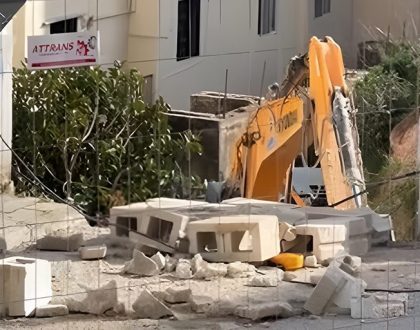
Controversy grows over Fortina land undervaluation in Malta

Momentum, a Maltese political movement, has called on members of parliament from both the Labour Party (PL) and Nationalist Party (PN) to take legal action demanding the rescission of the Fortina deed, a public land transaction that has sparked widespread controversy and raised serious questions about transparency and governance.
In a press release, Momentum leader Arnold Cassola described the Fortina Land transaction as “the result of fraud and deceit by Joseph Muscat's Chief of Staff, Keith Schembri, and Lands Authority high officials, who hid the Grant Thornton €23 million evaluation from parliament.”
This statement has intensified scrutiny over the Fortina deal, which involves public land that was transferred to private ownership under conditions that some claim were irregular and financially disadvantageous for the state.





















Background on the Fortina Land Transfer
The Fortina property in question was originally public land, transferred to private ownership in the 1990s. Recently, an audit by Grant Thornton estimated that Fortina should have paid the government a minimum of €18 million to make this land available for commercial purposes. However, the transaction that eventually took place required only €8.1 million to be paid, based on a parliamentary motion introduced by Borg in July 2019, who was at the time the minister responsible for the Lands Authority.
The disparity between the €18 million valuation and the €8.1 million paid has prompted questions about whether proper due diligence was conducted and whether the government acted in the best interests of taxpayers.
Cassola emphasized the legal avenues available under Maltese law in cases of alleged fraud or illegal land transfer. “In the case of such fraud, according to Maltese law, it is only the Attorney General, the State Advocate or a sitting MP who can file a court action to demand rescission of an illegal land transfer,” he said.
The Legal and Political Implications
Momentum has criticized the apparent inaction of MPs, suggesting that failing to challenge the Fortina transaction effectively condones the transfer and undermines public confidence in government oversight.
“Lack of MPs to file such a case would mean accepting the heist perpetrated at the expense of Maltese taxpayers,” Cassola asserted.
The movement also raised concerns about the broader implications of the transaction on public trust. “The Fortina land heist casts doubts on the whole system when it comes to giving away public land. For example, why did the Abela administration choose the day in July 2023 when the Prime Minister said no in Parliament on the Jean Paul Sofia Inquiry, to pass on public land to private entities?” Cassola questioned.
Momentum claims that similar practices were employed in other land deals. In July 2023, while public protests were ongoing in front of parliament, the government transferred public land in Qormi to the Pavi shopping complex for €4.9 million, despite the valuation suggesting it should have been charged €14 million.
Fortina’s Land and Sea Occupation
The controversy extends beyond financial discrepancies to physical encroachment. During the same parliamentary session, Economy Minister Silvio Schembri insisted on granting Fortina a 65-year temporary emphyteusis, despite evidence that Fortina had already illegally extended its hotel lido and occupied approximately 18,000 square meters of the seafront adjacent to the hotel.
“The PN voted against,” Momentum noted, highlighting the political divisions over the deal. Cassola questioned the timing and motives behind the government’s decision: “Why did Minister Schembri insist on gifting Fortina land and sea it had illegally occupied, at the time when the whole country's attention was riveted on the Sofia public Inquiry debate?”
Momentum’s Call to Action for MPs
Momentum committee member Matthew Agius criticized PN leader Alex Borg for perceived inconsistencies in his stance on development. Borg had expressed support for tower constructions in Gozo but appeared to shift his position days later.
“Soon, the Planning Authority will make a decision on a 13-storey building in Xlendi, developed by Joseph Portelli and friends. Is Alex Borg going to lead the protests against this proposed high-rise building in his island of birth?” Agius asked.
Momentum also highlighted the close ties between both major parties and developers, citing Borg’s campaign activity at Monte Kristo, a venue reportedly associated with illegalities.
“Alex Borg must act decisively and firmly. He needs to show through actions, and not just words, that he is not in the hands of the developers,” Momentum stressed.
Proposals for Public Accountability
Beyond criticizing current actions, Momentum has proposed systemic reforms to prevent similar controversies in the future. General Secretary Mark Camilleri Gambin outlined measures aimed at enhancing transparency, accountability, and public control over land and government spending.
Momentum has proposed a Public Integrity Act, which would require the National Audit Office to verify the assets of every politician, with criminal prosecution for those who make false declarations.
Additionally, the movement has introduced the concept of a Public Spending Register Bill, which would create a fully accessible database detailing every euro spent by the government. Camilleri Gambin stressed that these reforms are designed to restore public confidence in governance: “Secondly, we will make it clear that we must protect the little public land we still have left. We are proposing a constitutional amendment that prohibits the sale of public land for commercial use.”
Momentum advocates for strict regulation of land leases, stating: “No more giveaways. Every lease should be short-term, require a three-quarters parliamentary majority, and be strictly tied to the absolute preservation of the original character of the land.”
The Broader Context of Public Land Management
The Fortina case has sparked a wider debate in Malta over how public assets are managed and the transparency of governmental procedures. Critics argue that undervaluation and the transfer of public land for private gain erode public trust and undermine the principles of accountability in governance.
Momentum’s interventions are framed within this context, emphasizing the need for proactive oversight and legal recourse to prevent perceived exploitation of state assets. By calling on MPs to act, the movement seeks to ensure that Maltese taxpayers’ interests are protected and that future land transactions are conducted with integrity.
Momentum’s Stance on Future Development
The movement’s concerns extend beyond Fortina to potential future development projects that may affect Malta’s cultural and environmental landscape. Highlighting the upcoming decision by the Planning Authority regarding a 13-storey development in Xlendi, Momentum warns that unchecked construction could threaten both heritage and local communities.
Momentum emphasizes that public policy should prioritize long-term preservation over short-term commercial gains, ensuring that Malta’s limited public land remains protected for future generations.
Conclusion
The Fortina land controversy represents a convergence of legal, political, and ethical questions regarding the management of public resources in Malta. Momentum’s call for parliamentary action, combined with proposals for systemic reforms, underscores the movement’s broader objective: to safeguard public land, enhance government accountability, and restore citizen trust.
Whether MPs will act on these calls remains uncertain, but Momentum’s campaign highlights the importance of vigilance in democratic governance and the ongoing need for transparency and legal compliance in all public transactions.
FAQs
Who is leading the Momentum campaign against the Fortina land deal?
Arnold Cassola, leader of Momentum, is leading the campaign and has publicly criticized the Fortina deed.
What is the main legal issue with the Fortina land transfer?
The controversy centers on alleged undervaluation and illegal extension of the land, which some claim constitutes fraud.
How much did auditors Grant Thornton value the Fortina land at?
Grant Thornton concluded that the land should have been priced at a minimum of €18 million for commercial use.
How much did Fortina actually pay for the land?
Fortina paid the government €8.1 million, based on a parliamentary motion in 2019.
Who can file a legal case to rescind the Fortina deed under Maltese law?
Only the Attorney General, the State Advocate, or a sitting Member of Parliament can file such a case.
What other land transactions have raised similar concerns?
Momentum cited the transfer of public land in Qormi to the Pavi shopping complex for €4.9 million, despite a valuation of €14 million.
What proposals has Momentum made to enhance public accountability?
Momentum has proposed a Public Integrity Act and a Public Spending Register Bill to monitor politicians’ assets and government expenditure.
Why is the 13-storey building in Xlendi significant?
It represents a potential high-rise development that could impact local heritage and demonstrates the broader issues of developer influence.
What is Momentum’s position on public land?
Momentum seeks to protect remaining public land through constitutional amendments prohibiting commercial sales and limiting leases.
How does Momentum propose to prevent future land controversies?
By implementing strict oversight, transparency measures, and parliamentary review for land transactions to ensure integrity and accountability.

Ash
I like to keep it short. I am a writer who also knows how to rhyme his lines. I can write articles, edit them and also carve out some poetic lines from my mind. Education B.A. - English, Delhi University, India, Graduated 2017.