














Curaçao Gaming Licenses: What a Spectacular Sh*t Show
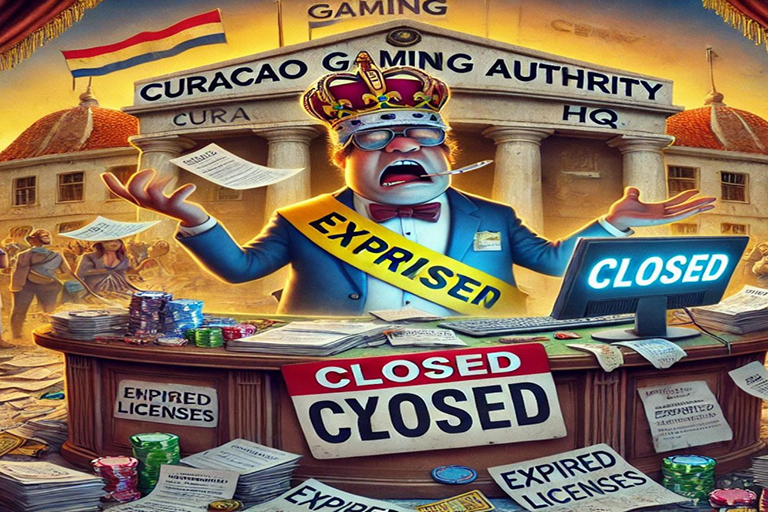
As of 2025, the Curaçao Gaming Control Board (GCB) has rebranded itself as the Curaçao Gaming Authority (GCA). While the name change might suggest an evolution towards transparency and efficiency, the reality is far more perplexing.
One might wonder: “Authority? What authority does the GCA actually hold over this mess?”
This rebranding comes at a time of mounting chaos, with the expiration of all Master Licenses (as of today – C.I.L. expired 31.01.2025) and no clear pathway for the thousands of operators who had relied on Curaçao’s licensing framework. Instead of progress, the GCA’s decisions—such as closing their application portal—have only fueled confusion, leading to a regulatory bottleneck of epic proportions.





















Master Licenses: Dead and Buried
The expiration of Master Licenses marks the end of an era for the island's gambling industry. As per the GCA’s own announcement, the licenses held by Gaming Services Provider N.V., Cyberluck Curaçao N.V., Antillephone N.V. and C.I.L. Curaçao Interactive Licensing N.V. are no longer valid.
These entities, which had essentially functioned as unregulated “regulators,” were responsible for enabling thousands of sub-licensees to operate globally with little to no oversight.
Despite years of warning and international scrutiny, the GCA has failed to ensure a smooth transition to the new direct licensing system promised under the National Ordinance for Games of Chance (LOK). Instead, chaos reigns.
Operators who have submitted applications are left in limbo, unsure of the status of their approvals. And while the GCA has promised to reopen its portal for new applications in mid-March 2025, it remains unclear how they will manage the already overwhelming backlog of applications.
The January 31, 2025 Announcement: A Comedy of Delays
In an announcement dated January 31, 2025, the GCA admitted that its online application portal remains closed, citing the need to “revise and update necessary application documents” in light of the LOK.
The timeline for reopening? Mid-March for B2C applications and May/June for B2B applications—a delay that leaves the industry in paralysis.
This closure has sparked outrage among operators and stakeholders, particularly those who submitted their applications months ago and are now left wondering whether they’ll ever receive approval. The GCA’s decision to issue temporary Certificates of Operation has only added to the uncertainty, as these certificates lack the legal clarity and legitimacy of a proper license.
A Long-Promised Reform That Never Arrived
In response to mounting pressure, Curaçao announced plans to replace the Master License system with direct government oversight, through the introduction of the National Ordinance for Games of Chance (LOK).
The LOK was supposed to:
- End the Master License system and require all operators to apply directly to the GCB.
- Ensure compliance with international Anti-Money Laundering (AML) and Know Your Customer (KYC) regulations.
- Improve consumer protection measures and enforce responsible gambling policies.
- Bring Curaçao in line with European regulatory expectations to prevent potential financial blacklisting.
The LOK was passed, but the reality of its implementation has been far from effective. Despite the official announcement that Master Licenses will not be renewed, many questions remain about how the transition to direct licensing will be handled.
Instead of an orderly reform process, operators are left uncertain about their legal status, the Curaçao Gaming Authority (GCA) appears unprepared for the transition and the credibility of Curaçao’s regulatory system is once again in question.
GCA’s Leadership: Cedric Pietersz and the Audit Paradox
In a move that raised more eyebrows than confidence, Cedric Pietersz was appointed as Managing Director of the then-GCB on January 18, 2024, officially taking office on February 1, 2024. While Pietersz was heralded as the man to steer Curaçao’s gambling reform, his tenure has been marked by more questions than answers.
Adding to the intrigue is the President of the Court of Audit of Curaçao, who reportedly has ties to gambling companies. This raises the obvious question: How can someone with potential conflicts of interest be tasked with auditing the very industry they’ve been involved in? It’s a classic case of the fox guarding the henhouse and it does little to inspire confidence in the GCA’s ability to enforce compliance.
Mounting Failures: Rabidi N.V., BC.Game and Cbet.GG
The collapse of several high-profile operators, including Rabidi N.V., BC Game and Cbet GG, has further highlighted the GCA’s inability to maintain regulatory oversight. These companies, once operating under Curaçao’s licenses, have faced allegations of illegal activities, fraud and non-compliance with international standards.
In the case of BC Game, the operator’s activities were flagged by multiple jurisdictions, yet no action was taken by Curaçao’s regulators until it was too late. Rabidi N.V., meanwhile, faced accusations of money laundering and Cbet GG was linked to unlicensed gambling operations in restricted markets.
These failures beg the question: What is the GCA doing to prevent such collapses in the future?
Silvania’s Silence on AK Global: A Question of Accountability
Finance Minister Javier Silvania, who has been the public face of Curaçao’s gambling reforms, has remained conspicuously silent on the case of AK Global. Despite public statements acknowledging that AK Global never applied for a legitimate license and operated illegally, no prosecutions or sanctions have been announced against the company’s Ultimate Beneficial Owners (UBOs).
This inaction is particularly troubling given Silvania’s promises of stricter enforcement under the LOK. If the GCA and the government are unwilling or unable to hold AK Global accountable, what hope is there for meaningful reform?
A System That Rewards Incompetence
The GCA’s apparent incompetence is not an isolated issue; it reflects a broader culture of mismanagement and regulatory capture. Consider the role of high-profile advisors like Aideen Shortt and Mario Galea, who have been heavily involved in promoting Curaçao’s reforms at international gaming conferences.
While these advisors claim to be champions of transparency and modernization, their involvement has done little to address the systemic issues plaguing the industry.
Meanwhile, Hilary Stewart-Jones, a director at Paysafe Group and Skywind Group, continues to advise the GCA while maintaining close ties to the financial sector—a clear conflict of interest. The same can be said of Reno Saleh, the GCA’s Head of Legal Affairs, whose department has been accused of providing inconsistent guidance to operators.
Key Figures in Curaçao’s Gaming Industry Reform
Several high-profile consultants and advisors have played roles in the restructuring of Curaçao’s gambling industry, but their involvement has raised serious concerns:
- Aideen Shortt (Lilywhite Consulting) – A consultant advising Curaçao’s Finance Minister, Javier Silvania. Shortt has promoted Curaçao’s gambling reform on international gaming conference circuits, reassuring industry insiders that the changes will not be as disruptive as feared.
- Mario Galea (Randon Consulting) – A former Malta Gaming Authority (MGA) official, now advising Curaçao’s government. Galea’s tenure at the MGA was marked by allegations of lax enforcement, leading some to question whether he is truly capable of overseeing a regulatory cleanup.
- Hilary Stewart-Jones (Paysafe Group, Skywind Group) – A payment processor executive who has been advising Curaçao’s Gaming Control Board. Stewart-Jones’ ties to the financial sector raise concerns about regulatory capture, as she is advising a regulator while being part of an industry that directly benefits from Curaçao’s licensing.
- Reno Saleh (Head of Legal Affairs, GCB) – A legal advisor responsible for ensuring compliance within the GCB. However, the legal framework remains unclear and operators have expressed concerns about conflicting information from the GCB.
Despite the presence of these consultants and advisors, Curaçao’s gambling reforms have failed to bring the necessary transparency and enforcement required to satisfy international regulatory expectations.
The Future of Curaçao’s Gambling Industry
As of today, Curaçao’s gambling industry stands at a crossroads. The expiration of Master Licenses and the delayed rollout of direct licensing under the LOK have created an environment of uncertainty that threatens the island’s reputation as a global hub for online gambling.
Key Questions That Remain Unanswered
- What is the status of pending license applications?
- Will the GCA be able to process new applications by mid-March, as promised?
- What measures are being taken to address conflicts of interest within the GCA?
- When will the government take action against operators like AK Global?
Until these questions are answered, the GCA’s claim to “authority” will remain a hollow one.
Is Curaçao Ready for Real Reform?
Despite its rebranding as the Curaçao Gaming Authority, the GCA has failed to demonstrate the leadership, transparency, or competence required to oversee a modern gambling industry. With its application portal closed, its audit department mired in conflicts of interest and its leadership seemingly unprepared for the challenges ahead, the GCA is quickly losing credibility.
Unless significant changes are made—starting with the removal of individuals with conflicts of interest and the implementation of a transparent licensing process—Curaçao risks losing its place as a leading jurisdiction for online gambling. For an industry built on trust and compliance, the current state of affairs is nothing short of a disaster.
If you’re navigating the complexities of gaming and finance, TRIDER can provide the clarity you need. With proven investigative expertise, we specialize in delivering actionable insights through tailored company analysis, profiling and compliance reviews. Let’s cut through the noise—contact TRIDER today to discuss how we can assist with your next investigation – [email protected]
FAQs
What is the Curaçao Gaming Control Board (GCB)?
The Curaçao Gaming Control Board (GCB) was the regulatory body overseeing online gambling in Curaçao until it rebranded to the Curaçao Gaming Authority (GCA) in 2025.
What is the significance of the Master License expiration?
The expiration of Master Licenses, including C.I.L. on January 31, 2025, marks the end of the old licensing system and has left many operators without valid licenses.
Why has the GCA’s application portal been closed?
The GCA closed its application portal to revise and update necessary documents following the National Ordinance for Games of Chance (LOK) and to address ongoing regulatory issues.
When will the GCA reopen its application portal?
The GCA plans to reopen the portal in mid-March 2025 for B2C applications and in May/June for B2B applications.
What is the National Ordinance for Games of Chance (LOK)?
LOK is a law aimed at replacing the Master License system with direct government oversight and ensuring compliance with international standards, but its implementation has been delayed.
Who is Cedric Pietersz, and what role does he play in Curaçao’s gaming reform?
Cedric Pietersz is the Managing Director of the Curaçao Gaming Authority, appointed in early 2024 to lead the gambling industry’s reform efforts, although his leadership has faced challenges.
What is the GCA’s stance on illegal operators like AK Global?
Despite acknowledging that AK Global operated without a valid license, the GCA and the Curaçao government have not taken any significant enforcement action.
Why has the GCA been criticized for conflicts of interest?
High-profile individuals advising the GCA, such as Hilary Stewart-Jones and Reno Saleh, have raised concerns about potential conflicts of interest due to their ties to the gambling industry.
What are the key issues facing Curaçao’s gambling industry?
The industry faces a crisis of confidence due to delays in licensing reforms, unaddressed illegal activities, and the GCA’s inability to provide clarity and oversight.
Can Curaçao regain its status as a leading jurisdiction for online gambling?
Unless significant changes are made to the regulatory process, including increased transparency and the removal of individuals with conflicts of interest, Curaçao risks losing its position in the global gambling industry.

Michael
With nearly 30 years in corporate services and investigative journalism, I head TRIDER.UK, specializing in deep-dive research into gaming and finance. As Editor of Malta Media, I deliver sharp investigative coverage of iGaming and financial services. My experience also includes leading corporate formations and navigating complex international business structures.
Related Posts
UK Gambling Tax Increase: Impact and Market Risks
April 3, 2026

RubyPlay expands US iGaming presence in West Virginia
March 30, 2026