

















GGL court defeats expose weaknesses in German gambling enforcement
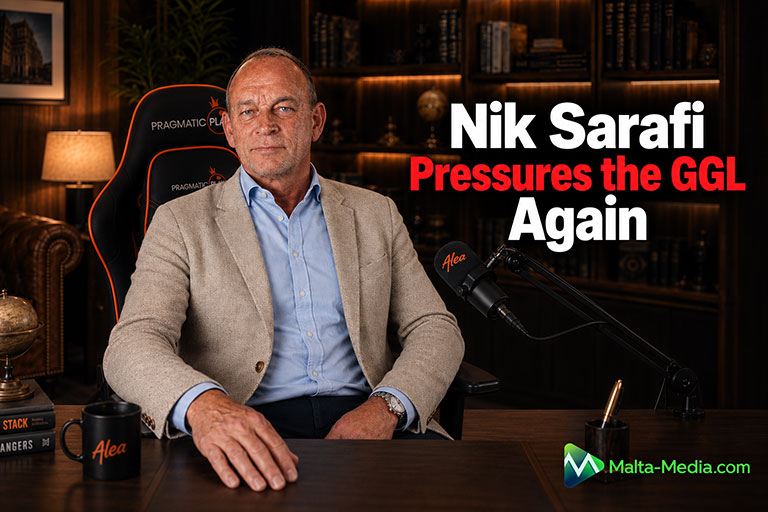
The lawyer who keeps beating the GGL: what Dr Nik Sarafi’s cases reveal?
Dr Nik Sarafi has turned a series of gambling disputes into a much broader test of the GGL’s legal discipline. His record is not undefeated and the latest decisions are not final, but the pattern is becoming difficult for Germany’s regulator to dismiss.
The GGL is very good at announcing power. It talks about prohibition orders, six-figure coercive fines, criminal referrals and a clear dividing line between the legal and illegal market. Dr Nik Sarafi has spent the last two years testing whether that confidence survives once the authority has to defend the legal reasoning in court. More often than the GGL should find comfortable, the answer has been no.
The headline needs one qualification. Dr Sarafi has not won every stage and the GGL has not lost every argument. In one streamer case, an initial interim success was overturned on appeal before the lawyer later won the main proceedings. The August 2026 decisions are also interim orders, not final judgments. Even with those limitations, the sequence tells us something important about the authority: the problem is not simply one badly drafted notice, but a recurring tendency to treat enforcement power as though it settles the legal question by itself.








The Twitch case began with an extremely broad idea of gambling advertising
The first case is probably the cleanest example. The GGL accused a well-known Twitch streamer of unlawful gambling advertising because he had shown his own participation in online gambling. It filed a criminal complaint, issued a prohibition order and threatened a coercive fine of €200,000. That is a serious package of state action against somebody whose conduct sat at the difficult boundary between content, entertainment and advertising.
Dr Sarafi attacked the premise rather than merely arguing about the size of the fine. His position was that the criminal concept of advertising cannot be reduced to the existence of a possible promotional effect. The form and purpose of the conduct matter. The criminal investigation was subsequently discontinued under section 170(2) of the German Code of Criminal Procedure, meaning the prosecution did not see sufficient grounds to proceed.
The administrative fight continued. The streamer initially obtained interim protection from the Administrative Court in Halle, but the Higher Administrative Court reversed that result. The GGL later imposed the threatened coercive measure and the main case remained alive. On 8 December 2025, the Administrative Court in Halle heard the substantive dispute and fully annulled the prohibition order, with the GGL ordered to bear the costs.
That history matters because it was not a lucky procedural escape. Dr Sarafi lost an important stage, kept the case moving and won when the court finally examined the merits. The authority had already attached the language of illegality to the streamer and had already applied serious pressure. The later judgment showed that the legal foundation could still fail after the reputational damage and enforcement burden had already arrived.
The August cases went after the foundation, not merely the paperwork
The next confrontation was much more dangerous for the regulator. On 6 August 2026, the Administrative Court in Halle issued two interim orders in cases 7 B 491/25 HAL and 7 B 492/25 HAL. One suspended enforcement of a prohibition order. The other suspended a related €50,000 coercive fine. Dr Sarafi acted for the applicant in both proceedings.
The court’s preliminary reasoning reached far beyond an error in one file. It examined the GGL’s practice of accepting SCHUFA-G checks as proof of economic capacity when players sought deposit limits above the normal €1,000 monthly ceiling. The court considered whether the authority had systematically tolerated an expansion that undermined the player-protection logic used to justify Germany’s restrictive licensing system. On that preliminary assessment, the inconsistency could make the licensing reservation unenforceable under EU law.
That is a very different kind of defeat. A regulator can correct a missed hearing, a defective deadline or a badly explained paragraph. It is much harder to repair a finding that its own long-running practice may have weakened the legal basis on which prohibitions and sanctions depend. The GGL can still challenge the decisions and may ultimately win the main proceedings, but it can no longer pretend that the coherence question is an industry talking point with no judicial weight.
The same reasoning has now moved beyond Dr Sarafi’s two cases
The pressure did not stop with the orders of 6 August. On 24 August 2026, the same court suspended a GGL search-blocking order directed at Google in case 7 B 62/26 HAL. The dispute involved different parties and should not be presented as another personal victory for Dr Sarafi. What matters is that the court applied substantially the same structural reasoning: an authority that undermines its own protective framework can lose the ability to enforce that framework against others.
That development makes the earlier cases more than isolated wins for one lawyer. Dr Sarafi identified the point of weakness, built his cases around it and forced the issue into the court record. Once the reasoning began appearing in further proceedings, the GGL’s problem became institutional. It was no longer enough to dismiss criticism as the self-interest of an operator, streamer or foreign provider.
His method is uncomfortable because it turns the regulator’s language back on itself
Dr Sarafi’s approach is not especially mysterious. He takes the claims the GGL makes about consistency, player protection and illegality, then asks whether the authority’s own conduct satisfies the same standard. In the streamer case, the question was whether the regulator had stretched the concept of advertising beyond what the law supported. In the August proceedings, the question was whether Germany could rely on a strict licensing reservation while the regulator tolerated conduct that weakened one of its central protective rules.
That is why the cases keep creating broader consequences. The GGL often speaks as though the absence of a German licence ends the discussion. Dr Sarafi’s cases insist that it begins another one. A licensing restriction must be lawful, proportionate and coherently enforced before the state can use it as the foundation for bans, fines and criminal consequences.
This is not proof that the GGL is incompetent
Regulators lose cases. That is not a scandal and it does not mean every enforcement action was reckless. Dr Sarafi is also an advocate for his clients, not a neutral academic commentator, and his public descriptions are designed to present the strongest version of their position. The August orders remain preliminary and the GGL is entitled to appeal, defend its practice and ask a higher court to take a different view.
The concern is the repeated distance between the authority’s public certainty and the durability of its reasoning. A €200,000 threat against a streamer ended with the underlying prohibition fully annulled. A later prohibition and €50,000 coercive fine were stopped because the court saw a possible structural enforcement deficit. Then a separate blocking order encountered the same problem. That is enough to justify a serious examination of how the GGL builds cases before it reaches for its most damaging tools.
The real lesson is about timing, damage and accountability
Judicial correction often comes late. By the time an operator, streamer or intermediary wins, the authority may already have issued a public statement, disrupted a business relationship or attached the word illegal to the conduct. A court can cancel an order, but it cannot fully reverse every commercial and reputational consequence created while the case was pending. That is precisely why a regulator with broad discretion must be more careful than the people it regulates, not merely equally careful.
The GGL should not respond by becoming timid. It should respond by becoming more precise. It needs narrower allegations, clearer evidence standards, a more honest assessment of proportionality and a willingness to explain how its own administrative practice fits the protective goals it invokes. Strong regulation does not become weaker because courts can trust the legal work behind it. It becomes stronger.
Our Final Thoughts and Conclusion
Dr Nik Sarafi is not unbeaten and the GGL is not automatically wrong whenever his name appears on the other side. The more useful conclusion is that he has repeatedly found the point where regulatory confidence exceeds legal certainty. He did it in the streamer case by separating actual advertising from assumed promotional effect. He did it again by asking whether the authority can enforce a licensing system whose protective logic its own practice may have undermined.
The court record is now moving from individual defects towards structural questions. That should worry the GGL far more than another hostile headline. An authority can rewrite a notice and try again. It cannot easily rebuild credibility once courts begin asking whether the system itself is being enforced coherently.
The lesson for Germany is straightforward. The regulator’s power is real, but power is not the same thing as legal certainty. Dr Sarafi keeps winning the important arguments because he forces the GGL to prove the part it too often assumes: that the authority itself has followed the law closely enough to demand absolute obedience from everybody else.
FAQs
Who is Dr Nik Sarafi and why are his cases against the GGL significant?
Dr Nik Sarafi is a lawyer who has represented clients in several disputes involving the GGL. His cases are significant because they have challenged not only individual enforcement measures but also broader questions about the regulator's legal reasoning, consistency and application of German gambling law.
What happened in the GGL case involving the Twitch streamer?
The GGL accused a Twitch streamer of unlawful gambling advertising after the streamer showed his own participation in online gambling. The authority issued a prohibition order and threatened a €200,000 coercive fine. The Administrative Court in Halle ultimately annulled the prohibition order in the main proceedings.
Why was the Twitch streamer case important for gambling advertising law?
The case raised the question of whether content with a possible promotional effect automatically constitutes gambling advertising. Dr Sarafi argued that the form, purpose and context of the conduct must also be considered when determining whether it legally qualifies as advertising.
What happened to the criminal proceedings involving the Twitch streamer?
The criminal investigation was discontinued under section 170(2) of the German Code of Criminal Procedure. Under that provision, prosecutors terminate proceedings when the investigation does not provide sufficient grounds to bring public charges.
What did the Administrative Court in Halle decide in August 2026?
On 6 August 2026, the Administrative Court in Halle issued two interim orders suspending enforcement of a GGL prohibition order and a related €50,000 coercive fine. The decisions raised broader concerns about the consistency of Germany's gambling regulatory framework.
Why are SCHUFA-G checks relevant to the GGL disputes?
The cases examined the GGL's practice concerning SCHUFA-G checks used when players sought deposit limits exceeding the standard €1,000 monthly ceiling. The court's preliminary reasoning questioned whether that practice was consistent with the player-protection objectives supporting Germany's restrictive licensing system.
Could the GGL's regulatory practices affect the enforceability of gambling restrictions?
Potentially. The August 2026 interim decisions considered whether inconsistent implementation of player-protection measures could undermine the coherence required to justify gambling restrictions under EU law. However, these were preliminary decisions rather than final judgments.
What was the significance of the GGL search-blocking case involving Google?
On 24 August 2026, the Administrative Court in Halle suspended a GGL search-blocking order directed at Google. Although Dr Sarafi was not presented as the lawyer in that case, the article argues that the court applied similar structural reasoning concerning the coherence of the regulatory system.
Does Dr Nik Sarafi win every case against the GGL?
No. He has not won every stage of every dispute. In the streamer proceedings, an initial interim success was reversed on appeal before the prohibition order was later annulled in the main proceedings. Several of the August 2026 decisions also remain interim rather than final judgments.
What do Dr Nik Sarafi's cases suggest about GGL enforcement?
The cases suggest that strong enforcement powers do not remove the GGL's obligation to demonstrate that prohibitions, fines and other measures have a sound and proportionate legal basis. The GGL itself says its role includes regulating cross-border online gambling, enforcing gambling rules and protecting players.

Michael Schmitt
Michael Schmitt is the founder of TRIDER.UK and Editor of Malta Media. He writes about iGaming, gambling regulation, corporate structures, financial services and market integrity, combining investigative journalism with nearly three decades of experience in corporate services and international business.
Related Posts

Evolution’s Asian trail did not disappear!
September 12, 2026

Mr Vegas renews its Big Brother UK sponsorship for the 2026 series on ITV2
September 11, 2026

Germany intensifies enforcement against illegal online gambling operators
September 11, 2026

Follow the tax money: Bet3000 versus Lottoland
September 11, 2026

Evolution Files investigation challenges claims of full clearance
September 9, 2026

Blurify updates Openora with new iGaming licenses compliance checklist
September 9, 2026
GGL questioned over Tipwin LUGAS evidence and Bet3000 standards
September 9, 2026
Evolution Spectrum Report findings raise fresh compliance concerns
September 9, 2026

Playtech broadens game content offering through Gaming Corps agreement
September 8, 2026