Gozo Ministry Built €12M Rubble Walls Without Permits
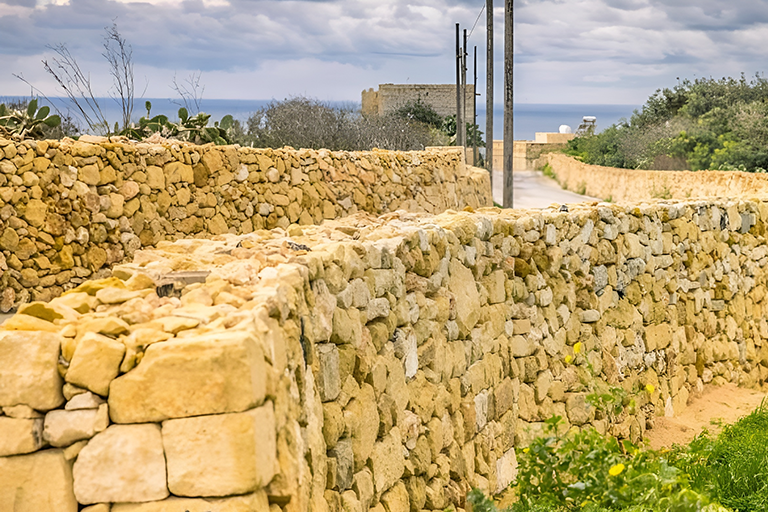
A multi-million-euro EU-funded infrastructure initiative spearheaded by the Gozo Ministry is under intense scrutiny following revelations that the works were completed without the necessary planning permits. A €12 million initiative to build around 30 kilometres of rubble walls throughout Gozo’s countryside and valley regions is currently under legal and financial scrutiny, following revelations that the works were approved only after completion through retroactive permitting measures.
Retrospective permits filed after project completion
According to documents reviewed and corroborated by multiple sources, the project was officially completed at the end of 2023 after two years of construction. However, it was not until late 2024—several months post-completion—that 21 individual applications for a Development Notification Order (DNO) were filed with the Planning Authority (PA). These were not new development requests but were instead submitted retroactively to formalise works already carried out.
The filings were made by Joseph Cutajar, a senior technical officer within the Gozo Ministry, alongside architect Godwin Sultana. The applications covered numerous localities across Gozo, indicating the broad geographical scope of the project.





















Sources close to the process disclosed that these applications were submitted not as a matter of procedural compliance but rather in response to an audit from the European Union, which is reviewing the funding allocation and the adherence to requisite legal frameworks.
EU compliance and risk of funding withdrawal
European Union structural and regional development funds are governed by strict compliance mechanisms, particularly concerning environmental impact, public procurement, and planning laws. The absence of planning permits at the time of construction places the Gozo Ministry in a precarious position, as it could result in the EU withholding or reclaiming funds.
According to EU regulations, projects that do not comply with national legal requirements—particularly planning regulations—are generally ineligible for funding. Retroactive compliance, though occasionally considered, is typically subject to heightened scrutiny and must be transparently justified. The delay in applying for permits raises questions about whether the Gozo Ministry deliberately sought to circumvent the legal process or acted negligently.
To date, it remains unclear whether EU auditors have concluded their review of the project. However, the mere possibility of clawback measures has cast a shadow over the Ministry’s handling of public infrastructure investments.
Oversight concerns involving the Planning Authority
A further layer of concern arises from the fact that the Gozo Ministry holds political and administrative responsibility over the Planning Authority itself. This dual role significantly amplifies accountability expectations, as the Ministry is expected not only to abide by national planning laws but also to set the example in their enforcement.
The current situation, however, reflects a model of governance in which legal formalities appear to have been treated as secondary, with regularisation efforts only initiated when external audits threatened to expose or penalise the irregularity. This “build now, sanction later” attitude—commonly associated with rogue private developers—has seldom been so clearly demonstrated within the public sector.
Legal analysts consulted for this report indicated that such practices, while perhaps not amounting to criminal violations under Maltese law in the absence of demonstrable intent to defraud, could still constitute administrative misconduct and could be actionable under EU compliance frameworks.
Financial irregularities and inflated costs
Beyond the legal and procedural anomalies, serious questions have also been raised concerning the financial stewardship of the project. Although the original contract, awarded through public tender to Road Construction Company Ltd, was valued at €9.6 million, the final cost ballooned to €12 million.
This final expenditure equates to an average of €400 per square metre of rubble wall constructed—an amount that multiple local contractors and industry professionals have categorised as grossly inflated. Standard market rates for such construction, including materials, are typically quoted between €80 and €100 per square metre.
This discrepancy implies that the cost borne by the public purse—specifically through EU structural funds—was approximately four times higher than the prevailing market price. While elevated costs are not inherently indicative of wrongdoing, the scale of the overpricing has led to heightened concern among regulators.
Sources close to the investigation have confirmed that the European Anti-Fraud Office (OLAF) has been made aware of the project and may initiate its own inquiry depending on the outcome of the preliminary audit.
Public procurement and tendering process under the spotlight
The contract was awarded through a public tendering process, but there is increasing demand for greater transparency regarding how the tender was assessed, what benchmarks were used to estimate pricing, and whether due diligence was adequately performed.
Questions also remain regarding the qualifications and track record of the winning contractor, Road Construction Company Ltd, which has handled other state-funded infrastructure projects in recent years. To date, there has been no public disclosure of the bid evaluations, price comparisons, or technical scoring that formed the basis for the selection of the contractor.
Observers have raised concerns that in the absence of robust oversight and competitive market engagement, such projects become vulnerable to pricing manipulation or preferential treatment.
The legal implications of retroactive regularisation
The legal status of the 21 DNO applications remains largely procedural, as such permits typically allow minor developments that do not require a full planning permit. However, their use as a tool to retroactively validate an extensive and high-cost project is unusual and potentially problematic.
Legal experts familiar with the case pointed out that while Maltese planning law permits regularisation in certain circumstances, its use post-completion—especially for publicly funded infrastructure—undermines principles of good governance and transparency.
Moreover, if retroactive regularisation is used systematically to validate unauthorised works, it may set a concerning precedent that erodes public confidence in the planning system and encourages future non-compliance.
Political accountability and calls for inquiry
The Gozo Ministry has not yet issued an official public statement addressing the controversy. Calls are mounting from opposition MPs and civil society groups for a formal parliamentary inquiry into the matter. Environmental NGOs and planning watchdogs have also demanded an investigation into whether ecological assessments were bypassed during the expedited construction phase.
Given the project’s impact on multiple rural and valley areas across Gozo—many of which fall within environmentally sensitive zones—there is significant public interest in determining whether environmental permits were also neglected or inadequately assessed.
Transparency and governance in EU-funded projects
This case has reignited broader debates about the management of EU funds in Malta and the robustness of institutional oversight mechanisms. While the country has benefited from millions in EU structural investment, questions persist about the transparency, planning, and execution of such initiatives.
The practice of commencing construction before obtaining the required permits, then seeking retroactive validation only when compliance checks arise, reflects a reactive rather than proactive governance model—one that may invite greater scrutiny from European institutions.
If found in breach of EU regulations, the consequences for Malta could go beyond this single project, potentially affecting future funding allocations or triggering reputational damage in Brussels.
Conclusion
The Gozo rubble wall project, initially intended to enhance rural infrastructure through EU financial support, has instead become a focal point for serious concerns about transparency, governance, and legal compliance. The decision by the Gozo Ministry to proceed with construction without first securing the required permits—and to seek retroactive approval only after the threat of EU audit—raises fundamental questions about accountability in the management of public funds.
With project costs far exceeding standard market rates and an apparent disregard for standard planning procedures, the situation has exposed critical vulnerabilities in Malta’s public procurement and infrastructure oversight mechanisms. It also casts doubt on the effectiveness of internal controls within institutions tasked with ensuring lawful and efficient use of EU funds.
As investigations by EU auditors continue and calls for greater transparency mount, this case may serve as a turning point for how Malta handles publicly funded projects. It underscores the urgent need for robust legal safeguards, clearer separation of oversight functions, and a renewed commitment to upholding the rule of law in all areas of public administration. The long-term credibility of Malta’s planning and procurement systems—and its access to vital EU funding—may well depend on the lessons drawn from this episode.
FAQs
What was the Gozo rubble wall project?
The Gozo rubble wall project was a €12 million EU-funded initiative aimed at constructing 30 kilometres of rubble walls in rural areas and valleys across Gozo.
Did the project have the necessary planning permits?
No. The works were completed without permits, and 21 separate applications were only submitted after the project was completed to retroactively regularise the construction.
Who was responsible for the project?
The project was managed by the Gozo Ministry, which also oversees the Planning Authority, raising concerns about conflict of interest and accountability.
Why were permits filed retroactively?
The retroactive permits were filed in response to EU audits that required verification of legal compliance as a condition for retaining funding.
Could Malta lose EU funds because of this?
Yes. If the EU finds that the project breached funding rules, it may withhold or demand repayment of funds, which could total millions of euros.
Was there an investigation into the cost of the project?
Yes. The project's costs—reportedly four times the market rate—prompted questions about financial irregularities, with the EU reportedly reviewing the matter for possible fraud.
Who was awarded the construction contract?
Road Construction Company Ltd won the public tender, but the process is now under scrutiny due to the inflated cost and lack of transparency.
Were environmental permits considered?
It is unclear whether environmental assessments were properly conducted, especially since many construction zones were located in ecologically sensitive areas.
What does this mean for future projects?
The case may prompt tighter EU oversight of projects in Malta, especially those involving public infrastructure and environmental impact.
Has there been any official response?
As of now, the Gozo Ministry has not issued an official statement. However, political and civil society groups are demanding a formal inquiry into the project.

Claire
A highly motivated, results-driven, enthusiastic and ambitious writer. I can offer you well researched and high-quality article writing on any topic for your website or blog and can as well re-write your existing web content.