















Jérôme Gallot Joins ANJ as Gaming Mediator
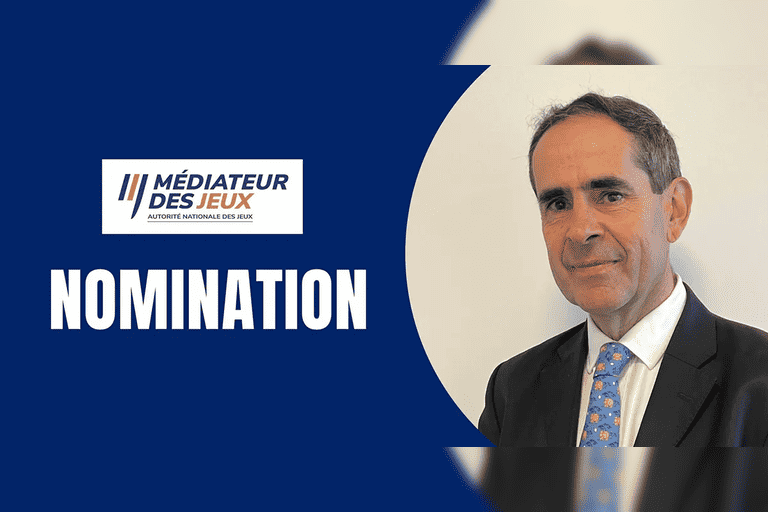
Jérôme Gallot has been appointed as the gaming mediator by the National Gaming Authority (ANJ) effective from December 2, 2024. This decision was made by Isabelle Falque-Pierrotin, the President of the ANJ, following Gallot's registration on the list of consumer mediators by the Consumer Mediation Evaluation and Control Commission. His appointment to this prominent role marks an important step in the ongoing efforts to address and resolve disputes between consumers and gaming or betting operators in France.
Gallot’s appointment is significant not only because of his long and varied career in public service but also due to his extensive expertise in consumer rights and competition law, which will be crucial in overseeing mediation within the gaming sector.
Jérôme Gallot’s Career and Qualifications
Jérôme Gallot, born in October 1959, has a rich background in both public service and private sector management. He has been a member of the Court of Auditors since 1985, a position that has provided him with a deep understanding of public finance and administration. However, Gallot’s career has extended far beyond this jurisdiction.





















From 1989 onwards, Gallot served within the Ministry of Economy and Finance, a key department for public administration in France. He notably served as the Director General of the Directorate General for Competition, Consumer Protection, and Fraud Control (DGCCRF) between 1997 and 2003. This experience equipped him with significant insight into the regulation of consumer protection, competition, and fraud prevention, areas that will be vital in his new role as mediator.
Gallot’s work did not stop at government institutions. He later joined large public institutions, where he played key roles in the management of the Caisse des Dépôts and its subsidiaries, including CDC Entreprise and the Strategic Investment Fund. These positions enabled him to gain experience in managing large-scale operations and overseeing public investments. In 2011, Gallot moved to the private sector, joining the executive committee of Veolia Environnement, where he managed the company’s subsidiary, Veolia-Transdev. His leadership experience in both public and private sectors underscores his ability to manage complex, multifaceted issues, a quality that will undoubtedly serve him well in mediating disputes within the gaming industry.
Furthermore, Gallot established his own consulting business, focusing on competition and consumer law. His extensive experience in these fields further strengthens his qualifications for the role of gaming mediator. Gallot has also served as a director of numerous listed and unlisted companies and currently holds a directorial position at a foundation.
The Role of the Gaming Mediator
The appointment of Jérôme Gallot as gaming mediator is part of an ongoing effort to ensure that the gaming and betting sector operates fairly and transparently, especially when it comes to resolving disputes between players and operators. The main goal of gambling mediation is to facilitate the amicable settlement of disputes that may arise between players and gaming or betting operators approved by the ANJ, as well as operators holding exclusive rights, such as Française des jeux (FDJ) and PMU.
Mediation serves as an alternative to traditional legal avenues, offering players and operators an opportunity to resolve their issues in a more efficient and less adversarial manner. Gallot’s role as mediator will be to oversee this process, helping both parties reach a resolution that is fair and equitable for all involved.
The Process of Gaming Mediation
Before engaging with the mediator, players must first make a written complaint to the operator with whom they have a dispute. This step is crucial, as it ensures that the operator has had the opportunity to address the complaint before mediation is considered. If the operator does not respond or fails to resolve the issue within 20 days, the player can then contact the mediator through the official Mediateurdesjeux website.
It is important to note that mediation is not a binding process. The mediator’s proposal, while aimed at resolving the issue amicably, is not legally binding. Each party is free to accept or reject the proposed solution. Furthermore, the mediation process does not prevent either party from pursuing legal action in court if they are dissatisfied with the outcome of the mediation.
Mediation is optional, allowing either party to exit the process at any point. This flexibility ensures that both players and operators can engage in the process on their own terms, without feeling forced into an agreement.
Key Figures of Mediation in the Gaming Sector
In 2023, the French gaming mediation system received a total of 1,523 applications. The majority of these applications (91%) were related to sports betting, reflecting the growing popularity and complexity of betting markets in France. This highlights the need for an effective mediation system, as sports betting is one of the most contentious areas within the gaming industry.
However, not all requests for mediation are accepted. In 2023, 752 applications were declared inadmissible, with the main reason being the lack of a prior written complaint to the operator, a requirement for initiating the mediation process. This underscores the importance of following the proper procedure when seeking mediation.
Of the accepted requests, about one-third of them received partial or full satisfaction, indicating that mediation can be an effective tool in resolving disputes between players and gaming operators.
The Future of Gaming Mediation in France
With the increasing popularity of online gaming and sports betting in France, the role of the gaming mediator is expected to become even more critical. As more players engage with these services, the likelihood of disputes between operators and consumers will rise, making the need for a fair and efficient mediation process more urgent.
Jérôme Gallot’s appointment as mediator comes at a time when the gaming industry in France is experiencing significant growth. His extensive background in consumer rights, competition law, and public administration makes him uniquely qualified to address the challenges of this expanding sector. Under his leadership, the gaming mediation process is likely to evolve and adapt to meet the demands of a dynamic and increasingly complex industry.
Conclusion
Jérôme Gallot’s appointment as the gaming mediator of ANJ represents a significant development in France’s efforts to ensure fairness and transparency in the gaming and betting sectors. With his wealth of experience in public administration, consumer law, and corporate governance, Gallot is well-equipped to handle the complex disputes that may arise between players and gaming operators. The gaming mediation system will continue to play a vital role in maintaining trust and integrity in the French gaming market, offering players an effective means of resolving disputes in an impartial and professional manner.
FAQs
What is the role of the gaming mediator?
The gaming mediator's role is to facilitate the amicable resolution of disputes between players and gaming or betting operators.
How can players initiate the mediation process?
Players must first contact the operator in writing. If there is no response within 20 days, they can then approach the mediator through the official website.
Is the mediator’s proposal binding?
No, the mediator's proposal is not binding. Both parties are free to accept or reject the proposed solution.
Can players withdraw from the mediation process?
Yes, both parties can withdraw from the mediation process at any time.
What types of disputes are handled by the gaming mediator?
The mediator handles disputes between players and approved gaming or betting operators, including issues related to sports betting.
How many mediation requests were received in 2023?
In 2023, a total of 1,523 mediation requests were received.
What percentage of mediation requests were related to sports betting?
91% of the mediation requests in 2023 were related to sports betting.
What happens if a player does not first contact the operator?
If a player does not first contact the operator in writing, their mediation request will likely be deemed inadmissible.
What is the success rate of mediation requests?
About one-third of mediation requests receive partial or full satisfaction.
Can mediation replace legal action?
Mediation does not exclude the possibility of pursuing legal action in court if the parties are dissatisfied with the outcome.

Paula Nancy
Hello and Welcome to my profile. I'm a UK based entrenched full-time Blogger, Journalist, columnist and a certified writer with many years of sound writing experience. If you need a high-quality and original content, I'm here to provide you with the best writing services.
Related Posts





Onlyplay launches Hot Dunk basketball slot with free spins
April 10, 2026



Italy reconsiders gambling ad ban to boost football funding
April 10, 2026