















Malta Vision 2050: Flawed Plan or Future Roadmap?
The future of Malta decided by 50 insiders and a focus group of 30: Is Malta Vision 2050 already a failure?
When Malta’s government announced the Malta Vision 2050 consultation, it promised a long-term roadmap shaped by wide-ranging dialogue and grounded in national consensus. A future built together. A plan to unite ministries, citizens, businesses and stakeholders across the board.
Yet beneath the polished slides and cheerful headlines, the process tells a very different story.
A story of centralised control, vague analytics and token consultation. One that raises serious doubts about whether this “vision” is fit for purpose or even grounded in reality.
Far from being a participatory exercise in nation-building, Malta Vision 2050 appears to have been drafted and validated by a tightly controlled inner circle. The public’s role has been symbolic at best. Entire sectors of society have been excluded. Critical stakeholders remain unheard. And the scale of the plan’s blind spots, both demographic and economic, risks undermining any claim to legitimacy this document might hold.





















What follows is a closer look at the flawed foundation of Malta’s national vision plan and why so many are beginning to question who this strategy truly serves.
Public consultation reduced to a poll and a focus group
According to official presentation slides, the sentiment analysis process that informed Malta’s Vision 2050 drew from two primary public engagement tools: a poll of 1,000 Maltese citizens and a focus group involving approximately 30 individuals. That’s it.
No additional surveys. No demographic breakdowns. No weighting or transparency around how the sample was selected. No regional or sector-specific panels. In total, this represents less than 0.2% of the Maltese population and yet it is the sole foundation for what is being presented as a shared national outlook.
More alarmingly, this consultation seems to have deliberately excluded an enormous section of Malta’s real, living population. There is no evidence that non-Maltese EU citizens or Third Country Nationals (TCNs) were invited to participate in any way. Despite the fact that they make up more than a third of Malta’s population and play a pivotal role in its economy, infrastructure and labour market, their voices are nowhere in the process.
For a country whose future depends on managing migration, mobility and demographic shifts, this exclusion is not just short-sighted. It is negligent.
A business community that barely got a seat at the table
On the private sector front, the situation is no better. The Malta Vision 2050 engagement report lists around 20 business representatives as participants, spread across two closed-door sessions. There is no public list of which these participants were, what industries they represented or how they were selected.
- Were SMEs included?
- What about international investors, fintech operators, gaming companies or industrial sectors?
We simply do not know.
There is also no evidence of consultation with trade associations beyond a small number of groups in the MCESD (Malta Council for Economic and Social Development) network. Entities such as the Malta Chamber, the Chamber of SMEs, the Malta Employers’ Association and other umbrella organisations are mentioned. But how meaningful or timely their involvement was remains unclear.
The absence of foreign-owned companies, startup networks, logistics providers and key growth sectors such as blockchain, healthcare and tech from this dialogue suggests a troubling lack of strategic foresight.
Workshops that look more like internal brainstorming!
One slide proudly announces that more than 50 representatives from government and public agencies gathered for a full-day workshop to shape the future of Malta. But look more closely and it becomes clear this was not a visioning exercise for the country. It was an internal planning retreat for public officials.
The “workshop” included archetypes such as the European investor, young Maltese professional and exchange student. But these were simply roleplay personas, not actual stakeholders. The event did not bring real representatives of these groups into the room. Instead, government staff was asked to simulate them in theoretical exercises.
The entire process reads like a stage-managed simulation rather than a meaningful consultation. Policy officials discussing imagined futures with other policy officials. No public attendance, no live-streamed sessions and no meaningful documentation or transcripts released.
This is not what democratic consultation looks like. It is administrative performance dressed up as inclusion.
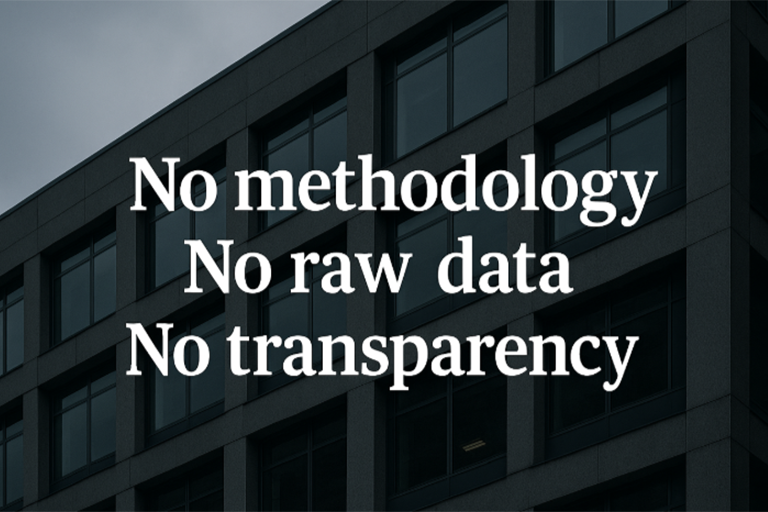
No methodology, no raw data, no transparency
Perhaps most troubling of all is the complete absence of methodological transparency. While the slides refer vaguely to “team analysis,” there is no mention of who conducted the research, what tools or datasets were used or how conclusions were validated.
There is no indication that a university, think tank or independent advisory body was involved in the sentiment analysis. No publication of data tables, sampling methods, weighting techniques or margin of error. In fact, there is no data presented at all, beyond three headline numbers: 30+ strategies, 1,800+ initiatives and 90 macro-initiatives.
None of which are defined or explained.
This raises the question: what exactly has been analysed? Who reviewed the data? And how can a 25-year national strategy be built on such a thin and unaccountable evidence base?
In any normal policy process, such vague foundations would be grounds for delay or rejection. But here, they are being positioned as the bedrock for the next generation.
Stakeholder engagement or stakeholder simulation?
Beyond the early focus groups and internal workshops, the Malta Vision 2050 process refers to a number of additional stakeholder consultations. These include MCESD plenary meetings, task force sessions and a few additional “key” conversations, such as with the Opposition Party and a Youth Advisory Forum.
Yet none of these interactions appear to be open to the public. Nor were they recorded, transcribed or independently verified. No position papers were released. No summaries published. No clear indicators of how the feedback shaped the vision documents. In practice, the public is left with no ability to assess whether these meetings were productive, representative or even properly attended.
Even when consultation occurred, the process appears to have been structured to ensure maximum control and minimum risk of dissent. Carefully managed inputs, selective invitations and a deliberate lack of transparency all suggest a process more concerned with narrative control than actual engagement.
A vision drafted in a vacuum
Malta Vision 2050 is being presented as a forward-looking document that will shape Malta’s social, economic and environmental trajectory for the next generation. But without a broad base of participation, its legitimacy remains in doubt.
There is no evidence that the vision reflects the views of international residents, non-citizen workers, expat business owners or those engaged in critical sectors like logistics, transport, agriculture or gaming. These are the very constituencies that will be asked to implement and live with the outcomes of the plan, yet they had no seat at the table.
Instead, Malta Vision 2050 reads as a politically safe, institutionally curated statement of ambition.
Written by and for insiders. It does not grapple with real tensions around infrastructure, population pressure, labour rights, energy pricing or foreign ownership. Nor does it acknowledge public frustration over housing, transport or public service quality.
In that sense, Malta Vision 2050 is not so much a roadmap as it is a branding document. A projection of what government wants to be seen to be doing, rather than what it is actually prepared to confront.
The risk of missed opportunities and false confidence
None of this is to say that Malta does not need long-term planning. It absolutely does. But plans built on flimsy evidence, narrow engagement and vague metrics are not strategies. They are narratives. And narratives cannot deliver the scale of coordination, investment and institutional reform that Malta’s future truly demands.
Malta Vision 2050 risks distracting from more urgent reforms. It risks locking in a false sense of progress. And most importantly, it risks further alienating the very communities Malta relies on most: its workers, its SMEs, its entrepreneurs and its increasingly international population.
The process could have been a national moment of reflection, ambition and dialogue. Instead, it has become yet another example of a tightly scripted exercise where public participation is reduced to decoration, not direction.
Conclusion: A vision built on silence cannot shape the future
Malta’s Vision 2050 is being framed as a shared national project. But the record shows it is anything but. With just 30 citizens consulted in focus groups, 20 business representatives involved in closed meetings and no inclusion of foreign workers or EU residents, the “vision” risks becoming a fiction.
Governance requires more than staged workshops and internal documents. If Malta is to face the next 25 years with clarity and purpose, it must be willing to open up its institutions, share its data and hear from everyone who lives and works on the island.
Until then, Malta Vision 2050 will remain what it currently is: an impressive-looking set of slides, disconnected from the country it claims to represent.
FAQs
What is Malta Vision 2050?
Malta Vision 2050 is a government-led initiative aimed at creating a long-term roadmap for the country's social, economic, and environmental development.
How were citizens involved in the Vision 2050 consultation?
Citizen involvement was limited to a poll of 1,000 people and a focus group of around 30 individuals, representing less than 0.2% of the population.
Were all residents of Malta included in the consultation?
No. Foreign EU citizens, Third Country Nationals, and many residents were excluded, despite their significant role in Malta's economy and society.
How was the business community consulted?
About 20 business representatives participated in closed-door sessions, with unclear representation of sectors such as SMEs, fintech, or healthcare.
What role did workshops play in shaping the vision?
Workshops mainly involved government officials simulating stakeholders rather than including real representatives, limiting genuine public engagement.
Was the consultation process transparent?
No. There is no published methodology, raw data, or independent validation, and the results were presented without detailed analysis.
Did the Vision 2050 process include international residents or investors?
No evidence suggests that international residents, expat business owners, or foreign companies were actively consulted during the planning process.
What are the risks of Malta Vision 2050 as currently structured?
The plan risks creating false confidence, ignoring urgent reforms, and alienating key communities critical for implementing the strategy.
Is Malta Vision 2050 a legally binding or official strategy?
It is presented as a national vision, but given the limited consultation and weak evidence, its legitimacy and enforceability remain questionable.
What needs to change for Malta Vision 2050 to succeed?
The process requires broader public participation, inclusion of international residents and businesses, transparent data sharing, and independent verification to ensure a credible national strategy.

Michael
With nearly 30 years in corporate services and investigative journalism, I head TRIDER.UK, specializing in deep-dive research into gaming and finance. As Editor of Malta Media, I deliver sharp investigative coverage of iGaming and financial services. My experience also includes leading corporate formations and navigating complex international business structures.
Related Posts



UK Gambling Tax Increase: Impact and Market Risks
April 3, 2026
Germany’s 77% Gambling Claim: Reality or Illusion?
March 18, 2026

Malta Vision 2050 cube sparks backlash over public spending
February 23, 2026

European iGaming enters its Institutional Phase
February 17, 2026

Michael Schmitt featured in ALEA’s iGaming podcast
February 17, 2026
Ronald Mizzi and Malta Vision 2050 pavilion controversy
February 17, 2026