Maltese film Sound Stage plans stall amid secrecy
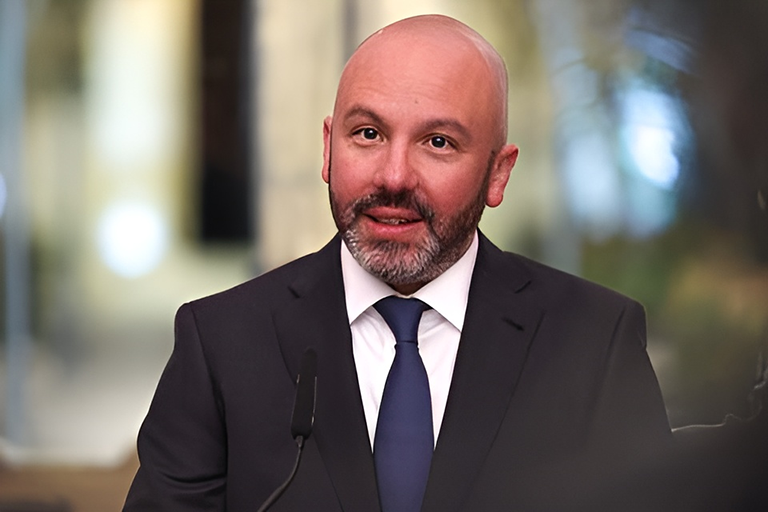
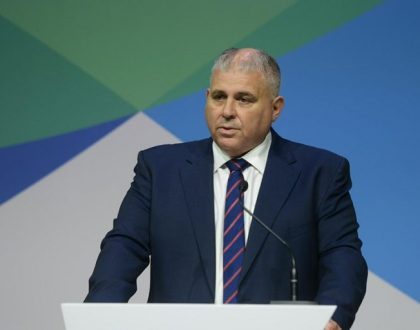
Despite repeated announcements and widespread promotion since 2020, Malta’s proposed national film sound stage has yet to materialise. Initially billed as a cornerstone development to modernise the island’s screen production capabilities, the project has become mired in delays, ambiguity, and a growing lack of transparency from those leading it—namely Film Commissioner Johann Grech and Culture Minister Owen Bonnici.
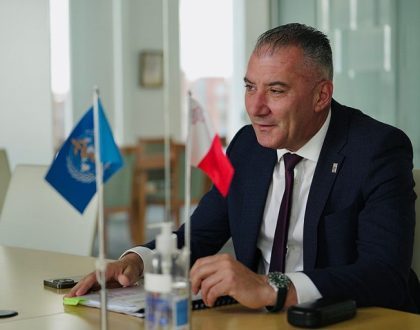
Over the past five years, the project has been publicly presented as a transformative initiative for Malta’s film sector. However, concrete developments have been elusive. Questions posed in Parliament by opposition MPs Claudette Pace and Julie Zahra have so far gone unanswered, with Minister Bonnici repeatedly stating that “the information is still being compiled.”
This vague phrasing is a well-worn parliamentary device often used to avoid providing substantive replies, and it has done little to clarify the status of the multimillion-euro investment.





















Initial promise of three sound stages quietly scaled back
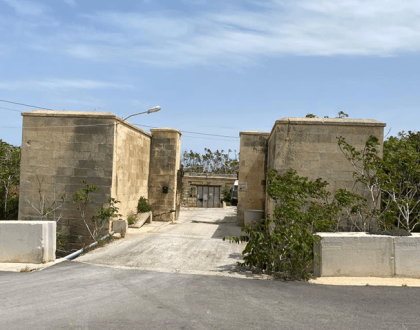
In 2020, Film Commissioner Johann Grech unveiled an ambitious initiative aimed at developing three dedicated sound stages within the Malta Film Studios complex in Kalkara. These would serve as permanent, purpose-built facilities capable of supporting high-end film and television production—filling what Grech described as “the missing piece” in Malta’s film industry infrastructure.
The proposal was widely publicised, not only through government statements but also in international trade publications and film industry media. These publications often received public funding themselves, casting some doubt on the independence of their reporting. Grech, who also holds a long-standing role as the Labour Party’s marketing consultant, made frequent references to the project in these features.
However, according to research by investigative outlet The Shift, despite the fanfare, the project has seen no substantial progress in five years. The only documented development has been the production of a revised architectural blueprint for the facility—presented during a recent Public Accounts Committee (PAC) session where Grech was questioned over his public spending.
From three stages to one: vague plans and no timeline
During that PAC session, Grech acknowledged that the original vision for three sound stages had been scaled back to a single unit. While he offered visual renders of the design—described as a “blueprint”—he failed to provide any information on crucial aspects such as cost estimates, financing sources, project timelines, or contracting entities.
Follow-up parliamentary questions were directed at Minister Owen Bonnici, seeking to clarify these points. However, Bonnici also declined to provide details. Notably, he refused to name the architects behind the new design or disclose how much they were paid, raising further concerns about transparency and oversight in public spending.
Industry insiders express concern over lack of direction
Multiple film industry professionals interviewed by The Shift expressed frustration over the state of the project. Several have pointed out that, while Malta continues to lag in infrastructure, neighbouring countries such as Italy, Greece, and Israel are moving aggressively to attract international productions through state-of-the-art facilities.
“A sound stage is not a luxury—it’s a necessity,” said one senior production coordinator. “It allows us to shoot in a controlled environment, unaffected by weather or natural light. Without it, we’re not competing on a level playing field.”
Some insiders allege that Grech has prioritised self-promotion over tangible development, citing his visible presence at high-profile events and media photo opportunities with celebrities. “There seems to be more focus on parties and red carpets than actual groundwork,” one industry source remarked.
Unanswered questions on public expenditure
The issue of transparency extends beyond the sound stage project. Grech and Minister Bonnici have also refused to provide information regarding the financial arrangements for the 2025 edition of the Mediterranean Film Festival—an event organised under the Film Commission’s remit and heavily funded by public money.
A €3 million tender for the organisation of the 2025 festival was officially awarded after the event had already concluded, a procedural anomaly noted in public procurement records. Despite this, there has been no explanation or justification provided by the relevant authorities.
Former ADPD chairperson Carmel Cacopardo, on behalf of The Green Party, has officially called on the National Audit Office to launch an investigation into the issue, referencing concerns raised in reporting by The Shift as the basis for the request.
€15 million spent, little clarity offered
Estimates suggest that over €15 million in public funds have been spent between 2023 and 2025 on events related to the Mediterranean Film Festival alone. Yet, to date, there has been minimal disclosure on how these funds were allocated or who the beneficiaries were.
In response to a Freedom of Information (FOI) request filed by The Shift, the Data Protection Commissioner ruled that Johann Grech must provide a detailed list of contracts awarded for the festival’s first edition in 2023. Grech has since appealed the decision, arguing against the release of that information—despite his role as a public official entrusted with managing public funds.
Broader implications for Malta’s international reputation
Malta has traditionally been recognised as an attractive and budget-friendly location for international film productions, valued for its picturesque landscapes and accessible filming conditions. Films like Gladiator, Troy, and Game of Thrones have capitalised on the island’s historic architecture, Mediterranean light, and government incentives.
Yet, the continued failure to develop essential infrastructure like sound stages risks undermining Malta’s ability to remain competitive in the international film market. Without meaningful investment and visible progress, international producers may begin to view Malta as an unreliable partner.
One international location manager told The Shift on condition of anonymity that, “Malta has great locations and strong crews. But without modern facilities, it’s hard to justify bringing a major production here, especially when other countries offer more and ask fewer questions.”
Political sensitivities and legal caution
The mounting scrutiny surrounding the Film Commission, its spending, and the conduct of its leadership comes at a sensitive political moment. With the Labour Party facing increased internal criticism and external watchdog attention, the government may be reluctant to allow further disclosures that could prove politically damaging.
At the same time, the legal dimension cannot be ignored. Requests for information have been met not just with resistance but also with formal appeals and, in at least one case, correspondence of a legal nature. These actions suggest a heightened sensitivity to how this information might be used or interpreted.
In this context, the absence of transparency raises more questions than it answers—and underscores the importance of public accountability in the use of taxpayer funds.
Conclusion
The stalled development of Malta’s long-promised film sound stage stands as a cautionary tale about the risks of opacity, political marketing, and mismanagement in public infrastructure projects. While the film industry continues to evolve and expand globally, Malta appears to be at a crossroads—touting ambition while lacking execution. The lack of openness from Film Commissioner Johann Grech and Minister Owen Bonnici has contributed to growing public skepticism and raised serious questions about the legitimacy of the project as a whole.
Without timely and accountable action, Malta risks falling behind in the highly competitive Mediterranean film production market. The government's repeated failure to provide concrete details—regarding planning, procurement, budgeting, and delivery—undermines its own messaging about supporting the creative industries and attracting international productions.
Public funds, especially those amounting to tens of millions of euros, must be managed with rigorous accountability. While questions continue to mount and legal resistance is pursued against Freedom of Information rulings, it becomes ever more critical for the authorities to demonstrate a commitment to openness and responsible governance. The sound stage project, once heralded as a transformative step for Malta’s creative economy, now risks becoming a symbol of missed opportunity—unless decisive, transparent corrective measures are taken.
FAQs
What is the Malta Film Sound Stage project?
The Malta Film Sound Stage project is a proposed infrastructure development announced in 2020, originally comprising three sound stages intended to support the island's film industry.
Why has the project not been completed?
As of 2025, the project has experienced significant delays, and government officials have not provided clear explanations or timelines for its completion.
Who is overseeing the project?
The project falls under the jurisdiction of the Malta Film Commission, led by Commissioner Johann Grech, with oversight by Culture Minister Owen Bonnici.
How many sound stages are now planned?
While the original plan included three stages, the proposal has been scaled back to a single sound stage, according to recent statements by Grech.
Has any construction begun?
No physical construction has been confirmed. The only known progress is the development of a revised architectural plan, referred to as a “blueprint”.
What concerns have been raised by industry professionals?
Industry stakeholders are concerned that Malta is falling behind regional competitors due to lack of infrastructure and apparent mismanagement.
How much money has been spent so far?
Reports estimate over €15 million has been spent between 2023 and 2025 on related events, particularly the Mediterranean Film Festival, although the exact breakdown remains undisclosed.
What is the Mediterranean Film Festival’s role in the controversy?
The festival has received significant public funding, and questions have been raised about procurement practices and transparency in contract awards.
Is there any official investigation underway?
The Green Party has requested the National Audit Office to investigate the matter, citing concerns about public spending and procurement irregularities.
Why are officials refusing to release information?
Officials have claimed that information is still being compiled or have declined to answer entirely. Appeals have been filed against FOI rulings requiring disclosure.

Anna Amstill
I am an avid Blogger and Writer with more than 6 years of experience with Content Writing. An Online Marketing expert specializing in Blog writing, Article writing, Website content, SEO specific Keyword content and much more. Education B.A. - business management, York University, Canada, Graduated 2016.