


Manoel Island dispute halts settlement talks
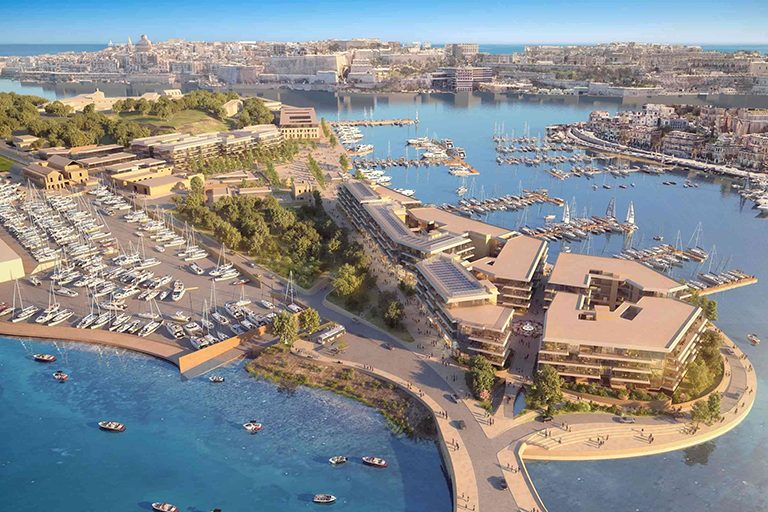
Negotiations between the Maltese government and MIDI PLC regarding a possible out-of-court settlement for the return of Manoel Island to public ownership have reportedly ground to a halt. According to multiple insiders, discussions have been derailed by the intervention of a third party—developer Anton Camilleri, also known as Tal-Franciz—who is now demanding substantial compensation through his company AC Enterprises Ltd.
The impasse marks a new chapter in the long-running and contentious history of the Manoel Island development project, which has faced years of delays, financial difficulties, and public scrutiny over transparency and environmental concerns.
Third-party compensation claim complicates settlement
According to individuals familiar with the situation, Camilleri’s company, AC Enterprises Ltd, is claiming pre-contractual liabilities and requesting compensation from MIDI as part of a deal signed in 2021. The sources explained that Camilleri is insisting that any agreement reached between MIDI and the government must also include provisions to compensate him for loss of business opportunities and other related damages.


Camilleri, one of Malta’s most prominent developers, has reportedly warned that if his demands are not met, he may consider initiating court proceedings against MIDI PLC. Such legal action would not only stall the current settlement talks but could also place the future of the entire Manoel Island project into indefinite limbo.
When contacted, Camilleri declined to provide detailed comments, saying that discussions were still ongoing and sensitive. Meanwhile, a spokesperson for MIDI maintained that “there is no litigation between the parties.” However, when pressed to explain the current status of the 2021 agreement signed with Camilleri, MIDI’s representative offered no further clarification.
MIDI’s silence on compensation request
While both MIDI and the government have been tight-lipped about the details, reports suggest that the company may be seeking up to €70 million in compensation from public funds in exchange for relinquishing its concession over Manoel Island. MIDI has refused to confirm or deny this figure, stating only that “the details of the claim for consideration on paid/expenses incurred in respect of Manoel Island cannot be disclosed.”
Government sources have confirmed that officials are fully aware of the dispute between MIDI and Camilleri and are monitoring developments closely. The Ministry responsible for lands and urban development is reportedly concerned that the situation could lead to a protracted legal battle, complicating efforts to return the island to the public in a timely and cost-effective manner.
Background on the Manoel Island concession
The controversy over Manoel Island dates back several decades. MIDI PLC was granted a 99-year concession in 1992 to redevelop the combined area of Tigné Point and Manoel Island, both prime waterfront locations in Malta. The concession was one of the largest ever granted to a private consortium, intended to stimulate investment and urban renewal.
Under the terms of the concession, MIDI was required to complete the development by 2023. While Tigné Point was successfully completed and became one of Malta’s most upscale residential and commercial districts, Manoel Island remained largely undeveloped. The area’s historical fortifications, marina, and natural environment have been the subject of both preservation campaigns and investor interest for years.
As delays mounted, public criticism grew over MIDI’s inability to deliver on the full scope of the project. Environmental groups, residents, and heritage advocates have repeatedly called for the land to be restored to public ownership and protected from overdevelopment. The government has now asserted that MIDI’s failure to commence works constitutes a breach of contract, while the company disputes this interpretation.
The 2021 agreement with Anton Camilleri
In 2021, MIDI entered into a memorandum of understanding (MoU) with AC Enterprises Ltd, owned by Anton Camilleri. This agreement was intended to create a joint venture for the redevelopment of Manoel Island. According to the terms of the MoU, MIDI would contribute the public land it held under concession, while Camilleri would inject the necessary capital investment.
MIDI’s financial position at the time made such a partnership essential. The company lacked sufficient funds to undertake the project independently. Under the preliminary plan, Camilleri was to become the majority shareholder in the joint venture, effectively taking over the development’s financing and management.
However, MIDI later claimed that the MoU was not legally binding, and that no final agreement or transaction had been concluded. The company began separate talks with the government about terminating the concession and seeking compensation for its past expenditures.
Camilleri, however, reportedly disagrees with this version of events. He maintains that substantial commitments were made and that his company suffered financial losses as a result of MIDI’s change of course. This disagreement now sits at the center of the current deadlock.
Previous partnership failures and project stagnation
The conflict with Camilleri is not the first time that MIDI’s Manoel Island project has collapsed due to failed partnerships. Several years earlier, a similar deal had been struck with Tumas Group, another major Maltese conglomerate. That partnership also fell apart in 2019, leading to further delays and uncertainty surrounding the island’s future.
Observers within the construction and financial sectors have long noted that the project’s profitability and financing model were structurally fragile. The combination of environmental restrictions, heritage preservation obligations, and escalating construction costs made it increasingly difficult to execute the original vision.
The government’s recent move to reclaim the concession further destabilized MIDI’s position, creating ripple effects across its corporate structure and finances.
Financial strain and bondholder concerns
The breakdown in talks with both the government and Camilleri has placed MIDI under mounting financial pressure. The company faces a €50 million bond repayment deadline by July 2026, owed to roughly 3,000 individual bondholders. These retail investors, many of whom hold MIDI securities through pension or savings plans, are now facing uncertainty regarding the company’s ability to meet its obligations.
According to financial insiders, preliminary negotiations with a local bank to refinance or roll over the bond issue collapsed after the government announced its intention to take back Manoel Island. Without the concession and the potential assets tied to it, MIDI’s balance sheet weakened substantially, reducing its creditworthiness and ability to secure loans.
Should MIDI fail to secure a settlement or raise funds through asset sales, the company risks defaulting on its bond, which could have significant reputational and legal repercussions for the broader Maltese capital markets.
Government perspective and possible legal scenarios
From the government’s standpoint, the objective remains to reclaim Manoel Island for public benefit while minimizing taxpayer exposure. However, the growing web of contractual claims between MIDI, Camilleri, and potential financial institutions could transform the issue into a multi-party legal dispute.
Legal experts suggest that if negotiations fail, the matter could end up in the Maltese courts, where competing claims over compensation, liabilities, and contractual breaches could take years to resolve. Such proceedings would likely freeze any further development activity on the island and delay any government plans to rehabilitate it as a public cultural or ecological zone.
One senior legal source familiar with the negotiations remarked that “even if all sides have valid legal claims, the practical result could be years of deadlock, which benefits no one.”
Uncertain future for Manoel Island
As things stand, the future of Manoel Island remains in limbo. Residents and environmental organizations have renewed calls for the area to be restored as a public park or heritage site, while others argue that a mixed-use development could still be viable under new management.
For now, the dispute between MIDI, the government, and Anton Camilleri continues to cast a shadow over one of Malta’s most symbolic urban regeneration projects. Without a breakthrough in negotiations, Manoel Island risks remaining an abandoned site, caught between corporate, legal, and political interests for years to come.
Conclusion
The situation surrounding Manoel Island has evolved into a complex intersection of legal, financial, and political interests, reflecting deeper challenges in Malta’s approach to large-scale public–private partnerships. What began as an ambitious vision for urban renewal and heritage-sensitive development has now become a case study in stalled progress, contested agreements, and competing claims for compensation.
The breakdown in negotiations between the government and MIDI PLC, compounded by Anton Camilleri’s demands, illustrates how fragile such arrangements can become when contractual clarity is lacking and financial pressures intensify. The government’s goal of returning Manoel Island to public hands, while widely supported by residents and environmental advocates, is now entangled in corporate disputes that could take years to resolve through the courts.
At stake is not only the future of a historic and ecologically sensitive island but also the credibility of Malta’s broader development and investment frameworks. If unresolved, the dispute risks eroding investor confidence, unsettling bondholders, and delaying much-needed restoration and public access.
Ultimately, Manoel Island stands as a reminder that transparency, accountability, and responsible governance must underpin any development involving public assets. Whether the current stalemate ends in a negotiated settlement or prolonged litigation, the outcome will shape how Malta balances economic ambition with public interest for years to come.
FAQs
What is Manoel Island?
Manoel Island is a small island located in Marsamxett Harbour, Malta, historically used for military and maritime purposes and now subject to redevelopment disputes.
Who currently holds the concession for Manoel Island?
MIDI PLC was granted a 99-year concession in 1992 to redevelop Manoel Island and Tigné Point, although the government is now seeking to reclaim the land.
Why have talks between the government and MIDI stalled?
Negotiations have been interrupted due to a compensation claim by developer Anton Camilleri, who was involved in a 2021 agreement with MIDI.
Who is Anton Camilleri?
Anton Camilleri, known as Tal-Franciz, is a Maltese developer who owns AC Enterprises Ltd and has claimed pre-contractual liabilities against MIDI.
Is there an ongoing court case between MIDI and Camilleri?
As of now, MIDI has stated that there is no litigation, although Camilleri has not ruled out the possibility of legal action.
What compensation is MIDI seeking from the government?
Reports suggest that MIDI may be requesting up to €70 million in compensation for expenses related to Manoel Island, though the company has not confirmed this.
What will happen to MIDI’s €50 million bond?
The bond, due in July 2026, is at risk of default if MIDI cannot secure funds or reach a settlement that stabilizes its financial position.
How is the government responding to the dispute?
Government officials are closely monitoring developments and exploring ways to reclaim Manoel Island while minimizing legal and financial exposure.
What happens if the case goes to court?
A court case could result in years of litigation, delaying any progress on returning or redeveloping the island.
What is the public sentiment about the issue?
Many residents and environmental groups support the return of Manoel Island to public ownership and oppose further large-scale private development.

Ash
I like to keep it short. I am a writer who also knows how to rhyme his lines. I can write articles, edit them and also carve out some poetic lines from my mind. Education B.A. - English, Delhi University, India, Graduated 2017.


