Nature stewards build awareness in Malta Natura 2000
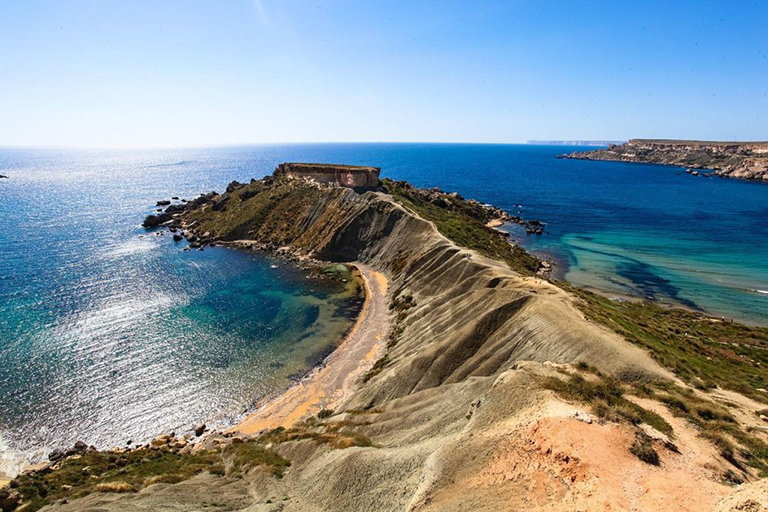
Ambjent Malta has announced a rebranding of its environmental rangers, who will now be referred to as nature stewards. The change, according to the Ministry for the Environment, is designed to provide a clearer reflection of the role these employees carry out within the framework of Malta’s Natura 2000 sites. While their responsibilities remain unchanged, the terminology shift is intended to highlight the stewardship, guidance, and educational aspects of their work.
This decision has drawn attention not only because of the terminology itself, but also because it demonstrates a broader policy approach to environmental protection in Malta, where public engagement and education are considered as important as enforcement.
The origins of the project
The concept of appointing environmental rangers, now renamed nature stewards, was first launched in December 2020 under Ambjent Malta. The project was part of a wider initiative aimed at protecting and managing Malta’s Natura 2000 sites, which form part of the European Union’s network of protected ecological areas.





















From its inception, the role of these rangers was not to exercise authority through enforcement, but rather to focus on educational outreach, public engagement, and the surveillance of protected areas. In practical terms, this meant that their presence in the field was designed to act as a deterrent to harmful practices while also fostering a sense of respect and awareness among visitors and local communities.
The legal limitations of the role
One of the most important clarifications provided by the Ministry is that nature stewards do not have enforcement powers. Unlike officers employed by the Environment and Resources Authority (ERA), Ambjent Malta’s stewards are tasked with observation rather than enforcement.
When illegal activity is witnessed, the stewards are expected to report the matter either to the ERA or directly to the police. Their contribution is therefore supportive and complementary rather than authoritative.
According to official figures, the stewards have referred 32 cases to the police and 23 cases to the ERA so far this year. While these numbers may appear modest, they highlight the ongoing presence of challenges in protecting Malta’s fragile ecological areas.
The ERA, which has its own enforcement officers, has investigated 211 incidents on Natura 2000 sites during the same period. This division of responsibility ensures that those who are empowered by law to act on breaches remain the ones to investigate and pursue action, while the stewards continue their work in observation, education, and awareness-building.
The scope of a nature steward’s duties
Although the title has changed, the tasks carried out by these employees remain extensive and multifaceted. At present, Ambjent Malta employs 17 nature stewards, who operate across various Natura 2000 sites. Their responsibilities include:
- Promoting public awareness about biodiversity and cultural heritage
- Coordinating public information events on conservation and ecology
- Designing and implementing educational programmes for schools, communities, and visitors
- Preparing and distributing information materials about protected sites
- Guiding visitors through designated areas while explaining ecological significance
- Managing ticketing and sales at sites where access is controlled
- Keeping financial records related to site management activities
- Controlling visitor crowds and ensuring the smooth running of events
- Maintaining calendars of public and educational events
- Conducting routine patrols of the areas under their remit
These duties underline the diverse nature of the role, which combines elements of education, tourism management, and practical fieldwork. In essence, the work is as much about people as it is about the environment, with communication forming a central part of the job description.
The purpose of the rebranding
The Environment Ministry has clarified that the rebranding from “ranger” to “nature steward” is not a restructuring or a redefinition of duties. Instead, the change is symbolic and communicative.
The term “ranger” often carries with it associations of enforcement, authority, and even policing. In contrast, “steward” is understood to mean someone who manages, cares for, and educates others about a resource. By adopting this terminology, Ambjent Malta aims to stress the nurturing and guiding aspect of the job, which is seen as central to building long-term public support for conservation efforts.
A spokesperson for the Ministry commented that the term “nature steward” more accurately reflects the intended role: that of safeguarding, explaining, and guiding, rather than enforcing or sanctioning.
The broader framework of Natura 2000
Natura 2000 is a network of protected areas established across the European Union with the aim of ensuring the long-term survival of Europe’s most valuable and threatened species and habitats. Malta, despite its small geographic size, has a number of designated Natura 2000 sites, many of which contain unique ecological and cultural features.
The management of these sites is a delicate process. While conservation is the priority, there is also a need to accommodate public access, tourism, and educational opportunities. The work of the nature stewards is therefore critical, as they act as intermediaries between the protected environment and the general public. Their presence not only reduces the risk of accidental or deliberate harm but also fosters greater appreciation of the significance of Malta’s ecological heritage.
The role of education and awareness
Environmental stewardship cannot succeed through enforcement alone. Laws and regulations are necessary, but they must be supported by a culture of respect and understanding. It is in this respect that the nature stewards play a particularly valuable role.
By guiding visitors, running educational events, and preparing accessible materials, the stewards encourage the public to see themselves as participants in the protection of nature rather than passive observers. This approach aligns with international best practices in conservation, where community involvement and public awareness are increasingly regarded as central to long-term sustainability.
The balance between authority and guidance
The absence of enforcement powers has occasionally raised questions about the effectiveness of the stewards’ presence. However, the system is designed in a way that maintains a balance. Enforcement remains with the ERA and the police, whose officers have the legal mandate to act against environmental breaches.
The stewards, meanwhile, are free from the sometimes adversarial aspects of enforcement and are therefore better placed to build positive relationships with communities and visitors. This division of roles reduces the likelihood of conflict while maintaining the possibility of legal action when required.
Future outlook
As Malta continues to face increasing pressures on its environment due to development, tourism, and climate change, the role of nature stewards is expected to become even more significant. Their emphasis on public engagement and education can help to cultivate a society that values its natural heritage.
While challenges remain, particularly in terms of ensuring that environmental laws are enforced, the collaboration between Ambjent Malta, the ERA, and the police offers a model where both education and enforcement can work hand in hand.
The rebranding to “nature stewards” may appear minor at first glance, but it reflects a wider vision of conservation in which guidance and stewardship are regarded as essential tools in protecting the natural environment.
Conclusion
The rebranding of environmental rangers as nature stewards by Ambjent Malta is more than a simple change in terminology. It reflects a deliberate effort to highlight the importance of education, stewardship, and community engagement in the protection of Malta’s natural heritage. While enforcement remains firmly in the hands of the Environment and Resources Authority and the police, the stewards play an equally vital role by fostering awareness, guiding visitors, and building public support for conservation.
As Malta faces mounting environmental challenges, the collaboration between observation, education, and legal enforcement will be crucial in safeguarding fragile ecosystems. The work of the nature stewards demonstrates that lasting protection of Natura 2000 sites is not only about applying the law but also about cultivating respect, knowledge, and a shared responsibility for the environment.
FAQs
What is Ambjent Malta?
Ambjent Malta is a government agency responsible for managing, maintaining, and promoting Malta’s natural and cultural heritage, particularly in Natura 2000 sites.
What are Natura 2000 sites?
Natura 2000 sites are protected areas across the European Union established to safeguard habitats and species considered valuable and threatened.
Why were rangers renamed as nature stewards?
The change was made to better reflect the role’s emphasis on guidance, care, and education rather than enforcement.
Do nature stewards have enforcement powers?
No, they do not. Their role is limited to observation and reporting. Enforcement powers remain with the ERA and the police.
How many nature stewards are currently employed?
Ambjent Malta currently employs 17 nature stewards across various Natura 2000 sites.
What kind of cases do stewards report?
Stewards report illegal activities such as environmental damage, littering, or unauthorized use of protected areas.
How many cases have been reported this year?
So far this year, 32 cases have been referred to the police and 23 to the ERA by the stewards.
What is the ERA’s role?
The Environment and Resources Authority (ERA) investigates environmental breaches and has its own enforcement officers.
How do stewards contribute to education?
They run events, design programmes, distribute educational materials, and guide visitors to raise awareness of conservation.
Why is education considered important in conservation?
Education helps build a culture of respect for the environment, ensuring long-term protection beyond enforcement measures.

Ash
I like to keep it short. I am a writer who also knows how to rhyme his lines. I can write articles, edit them and also carve out some poetic lines from my mind. Education B.A. - English, Delhi University, India, Graduated 2017.