The quiet influence behind Mansion Group’s offshore network
Revisiting an overlooked figure in Mansion’s corporate history
When examining the evolution of Mansion Group’s offshore structuring, public discussion tends to centre on its visible leadership and brand assets. Yet the most enduring footprints are often those of the individuals who rarely appear in formal filings but whose influence is imprinted on key decisions. One such figure is Singapore-based corporate lawyer Lawrence Quahe, a founding partner of Quahe Woo & Palmer LLC.
Mr Quahe’s name has surfaced in internal Mansion documents and sworn testimony in Gibraltar proceedings initiated by the group’s former CEO, Karel Manasco. These records suggest his advisory work overlapped with critical restructuring phases in which Mansion diversified its operational presence across multiple jurisdictions.
While no allegation of unlawful conduct has been made, the role of such legal advisers in shaping structures that later face regulatory scrutiny deserves careful analysis.
A background rooted in cross-border structuring
Quahe Woo & Palmer LLC positions itself as a boutique practice advising on international tax planning, private wealth, trusts and cross-border commerce. Such areas often require navigating multiple jurisdictions with differing disclosure obligations. In industries like online gambling, these skills are commercially valuable, though they inevitably carry heightened compliance and reputational risks.





















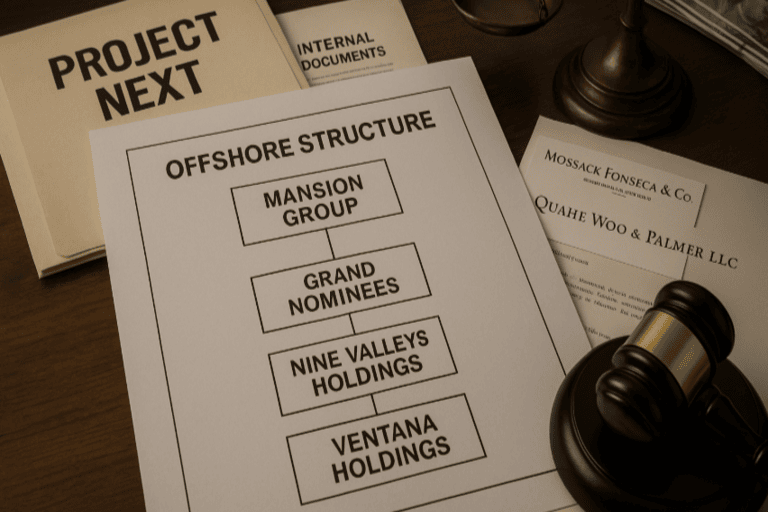
From available correspondence and corporate charts linked to Mansion Group, Mr Quahe’s professional proximity appears consistent with his firm’s expertise. His alleged involvement in “Project Next” (Mansion’s internal plan to create jurisdictional distance between its core assets and regulatory bodies) would have aligned with these competencies. The project’s blueprint, described in whistleblower evidence, included the formation of offshore entities through nominee arrangements, with the objective of dispersing operational functions in a manner that reduced transparency.
The Project Next connection
The “Project Next” strategy has been referenced repeatedly in the Gibraltar litigation between Mr Manasco and Mansion. According to testimony, it was during this period that Mr Quahe participated in planning sessions in Singapore attended by Mansion’s beneficial owners, including members of the Sampoerna family. Notes from these meetings point to discussions about Grand Nominees, Nine Valleys Holdings and Ventana Holdings, offshore structures linked through intermediaries such as MF Corporate Services (Niue) PTE Ltd and Mossack Fonseca PTE Ltd.
There is no suggestion that Mr Quahe engaged in misconduct. However, the use of these intermediary structures is a matter of public interest given their historic appearance in leak databases such as the Panama Papers. Such vehicles are lawful but have often been associated with opacity in beneficial ownership, an issue now central to international anti-money laundering and corporate transparency initiatives.
Absence from public registers
One feature that distinguishes Mr Quahe’s role is his absence from Mansion’s official officer lists. This is not unusual for external counsel, yet the absence from formal registers does not diminish the influence that documented participation in strategic sessions suggests. The dichotomy between public-facing records and private advisory involvement raises legitimate questions about how legal architects can shape corporate trajectories without leaving an official trace.
For regulators and enforcement bodies, this gap complicates retrospective accountability. In complex international structures, the absence of formal appointments can insulate legal advisers from direct responsibility while still allowing them to craft frameworks that materially affect compliance exposure.
Intersections with other high-risk jurisdictions
The documentary trail in the Manasco proceedings suggests that some entities connected to Mr Quahe’s advisory sphere operated under licences from jurisdictions with varying enforcement reputations. References appear to Curaçao-licensed platforms, including those trading under the Casino Midas brand, which historically have made use of nominee directors and trusts.
The ethical considerations in such contexts are significant. Dual representation of interconnected entities is not inherently improper but can create tension with professional independence, especially where corporate design appears aimed at shielding ultimate beneficial owners from scrutiny. In this regard, the questions raised are not solely about legality but also about alignment with the broader principles of transparency and integrity in cross-border commerce.
Silence in the face of inquiry
One of the most notable aspects of this matter is the sustained silence from both Mr Quahe and his firm. Multiple journalists, including those covering the Gibraltar proceedings, have reportedly sought comment. None has been forthcoming. While silence can be a strategic choice to avoid fuelling speculative narratives, it can also be interpreted as reluctance to engage with public interest concerns over the shaping of opaque structures.
For comparison, other professionals named in leak-related investigations have at times issued statements clarifying their roles or refuting inferences. The absence of such clarification here leaves the narrative to be shaped by the available documentation and witness testimony, much of which originates from the legal dispute between Mr Manasco and Mansion Group.
Positive contrast: Manasco’s stance
In contrast to the reluctance of others to address the record, Karel Manasco’s approach in the Gibraltar proceedings has been to place detailed evidence before the court. His filings have illuminated the internal mechanisms by which Mansion’s structure was designed and implemented. While these disclosures have inevitably drawn attention to the decisions made during his tenure, they have also provided rare insight into the often-unseen role of external advisers in shaping multinational gambling operators.
Mr Manasco’s willingness to engage with both legal and public forums has positioned him as a rare source of transparency in a sector where public statements are often tightly controlled. In doing so, he has facilitated a more complete understanding of how Mansion’s corporate design evolved, including the advisory input that informed it.
Legal frameworks and accountability gaps
The broader policy question arising from this case is how accountability can be maintained in the advisory layer of corporate structuring. Legal professionals play an indispensable role in ensuring that companies operate within the law. Yet, when their advice contributes to structures that later attract regulatory interest, the lines between professional duty and strategic corporate ambition can blur.
Singapore’s legal framework imposes ethical duties on practitioners to act with independence and to avoid conflicts of interest. In cross-border practice, these duties must be harmonised with the regulatory expectations of other jurisdictions where clients operate. When a client’s operational sectors involve high-risk activities, such as online gambling in loosely regulated jurisdictions, the need for heightened diligence becomes clear.
The ongoing relevance of leaked data
Although no regulatory action has been taken against Mr Quahe, the repeated appearance of entities linked to Mansion in leak databases serves as a reminder that historic structuring decisions can have enduring reputational impact. This is particularly relevant as enforcement agencies improve their capacity to cross-reference leaked material with official corporate registers, licensing databases and financial transaction records.
The Mansion network’s documented connections to intermediary firms like Mossack Fonseca (a firm whose closure followed global scrutiny) underscore the reputational hazards for professionals associated, even indirectly, with structures appearing in such data.
Why this matters beyond Mansion Group
While the Mansion case is specific, the underlying dynamics are not unique. Across multiple sectors, the combination of offshore service providers, nominee arrangements and cross-border legal advice continues to challenge transparency initiatives. Without formal positions, advisers can remain insulated from direct enforcement measures, yet their influence on corporate architecture is undeniable.
In the gambling sector, where revenue flows cross jurisdictions daily and licensing standards vary widely, these dynamics are magnified. The public interest in identifying the architects of complex ownership structures is therefore not simply about historic accountability but about informing current regulatory reform.
A need for greater scrutiny
The case for increased oversight of cross-border legal advisory roles is strong. Current reforms in beneficial ownership disclosure across the EU, UK and key offshore jurisdictions aim to close the information gap that allows complex networks to operate in near opacity. Yet these measures often focus on the companies themselves, not the professional advisers whose strategies enable the very opacity regulators seek to eliminate.
In the absence of direct legal findings, caution is warranted in assessing any individual’s conduct. Nonetheless, where documentation demonstrates sustained advisory involvement in shaping high-risk structures, public interest journalism has a duty to highlight those roles and to question whether the existing regulatory model adequately addresses them.
Our Final Thoughts and Conclusion
The documentation emerging from the Gibraltar proceedings adds another layer to the public understanding of Mansion Group’s structuring history. It also spotlights the broader question of legal adviser accountability in the creation of jurisdictionally fragmented corporate networks.
Mr Quahe’s absence from public registers does not diminish the influence suggested by meeting records and internal charts. Nor does the lack of formal charges resolve the ethical questions about dual representation and structuring in high-risk sectors. As regulatory cooperation intensifies, these questions are likely to become more pressing.
By contrast, Mr Manasco’s role in placing this information on the record has strengthened transparency in an area of corporate activity that often escapes public view. His disclosures, though arising from contentious litigation, have created an opportunity for regulators, policymakers and the public to better understand the legal architecture behind multinational gambling operators.
The original April article we published offered an initial profile of Mr Quahe’s advisory presence. This follow-up aims to place that profile within the wider context of offshore legal strategy and to underscore the continuing relevance of the questions it raised.
You can read the original profile here: https://www.linkedin.com/posts/maltamedia_lawrence-quahe-quahe-woo-palmer-llc-ugcPost-7319686807477018624-djLV
FAQs
What role did Lawrence Quahe play in Mansion Group’s corporate history?
Lawrence Quahe acted as a Singapore-based legal adviser, supporting Mansion Group in cross-border structuring and strategic planning.
Was Lawrence Quahe involved in any unlawful activities with Mansion Group?
No, there is no allegation of misconduct; his role was advisory in nature.
What is Project Next in Mansion Group’s context?
Project Next was Mansion’s internal plan to create jurisdictional distance between its core assets and regulatory oversight using offshore structures.
Why is Lawrence Quahe absent from Mansion Group’s official registers?
As external counsel, he did not hold formal officer positions, but his influence was evident in strategic planning sessions.
How did Quahe Woo & Palmer LLC support Mansion Group?
The firm advised on international tax planning, trusts, private wealth, and cross-border corporate structuring relevant to Mansion’s operations.
Are the offshore entities linked to Lawrence Quahe illegal?
No, the entities are lawful, but they have been associated with opacity in beneficial ownership, attracting public interest.
What jurisdictions were involved in Mansion Group’s restructuring?
Documents mention multiple jurisdictions, including Singapore, Curaçao, Niue, and connections to Mossack Fonseca structures.
Why is public interest focused on advisers like Lawrence Quahe?
Because legal advisers can shape complex corporate networks without appearing in official records, influencing transparency and compliance.
Did Lawrence Quahe respond to inquiries about his role?
No, he and his firm have not issued public comments regarding their advisory involvement.
What lessons does Mansion Group’s case offer regulators?
It highlights the need for oversight of cross-border legal advisers and improved disclosure in complex corporate and offshore structures.

Michael
With nearly 30 years in corporate services and investigative journalism, I head TRIDER.UK, specializing in deep-dive research into gaming and finance. As Editor of Malta Media, I deliver sharp investigative coverage of iGaming and financial services. My experience also includes leading corporate formations and navigating complex international business structures.
Related Posts



KSA flags Unibet operator Optdeck for AML non‑compliance
April 10, 2026



PopOK Gaming Announces Major Partnership with Stake
April 9, 2026