

















BETBY outlines post-World Cup strategy to boost engagement and retention

BETBY has released a new operator-focused playbook examining how sportsbooks can respond to the change in player behaviour that typically follows a major international sporting event. Titled “The World Cup Is Over. Now What? Win Engagement, Cut Churn, Grow LTV.”, the publication focuses on the period after the tournament and the operational decisions that can influence longer-term player engagement.
The 2026 FIFA World Cup represented the largest edition of the tournament to date, with 48 teams competing across 104 matches. The competition ran from 11 June through the final on 19 July, creating an unusually extensive schedule for operators seeking to capture sports betting interest.
For sportsbook businesses, however, the commercial challenge does not necessarily end when the final match is played. A major tournament can bring substantial increases in traffic and activity while also attracting customers whose engagement may be closely connected to the event itself.









BETBY's new playbook therefore shifts attention from acquisition during the tournament to retention after it. Rather than treating the end of the World Cup as the end of an opportunity, the supplier argues that operators can use the behavioural information collected during the tournament to make more informed decisions about subsequent engagement.
BETBY reports a significant rise in network activity
According to figures presented by BETBY in the playbook, activity across its partner network increased considerably during the 2026 World Cup period.
The company reports an 86.4% increase in traffic and an 84.8% rise in active players compared with the month before the tournament began. BETBY presents these figures as evidence of the scale of the acquisition and engagement opportunity associated with a global sporting event of this size.
These figures are presented by BETBY as network-level observations rather than as an industry-wide benchmark. The distinction is important because player behaviour can vary significantly according to market, operator, product offering and the type of audience being targeted.
The central question addressed by the playbook is what operators do with that additional audience once the tournament has concluded.
A large sporting event can create a temporary concentration of attention. Once the fixtures disappear from the daily schedule, operators need to identify which customers remain commercially engaged, which users are showing signs of reduced activity and which segments may require a different approach.
From tournament traffic to long-term player value
BETBY's playbook places considerable emphasis on the transition from short-term engagement to sustainable player value.
The supplier's approach is built around three fundamental decisions: what content should be presented to an individual player, when an operator should intervene and how much investment that player warrants based on projected value.
This places player segmentation at the centre of the retention process.
Instead of treating the post-tournament audience as a single group, operators can assess differences in behaviour and engagement. Some customers may continue to follow regular sporting competitions while others may have joined primarily because of the World Cup.
Understanding that distinction can help operators determine where retention activity may be appropriate and where additional spending may have limited commercial justification.
The approach also reflects the increasing role of data-driven decision-making within sportsbook technology. BETBY's existing sportsbook offering incorporates AI and machine learning capabilities alongside customer segmentation and analytics tools.
AI personalization becomes a key retention tool
One of the areas highlighted by the playbook is the use of AI-powered personalization to determine what individual players see.
A personalized feed can be used to prioritize events, markets or other sportsbook content according to available behavioural signals. The objective is not simply to present more information but to improve the relevance of what is displayed to each user.
According to BETBY's playbook, players exposed to an AI personalized feed remained active for longer. The company positions this finding as an example of how personalization can move beyond a technology feature and become part of a broader retention strategy.
The principle is relatively straightforward. If an operator understands what a customer has previously engaged with, it can potentially make subsequent content more relevant. That may help reduce the disconnect between the end of a major tournament and the availability of other sporting opportunities.
However, personalization should also operate within applicable regulatory and responsible gambling requirements. Operators remain responsible for ensuring that marketing, incentives and player communications are appropriate for the jurisdictions in which they operate.
Identifying players before they become inactive
The second major area addressed by BETBY concerns the identification of customers who may be at risk of disengagement.
The playbook describes the use of scoring models designed to identify at-risk players while they are still potentially reachable. In practical terms, this means moving the focus from reacting to inactivity toward identifying behavioural changes before a customer has completely stopped interacting with the sportsbook.
This distinction can be commercially significant.
Once a customer has become inactive for an extended period, an operator may have fewer practical opportunities to re-establish engagement. Earlier identification can provide more time to evaluate whether communication or other permitted retention measures are appropriate.
BETBY has previously described AI applications covering risk management, personalization and player analysis. The company has also highlighted AI Labs as part of its broader technology strategy. Danil Emelyanov is identified by BETBY as Head of AI Labs.
LTV can help determine retention spending
The third component of the playbook is linked to lifetime value, commonly referred to as LTV.
For operators, LTV provides a framework for evaluating the potential long-term commercial value of a customer rather than looking only at immediate activity.
BETBY's playbook considers how different LTV tiers can influence retention spending. The underlying principle is that investment decisions should be proportionate to projected value rather than applied uniformly across an entire customer base.
This can allow operators to establish clearer commercial parameters around retention campaigns. A player with sustained engagement and a higher projected lifetime value may warrant a different level of attention from a customer whose activity is sporadic or primarily linked to a single event.
Such segmentation does not eliminate uncertainty. Player behaviour can change rapidly and projections are not guarantees of future activity. Nevertheless, structured LTV analysis can provide operators with a more consistent basis for deciding where resources should be allocated.
BETBY highlights the commercial role of AI
Danil Emelyanov, Head of AI Labs at BETBY, said: “Most AI hype in this industry doesn’t survive contact with reality,” said Danil Emelyanov, Head of AI Labs at BETBY. “Built with a clear purpose, it delivers enormous value — higher personalisation, more accurate prediction, more granular segmentation. That’s how data becomes commercial value.”
The statement reflects the broader argument presented in the playbook. BETBY is not positioning AI solely as a technology upgrade. Instead, the supplier presents it as a mechanism for converting customer and behavioural data into decisions that can influence engagement, segmentation and retention.
BETBY has previously described AI-based products designed to support sportsbook personalization and automated processes. Its sportsbook platform also incorporates customer segmentation, business intelligence capabilities and marketing tools intended to support more targeted operator activity.
Why the post-World Cup period matters
The weeks following a major tournament can create a different operating environment from the one experienced during the event itself.
During the World Cup, the volume of fixtures and global attention can naturally generate repeated reasons for customers to return. Once the tournament concludes, operators need to compete for attention across the regular sports calendar.
That makes the post-event period an important test of whether the traffic generated during the tournament can translate into longer-term engagement.
The BETBY playbook therefore places emphasis on acting on available data rather than relying exclusively on broad promotional activity. Personalization can help determine what content is relevant. Predictive scoring can help identify behavioural changes. LTV segmentation can help determine where retention resources may be commercially justified.
Together, these elements form a framework that is intended to help operators manage the transition from event-driven activity to more sustainable customer engagement.
A data-led approach to sportsbook retention
The wider significance of BETBY's publication lies in its focus on what happens after the headline sporting event has passed.
The World Cup can provide a powerful acquisition and engagement opportunity, but the longer-term value of that audience depends on what happens next. Operators need to understand which customers remain interested in sports betting, which users are likely to disengage and what type of content may be relevant to each segment.
BETBY's playbook argues that much of the information required to make those decisions is already available through player behaviour and engagement data.
The challenge is therefore less about collecting information and more about converting it into useful decisions. AI systems, predictive models and LTV segmentation can support that process when they are deployed for clearly defined commercial purposes and within applicable regulatory boundaries.
Conclusion
BETBY's new post-World Cup playbook places the spotlight on a stage of the sportsbook customer journey that can receive less attention than the tournament itself. Major sporting events can generate significant traffic and player activity, but the period immediately afterwards can determine whether that momentum develops into longer-term value.
By focusing on personalization, early identification of potential disengagement and LTV-based resource allocation, BETBY presents a data-led framework for approaching the post-tournament environment. The approach does not suggest that every customer will remain active or that AI can eliminate churn. Instead, it emphasizes making more informed decisions about where attention and investment may have the strongest potential commercial rationale.
For operators, the key lesson is that the final whistle should not necessarily mark the end of the customer strategy. The data generated during a major event can provide a foundation for understanding subsequent behaviour, provided it is interpreted responsibly and used in accordance with applicable laws and regulatory expectations.
BETBY's playbook ultimately frames the post-World Cup period as an opportunity to move from broad event-driven engagement toward more individualized and measurable retention strategies. As sportsbook technology continues to incorporate AI, personalization and predictive analytics, the ability to turn behavioural information into disciplined commercial decisions is likely to remain an important part of the industry's ongoing development.
FAQs
What is BETBY's new World Cup playbook about?
BETBY's playbook examines how sportsbook operators can manage player engagement after the 2026 World Cup and use data-driven strategies to support retention and LTV.
What traffic increase does BETBY report during the World Cup?
BETBY reports an 86.4% increase in traffic across its partner network compared with the month before the tournament began.
How much did active players increase according to BETBY?
BETBY reports that active players increased by 84.8% compared with the month before the 2026 World Cup began.
How can AI personalization support sportsbook engagement?
AI personalization can help operators prioritize relevant content for individual users based on available behavioural and engagement data.
What does player retention mean in sportsbook operations?
Player retention refers to efforts aimed at maintaining appropriate and continued customer engagement over time rather than relying only on short-term acquisition.
How does LTV influence retention spending?
LTV can provide a framework for evaluating projected customer value and determining how retention resources may be allocated across different customer segments.
Who is Danil Emelyanov?
Danil Emelyanov is identified by BETBY as Head of AI Labs and has discussed the company's work involving artificial intelligence and sportsbook technology.
Why is the post-World Cup period important for sportsbooks?
The period after the tournament can reveal whether event-driven traffic develops into longer-term engagement or declines once the major competition has ended.
What role can predictive scoring play in retention?
Predictive scoring can help operators identify behavioural patterns that may indicate declining engagement while there may still be an opportunity to respond appropriately.
Does AI eliminate player churn?
No. AI does not guarantee retention or eliminate churn. It can provide analytical tools that may help operators make more informed decisions about customer engagement.

Paula Nancy
Hello and Welcome to my profile. I'm a UK based entrenched full-time Blogger, Journalist, columnist and a certified writer with many years of sound writing experience. If you need a high-quality and original content, I'm here to provide you with the best writing services.
Related Posts

DeGaming unveils new identity built around transparent iGaming systems
September 25, 2026

Wazdan partners with Games Valley to expand access to its game portfolio
September 25, 2026

Advanced Compliance Technology appoints Mark Dufty to lead game analysis
September 25, 2026
EveryMatrix powers Danske Licens Spil casino platform launch in Denmark
September 25, 2026

GR8_TECH rebuilds frontend architecture for faster iGaming performance
September 24, 2026
Digitain introduces We Know the Player concept for player-focused iGaming
September 24, 2026
Vyking integrates Xtremepush CRM tools for global iGaming operators
September 23, 2026
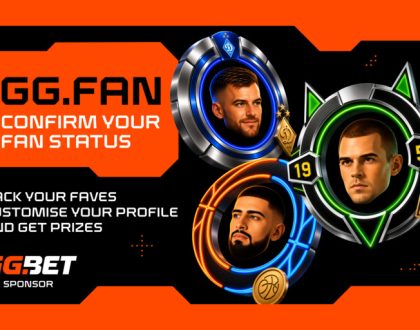
GG.BET launches GG.FAN loyalty program for Ukrainian sports fans in 2026
September 23, 2026
Premier Padel selects iGame Media for 2027 betting data and live streaming
September 23, 2026