

















Finland receives 75 applications for gambling licenses ahead of 2027 launch
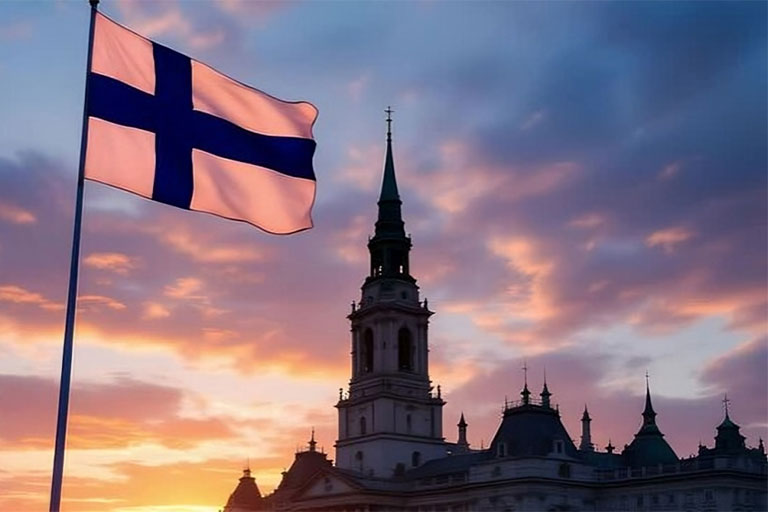
Finland’s planned transition to a competitive gambling market is attracting more applications than earlier expectations suggested. The National Police Board had received 75 applications for gambling licenses by 22 September 2026, according to information provided to Finnish public broadcaster Yle. No application had been approved at that point and the authority indicated that processing could take between six and eight months.
The latest figure marks a significant increase from the 50 applications reported in June. Earlier estimates cited by Yle had placed the expected total in the range of 40 to 60 applications. The number now stands above that range, although the application total should not automatically be interpreted as the number of separate operators seeking entry into Finland.
The new licensing framework is scheduled to open the Finnish market to competition on 1 July 2027. Applications have been accepted since 1 March 2026, while the National Police Board remains responsible for licensing during the current transition period. The Finnish Supervisory Agency is due to assume licensing and supervisory responsibilities from July 2027.









Application numbers do not equal operator numbers
The figure of 75 applications requires careful interpretation. Finnish authorities have confirmed that the licensing system does not impose a fixed numerical limit on gambling licence holders. Applicants can also seek authorisation covering different planned activities, while separate applications may be submitted where required.
This distinction is important because the headline figure could otherwise be read as evidence that 75 companies have entered the Finnish licensing process. Public information does not support that conclusion. The National Police Board has not published a complete list of applicants, meaning that the total number of distinct companies cannot be established from the aggregate figure alone.
Publicly identified applicants include state-owned Veikkaus and LeoVegas Group. However, any discussion of applicant numbers should distinguish between regulator-confirmed aggregate figures and company-specific disclosures made through public statements or other reliable reporting.
Veikkaus prepares for a competitive environment
Veikkaus remains central to Finland’s gambling system during the transition. Under the existing framework, the company retains its exclusive right to provide gambling services in mainland Finland until the end of June 2027. The new system will preserve Veikkaus’s exclusive position for certain areas, including lottery-type games and physical slot machine and casino operations while opening betting and specified online gambling products to licensed competition.
Veikkaus has also begun preparing for the new market structure. In its first-half 2026 reporting, the company said it established two separate subsidiaries in May and submitted applications covering both exclusive operations and the competitive licensing market.
The company reported actual sales revenue of €936.3 million for 2025. It also said the number of registered customers increased by approximately 70,000 during the year to almost 2.7 million at the end of 2025. These figures are company-reported and illustrate the scale of the existing customer base ahead of the regulatory transition.
Finland’s population was approximately 5.66 million at the end of July 2026 and preliminary data put it at about 5.66 million at the end of August. The registered customer figure therefore represents a substantial share of the population, although registered customers should not be treated as equivalent to unique active gamblers.
Fees and processing requirements
The cost of entering the licensing process is another important consideration for applicants. The application fee for a gambling licence or an exclusive licence is €29,000 in 2026. The fee applies to each application and is payable as part of the processing procedure. The fee is not itself a guarantee that an application will be approved.
Finnish authorities assess applicants according to statutory suitability and reliability requirements. The National Police Board has stated that the evaluation can involve register extracts, certificates and other documentation. The Board has also noted that the large proportion of foreign applicants can make assessment more demanding.
The authority currently estimates a processing period of six to eight months. There is no fixed deadline for submitting applications and Finnish law does not set a numerical cap on the number of gambling licenses that may be issued.
For businesses targeting the first day of the competitive market, timing remains a practical issue. Although applications can continue to be submitted, companies need sufficient time for regulatory assessment and the technical and compliance requirements that precede market entry. The authorities have made clear that a licence alone is not the only operational requirement before services can begin.
Finland follows a broader Nordic licensing trend
The scale of interest has also drawn comparisons with Sweden. Yle reported that University of Helsinki researcher Janne Nikkinen referred to 89 licenses in Sweden and noted that Sweden has roughly twice Finland’s population. The comparison is best treated as an attributed research figure rather than as a direct measure of the number of companies expected to enter Finland.
Sweden’s licensing framework provides a relevant regional reference because it also combines regulated commercial online gambling with specific licensing categories. The Swedish Gambling Authority, known as Spelinspektionen, administers licensing for commercial online gambling and betting.
Finland’s framework is nevertheless distinct in both structure and implementation. The Finnish reform is designed as a partial licensing system, with certain gambling activities remaining under an exclusive model while betting and specified online products move into a competitive market.
Marketing will remain subject to restrictions
The opening of the market does not mean unrestricted gambling advertising. Under the new framework, licensed operators will be permitted to market gambling within defined limits. Finnish government materials state that marketing should be moderate in volume, scope, visibility and repetition and should be necessary to direct demand toward licensed gambling. Marketing may not be targeted at minors or otherwise vulnerable people.
This regulatory element will become increasingly significant as more operators prepare to compete for Finnish customers. A larger licensed market may create more commercial activity, but operators will still have to meet advertising and consumer protection obligations under the new Gambling Act.
The regulatory transition is therefore broader than simply issuing gambling licenses. Companies will need to demonstrate compliance across licensing, player protection, marketing, technical controls and ongoing supervision.
What the 75 applications indicate
The latest application figure provides a clear indication that commercial interest in Finland’s regulated market is substantial. It also shows that the market is attracting attention well before the legal opening date.
At the same time, the number should not be treated as a final count of operators or as evidence that all applicants will receive licenses. Every application remains subject to regulatory assessment and the National Police Board had not approved any application as of 22 September 2026.
The coming months are consequently likely to focus on regulatory processing rather than immediate market launches. Applicants will need to satisfy the applicable legal requirements before licenses become effective, while preparations for technology, compliance and operational integration continue ahead of July 2027.
Conclusion
Finland’s 75 gambling licence applications mark a notable stage in the country’s transition from a long-standing monopoly structure to a partially competitive licensing system. The figure is higher than earlier estimates and demonstrates considerable interest in the opportunities that may emerge when the new framework takes effect on 1 July 2027.
The underlying number should nevertheless be read carefully. Applications are not the same as approved licenses and approved licenses are not necessarily the same as individual operators. The National Police Board has confirmed that no application had yet been decided by 22 September 2026 and the licensing process remains subject to detailed regulatory scrutiny.
Veikkaus is preparing for competition while retaining exclusive rights in defined areas of the market. International companies are also assessing the opportunity, but public information remains incomplete regarding the full applicant pool. The final shape of Finland’s licensed gambling sector will become clearer only as applications are processed and regulatory requirements are completed.
For the industry, the significance of the current 75 applications lies less in the headline figure itself than in what it represents. Finland is building a new regulatory market and the scale of early interest suggests that the licensing phase will be closely watched by operators, suppliers, regulators and other stakeholders across the Nordic gambling sector.
FAQs
What is the latest number of gambling licence applications in Finland?
The National Police Board had received 75 applications for gambling licenses by 22 September 2026. No application had been approved at that time.
When will Finland’s competitive gambling market open?
Finland’s new licensed gambling market is scheduled to begin on 1 July 2027.
When did Finland begin accepting gambling licence applications?
Applications under the new Gambling Act began on 1 March 2026.
Does 75 applications mean Finland has 75 gambling operators?
No. The figure represents applications rather than confirmed companies. The same company can submit more than one application under the applicable framework.
How much does a Finnish gambling licence application cost?
The application fee for a gambling licence or an exclusive licence is €29,000 in 2026. The fee is charged per application.
How long does the Finnish licensing process take?
The National Police Board currently indicates a processing period of approximately six to eight months, depending on the application and assessment requirements.
Can companies still submit gambling licence applications?
Yes. There is no fixed application deadline and Finnish authorities have stated that applications can continue to be submitted.
What role will Veikkaus have after July 2027?
Veikkaus will continue to hold exclusive rights for certain gambling activities while also participating in the competitive market under the new licensing framework.
Will gambling advertising be unrestricted after the market opens?
No. Marketing by licensed operators will remain subject to statutory requirements, including restrictions concerning volume, visibility, targeting and the protection of minors and vulnerable groups.
Will every gambling licence application be approved?
No. Applications remain subject to regulatory assessment and approval is not automatic. As of 22 September 2026, the National Police Board had not approved any of the 75 applications.

Esther
I am a professional writer with 8 years of experience in this field and I can provide you with the best-written content you can find. Education B.A. - English, George Washington University, United States, Graduated 2011.
Related Posts

Irish Bookmakers Association warns as Ireland considers gambling tax rise
September 21, 2026
Germany’s gambling blocking system struggles with obvious targets
September 19, 2026
BetComply strengthens compliance team with three experienced appointments
September 16, 2026
Euromat study finds Europe’s illegal online gambling market worth €12bn
September 16, 2026
Betting and Gaming Council warns of illegal betting risk at St Leger
September 16, 2026
Dutch iGaming operators face shifting demand as offshore interest grows
September 16, 2026
Blask reports Vietnam iGaming demand fell 26.2% amid XoilacTV case update
September 16, 2026
Belarus iGaming demand jumps as Lukashenko targets Maxline advertising
September 16, 2026

Donald Tusk raises gambling tax proposal during EU budget debate
September 11, 2026