
















Germany acted too late on FIFA sponsor ADI Predictstreet
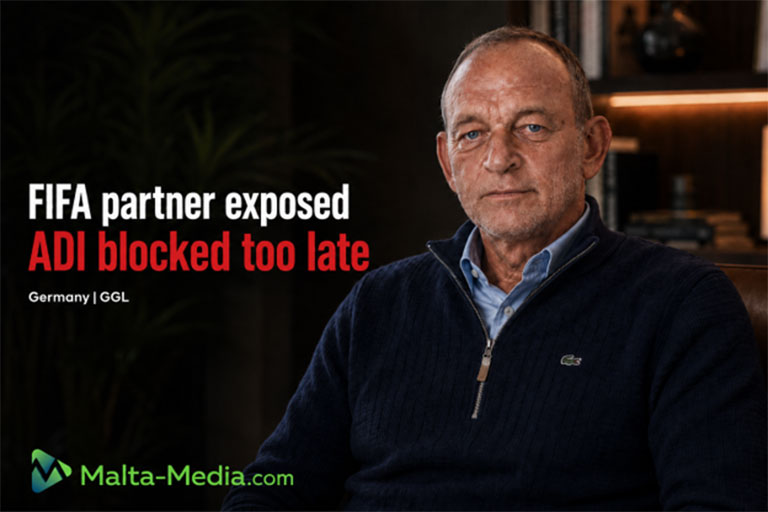
German viewers saw ADI Predictstreet throughout the FIFA World Cup before the country’s gambling regulator stopped them from accessing its platform. The company’s branding appeared on stadium advertising boards, around official interviews and at press conferences while the product remained outside Germany’s licensed gambling market.
The Gemeinsame Glücksspielbehörde der Länder, or GGL, eventually intervened. ADI Predictstreet reacted by restricting access for users located in Germany. By then, however, FIFA had already delivered the sponsorship’s most valuable commercial asset: repeated exposure during the largest football tournament in the world.
The intervention stopped German users from reaching the platform directly. It did not remove the company’s name from the tournament, erase the credibility created by its official FIFA status or undo the introduction of the brand to millions of German viewers. Germany enforced its rules after the advertising had already done much of its work.









FIFA introduced ADI Predictstreet to a global audience
On 2 April 2026, FIFA announced ADI Predictstreet as the first official partner in its new prediction-market category. The agreement was described as a multi-year partnership designed to introduce a new form of interactive fan engagement around the World Cup.
According to FIFA’s partnership announcement, supporters would be able to forecast match results, tournament statistics, player performances and other events using official FIFA data. ADI Predictstreet would also become presenting partner of FIFA’s free-to-play World Cup bracket challenge.
The announcement did not present the arrangement as an ordinary advertising purchase. FIFA described the platform as an innovation that would deepen the relationship between supporters and the tournament. It said the service would be made available globally through mobile and desktop applications and would operate with measures intended to ensure transparency, fairness and participant protection.
That language gave ADI Predictstreet more than visibility. It gave the company institutional credibility. FIFA was effectively telling supporters that this was a partner suitable for introduction on football’s largest commercial stage.
At the time of the announcement, the platform was still due to make its global debut. FIFA was not partnering with an established consumer brand with years of publicly visible operating history. It was helping launch a new company and a relatively unfamiliar product category to an international audience.
The commercial value of that arrangement is difficult to overstate. Official World Cup partner status places a company alongside globally recognised brands and connects it with the authority, reach and emotional power of the tournament. For a new prediction-market platform, that association could achieve in weeks what conventional marketing might take years to build.
German authorisation was missing
ADI Predictstreet operates through Predict Street Limited, a Gibraltar-registered company. Its published terms and conditions identify the business as a betting intermediary regulated by the Gibraltar Licensing Authority under remote gambling licence number 167.
That licence gave the company permission to operate under Gibraltar’s gambling framework. It did not provide automatic permission to offer or advertise gambling in Germany.
Germany applies its own authorisation system. Operators permitted to offer gambling to German consumers are listed on the official whitelist maintained by the competent authorities. A foreign licence, whether issued in Gibraltar, Malta or another jurisdiction, does not replace German permission.
When the GGL examined ADI Predictstreet in June, the company did not hold a German gambling licence. The regulator therefore opened proceedings to determine whether the platform constituted unauthorised public gambling and whether its World Cup exposure involved advertising for an unauthorised offer.
The case was not difficult to discover. ADI Predictstreet was not operating through a hidden domain, a small affiliate website or an obscure social-media account. Its name was being displayed during one of the most watched sporting events on the planet.
Sportschau reported on 17 June that the branding appeared on pitch-side boards and around official interviews and press conferences. The investigation had therefore begun only after German viewers had already encountered the sponsor during the tournament.
The regulator achieved a result, but not before the exposure
The GGL’s intervention produced a concrete outcome. ADI Predictstreet restricted access to its platform from Germany after the authority initiated proceedings.
A notice shown to German visitors stated that access from Germany had been blocked. The GGL said the company had reacted to its supervisory measures and that an offer accessible from Germany was no longer being advertised through the platform.
This was a genuine enforcement result. The regulator identified an unauthorised offer and secured a geographical restriction without needing to wait years for a final court decision. It would be inaccurate to suggest that the GGL simply ignored the case.
The problem is the timing and the limit of what the intervention achieved. Sportschau confirmed the German restriction on 26 June, more than two weeks after the World Cup began on 11 June.
By that point, the company had already been introduced as an official FIFA partner. Its logo had been displayed during matches and attached to official tournament activity. German audiences had received the message that ADI Predictstreet belonged inside the World Cup’s commercial ecosystem.
Blocking the website could stop a German user from registering or trading directly through the normal route. It could not reverse the reputational benefit of the sponsorship.
That distinction is central to the case. The GGL controlled access after the commercial introduction had taken place. FIFA controlled the introduction itself.
The scale of gambling exposure was substantial
Gambling advertising was highly visible during Germany’s early World Cup matches. Research by the University of Hohenheim, commissioned by the RedaktionsNetzwerk Deutschland, found a combined 57 minutes of gambling advertising during Germany’s first two matches on ARD and ZDF.
As Frankfurter Rundschau reported, that figure covered gambling advertising generally. It must not be misrepresented as 57 minutes of ADI Predictstreet advertising alone.
The distinction matters, but it does not weaken the wider finding. German football viewers were exposed to an environment in which gambling-related brands occupied a significant share of the commercial space surrounding the matches. ADI Predictstreet was one visible part of that environment despite not holding German authorisation.
Repeated exposure builds familiarity. A brand seen around the World Cup begins to look established even when the business behind it is new. Official partner status adds another layer because viewers reasonably assume that FIFA has examined the companies it chooses to promote.
Most viewers will not interrupt a match to check whether a sponsor appears on the GGL whitelist. They see an official FIFA partner presented alongside the competition, the players and the tournament’s established commercial brands.
Germany’s regulatory model places considerable responsibility on the consumer to distinguish between legal and unauthorised gambling. The GGL regularly encourages players to consult the whitelist before registering or placing a bet. That advice becomes far less convincing when a company without German permission is introduced through an official World Cup sponsorship.
“Not targeted at Germany” is not a convincing answer
ADI Predictstreet maintained that it had not conducted marketing or advertising specifically aimed at Germany. The company’s reported position was that the World Cup exposure resulted from global sponsorship and international media arrangements rather than a German-targeted campaign.
That defence focuses on the intention behind the advertising rather than the audience it reached. German viewers still saw the branding. The fact that the same advertising was also visible in other countries does not make the German exposure disappear.
Global sports sponsorship is purchased precisely because it crosses borders. FIFA sells access to an international audience that individual national campaigns cannot easily replicate. A sponsor does not pay for global rights while remaining indifferent to the countries where the tournament is watched.
The German market was therefore not incidental in any meaningful commercial sense. Germany is one of football’s largest television markets, with a major national team, a substantial gambling sector and millions of viewers following the tournament.
A campaign does not have to contain a German flag, German-language slogan or locally purchased television spot to create an advertising effect in Germany. Repetition of a company name during German broadcasts can build awareness regardless of where the sponsorship agreement was signed.
The company’s argument may be relevant to the legal assessment of who controlled the advertising and whether the activity was specifically directed at Germany. It does not answer the commercial question. German consumers received the message and FIFA delivered it.
FIFA’s due diligence remains the central issue
ADI Predictstreet was responsible for ensuring that its platform complied with the rules applying to the markets it served. The GGL was responsible for enforcing German gambling law. The more difficult question concerns FIFA’s role as the organisation that selected the sponsor and distributed its branding worldwide.
FIFA publicly promised that the partnership would operate in alignment with regulatory and integrity frameworks. It referred to real-time monitoring of suspicious trading activity, structured information-sharing systems, transparency, fairness and participant protection.
Those commitments dealt primarily with the operation and integrity of the prediction market. They did not explain how FIFA assessed whether the partner could legally operate in every country receiving the advertising.
A global rights holder cannot reasonably assume that a gambling licence from one jurisdiction settles the position everywhere else. Gambling laws remain national. Products permitted in one country may be restricted or prohibited in another.
That makes territorial licensing a basic due-diligence question rather than a secondary legal complication. Before giving a gambling-related company worldwide exposure, FIFA should know where the product can be offered, where it can be advertised and where alternative arrangements may be required.
There is no detailed public explanation showing what jurisdictional assessment was undertaken before the sponsorship began. FIFA’s announcement spoke confidently about global availability but did not set out the markets in which access would be restricted.
The gap between the public promise and the later German intervention is too significant to dismiss as a minor administrative issue. FIFA announced a global product. Germany subsequently determined that the company lacked the national permission required for the German market.
FIFA may have included contractual obligations requiring ADI Predictstreet to comply with local law. Such provisions are common in international commercial agreements. A clause transferring responsibility to the sponsor, however, does not remove FIFA’s own responsibility for the advertising inventory it sells.
German broadcasters did not choose the stadium sponsors
ARD and ZDF carried the World Cup matches to German viewers, but the broadcasters did not independently select the companies displayed on the stadium advertising boards. The advertising formed part of the international match feed and the physical or digitally produced tournament environment supplied by FIFA.
ZDF reportedly stated that the German broadcasters had no influence over advertising boards forming part of the real stadium image. That leaves the broadcasters in the uncomfortable position of transmitting advertising they did not sell and could not easily remove.
The practical problem is not unique to gambling. International sporting events can expose national audiences to sponsors involving alcohol, crypto assets, financial products or other regulated services that face different rules across different countries.
Technology already exists to display different advertising to different broadcast markets. Virtual replacement systems are used in professional sport to customise pitch-side branding for regional audiences. Reporting by taz has highlighted the question of whether similar technical arrangements could have prevented ADI Predictstreet from appearing in Germany.
The public material does not establish which technical options FIFA had available during this World Cup or how quickly the advertising could have been altered. It does establish that the existing system failed to prevent the branding from reaching a market where the sponsor lacked permission.
Responsibility cannot disappear into the broadcast chain. If the broadcaster does not select the sponsor, the sponsor says it did not target Germany and the regulator can only act after transmission begins, the decisive control remains with the organisation selling the global rights.
Prediction markets are not harmless fan engagement
FIFA presented ADI Predictstreet as a new way for supporters to engage with football. The platform allowed users to trade contracts linked to whether particular events would occur, including match results, player performances and tournament outcomes.
The terminology can make prediction markets sound closer to opinion polling or financial forecasting than gambling. Money is still placed at risk on uncertain future events, with successful positions producing a payout and unsuccessful positions producing a loss.
European regulators have become increasingly concerned about such platforms. On 19 June, the GGL joined authorities from eight other European jurisdictions in issuing a joint warning about prediction markets.
The authorities highlighted insufficient player-protection measures, addiction risks, possible market manipulation, fraud and limited transparency around the processing of stakes and payouts. They also warned that prediction markets can fall outside clear regulatory categories even though consumers face risks like those found in conventional gambling.
The warning did not accuse ADI Predictstreet of committing fraud, manipulating markets or failing to pay customers. It described the risks regulators associate with the wider product category.
That caution is especially relevant when a new platform is introduced through sport rather than through a conventional gambling campaign. The presentation as fan engagement can soften the consumer’s perception of the financial risk.
FIFA’s involvement made the product appear connected to the tournament experience. It placed prediction trading alongside brackets, match forecasts and supporter participation, blurring the line between free entertainment and real-money activity.
The launch created further questions
The German licensing issue was followed by reports of operational difficulties involving ADI Predictstreet’s World Cup launch. These included complaints about a ticket promotion, changes to competition arrangements, platform bugs and problems withdrawing money.
The Wall Street Journal reported that more than half a dozen users said they had not received tickets they believed they had won. Further complaints appeared in the company’s official Discord community.
Some users reportedly received tickets too late to use them. Others complained that leaderboard rules or snapshot dates had changed during a promotion designed to reward trading activity, referrals and social-media promotion.
These are user allegations and reported experiences. They are not findings by a regulator or court and do not prove deliberate misconduct by ADI Predictstreet.
The company acknowledged that scaling its promotional activity had caused operational challenges and said parts of its prize-fulfilment process required improvement. It said participants affected by logistical or operational problems would receive the prizes or equivalent value to which they were entitled.
ADI Predictstreet also said changes to its points system had been necessary because some users attempted to exploit the promotion. Users quoted by the Journal denied trying to manipulate it.
The response should be judged fairly. New platforms can experience technical and administrative failures without those failures proving dishonesty. The company accepted that aspects of the launch had not worked and committed to correcting them.
The complaints still strengthen the case for more demanding due diligence by FIFA. The football authority did not merely accept advertising from an established regulated operator. It placed its name and tournament beside a platform that was launching at scale for the first time.
FIFA’s announcement promised participant protection and transparency. A troubled prize campaign and reports of withdrawal difficulties make those assurances more important, not less.
The GGL had already promised intensified World Cup monitoring
Two days before the tournament began, the GGL announced that it would increase supervision around the World Cup. Its 9 June statement specifically referred to the examination of sports-betting advertising, monitoring of online offers, observation of television and streaming broadcasts and analysis of new betting products and markets.
ADI Predictstreet fitted almost every category identified by the regulator. It was a new market product, attached to a major sporting event, advertised through broadcasts and accessible online.
The authority moved with reasonable speed once the case entered public view. The review was reported on 17 June and German access had been restricted by 26 June.
That speed does not resolve the preventive failure. The GGL had announced intensified observation before the competition began, yet the sponsor’s position was addressed only after its branding had already appeared during the tournament.
The authority’s powers are not unlimited. It did not choose the sponsor, negotiate the FIFA agreement or control the international television feed. It could not be expected to rewrite a worldwide commercial contract overnight.
Even so, the case demonstrates that intensified monitoring remains reactive when global sports organisations do not screen sponsors against national gambling rules before the campaign launches.
The regulator can identify a breach, initiate proceedings and secure a block. It cannot recover the attention already delivered to the brand.
Our final thoughts and conclusion
The established facts are uncomfortable enough without exaggeration. FIFA appointed ADI Predictstreet as its first official prediction-market partner and promised global access, integrity safeguards and participant protection. The company held a Gibraltar licence but no German gambling permission.
Its branding was displayed to German viewers during World Cup coverage. The GGL opened proceedings and ADI Predictstreet subsequently restricted German access.
There is no evidence that FIFA deliberately set out to circumvent German gambling law. There is also no regulatory finding that the operational complaints reported by users amounted to fraud or deliberate non-payment.
The failure lies in the order of events. FIFA delivered the advertising first. Germany applied the restriction afterwards.
That sequence gave a new gambling-related brand the credibility of official World Cup partner status before the German licensing position had been resolved. The eventual geographical block stopped access but could not undo the introduction.
FIFA’s public material does not provide a convincing account of how national licensing restrictions were assessed before the partnership went live. The company’s claim that its advertising was not specifically aimed at Germany does not answer why German viewers were repeatedly exposed to it.
The GGL achieved what it could within the immediate case. It stopped ordinary direct access from Germany. Presenting that as a complete regulatory success would still be too comfortable.
The commercial benefit had already arrived. Millions had seen the brand, official FIFA status had created legitimacy and the sponsor had occupied the same visual space as companies that had spent years building regulated market positions.
Licensed German gambling operators are expected to obtain permission before offering products and before advertising them. A global sports organisation should not be allowed to reverse that sequence by advertising first and leaving national authorities to establish legality afterwards.
Germany blocked the door, but FIFA had already brought the company into the room.
FAQs
What is ADI Predictstreet?
ADI Predictstreet is a prediction market platform that allows users to trade on football-related outcomes using official FIFA data.
Why did Germany investigate ADI Predictstreet?
Germany's gambling regulator investigated ADI Predictstreet because it did not hold a German gambling licence while its branding appeared during FIFA World Cup broadcasts.
Who regulates gambling in Germany?
The Gemeinsame Glücksspielbehörde der Länder (GGL) is responsible for regulating and supervising online gambling in Germany.
Did ADI Predictstreet have a gambling licence?
Yes. ADI Predictstreet operated under a Gibraltar gambling licence, but this licence did not authorize it to offer services in Germany.
What action did the GGL take?
The GGL initiated proceedings that resulted in ADI Predictstreet restricting access to its platform for users located in Germany.
Why is FIFA's partnership with ADI Predictstreet controversial?
The controversy stems from FIFA promoting the platform globally even though it lacked authorization to operate in one of the tournament's largest television markets.
What are prediction markets?
Prediction markets allow users to trade contracts based on the likelihood of future events, such as football match results or player performances, often involving real-money participation.
Did regulators accuse ADI Predictstreet of fraud?
No. Regulators highlighted concerns about prediction markets generally, but there has been no regulatory finding that ADI Predictstreet committed fraud.
Can international gambling licences be used in Germany?
No. Operators must obtain authorization under Germany's own gambling framework regardless of licences issued by other jurisdictions.
What is the main issue highlighted by this case?
The case raises questions about sponsor due diligence, national gambling compliance and whether global sporting organizations should verify local licensing before promoting gambling-related partners.

Michael Schmitt
Michael Schmitt is the founder of TRIDER.UK and Editor of Malta Media. He writes about iGaming, gambling regulation, corporate structures, financial services and market integrity, combining investigative journalism with nearly three decades of experience in corporate services and international business.
Related Posts


South Africa’s online gambling activity rises 390%, SRI report finds
October 21, 2026


SBC and VNLOK form strategic partnership for 2027 Amsterdam summit
October 19, 2026


