


Cubeia upgrades Poker client with PixiJS engine for faster table loading
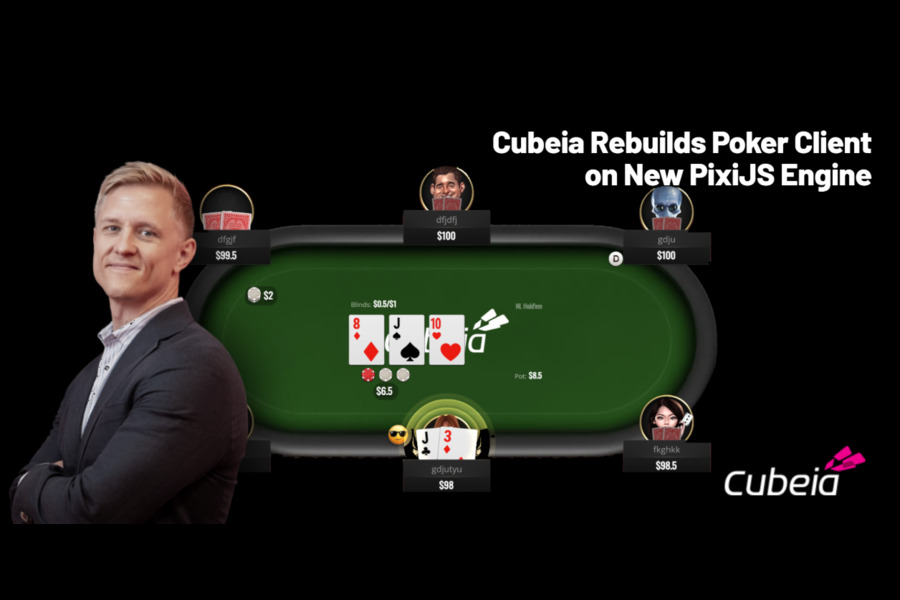
Cubeia has announced a substantial upgrade to its Cubeia Poker client, moving the front-end experience onto the PixiJS rendering engine. The company said the refreshed client will be available to operators from 10 September, marking another stage in the development of its long-running poker technology.
The release is focused on more than a change in appearance. According to Cubeia, the client has been rebuilt around a new technical foundation intended to support richer graphics, smoother animation and a more consistent flow of game actions.
Cubeia has operated in the online gaming software sector since 2007 and presents its poker offering as a production-proven system with the core platform running since 2009. The company’s current poker product includes the player client as well as game-server, back-office and other supporting functionality.










The latest update therefore represents a meaningful front-end redevelopment of an established product rather than the launch of an entirely new poker platform.
PixiJS becomes the new rendering layer
A central part of the release is the adoption of PixiJS. The open-source HTML5 creation engine is designed to deliver hardware-accelerated graphics through technologies including WebGL and WebGPU, making it suitable for interactive applications where visual performance is important.
For Cubeia, the move provides a modern rendering layer for its poker client. The company said this creates a stronger base for graphics and animation while making future client development easier to manage.
This distinction is important in online poker, where the interface needs to communicate a considerable amount of information without interrupting the pace of play. Cards, player status indicators, action sequences, timers and outcome animations must work together in a way that feels immediate and understandable.
Cubeia’s existing product is already built around an HTML5 and JavaScript client that can be accessed through a browser across different devices. The new rendering architecture extends that browser-first approach while placing greater emphasis on visual performance and animation.
Redesigned interface targets clarity and usability
The upgraded Cubeia Poker client includes redesigned cards, player badges and progress bars. The company has also reworked dealing and winning animations as part of the broader interface rebuild.
These changes may appear primarily visual but can also influence how players understand activity at the table. In a fast-moving poker environment, interface elements need to communicate changes quickly and consistently.
The updated player badges and progress indicators are intended to make information easier to interpret at a glance. Meanwhile, revised animations can provide clearer feedback when cards are dealt or a winning outcome is established.
The objective, based on Cubeia’s description of the release, is to create a more cohesive experience rather than simply adding decorative effects.
New all-in information adds more context
Another feature highlighted by Cubeia is the addition of in-hand information showing the number of outs available during all-in situations.
In poker, outs generally refer to cards that could improve a player’s hand sufficiently to produce a winning result. Displaying that information directly within the client can give players more context during a pivotal point in a hand.
The feature also reflects the wider direction of the update. Rather than limiting the redevelopment to graphical improvements, Cubeia has incorporated additional information directly into the playing experience.
For operators, features of this type can also help create a more modern poker interface while keeping important game information in one location.
Timeline management has been rebuilt
Cubeia said it has also rebuilt the client’s timeline management system. This technical component is responsible for coordinating gameplay actions and animations in a predictable sequence.
For a live poker table, timing is fundamental. An action needs to appear at the appropriate point and visual feedback should correspond with what is happening in the game state.
A revised timeline system can therefore help prevent animations and gameplay events from appearing out of order. Cubeia said the rebuilding of this system is part of its broader effort to make the client feel faster, smoother and easier to follow.
The company has described the change as part of a deeper reconstruction of the client’s foundations, suggesting that the release is intended to support future development as well as immediate improvements for users.
Cubeia reports faster table loading
Performance is another prominent element of the release. Cubeia said the upgraded client delivers “20% faster table load times.”
The company has not provided a broader set of testing conditions in the material supplied for the announcement, so the stated figure is best understood as Cubeia’s own reported performance improvement.
Even so, faster table loading can be significant for online poker operators. Players typically expect games to become available with minimal delay, particularly when moving between tables or entering a new session.
Reducing loading time can also help improve the perceived responsiveness of a poker product. In a competitive online environment, small delays can affect how a platform feels even when the underlying game system is operating normally.
A browser-based product for multiple devices
Cubeia has continued to position its poker client as an HTML5-based experience that works through a browser rather than requiring a dedicated application.
That approach can simplify access for players using different devices. Cubeia states that its poker client is responsive and adapts its layout to different screen sizes.
The updated rendering layer is being introduced within that broader browser-based framework. For operators, this means the technology can continue to support a web environment while providing a more advanced graphics foundation.
It also gives the client greater scope for visual customization. Cubeia says its poker interface can be skinned using standard CSS, allowing operators to align the presentation more closely with their own brands.
Operator customization remains central
Customization has long been part of Cubeia Poker’s positioning. The company provides operators with tools intended to adapt the client and broader poker offering to individual brands.
The new release keeps that flexibility in focus. A redesigned interface can have greater value for operators when visual components remain configurable rather than locked to a fixed presentation.
Branding is particularly important for B2B gaming technology because operators may need their poker product to fit alongside casino and sportsbook experiences already offered under the same identity.
Cubeia’s broader poker solution also supports multiple game formats and tournament structures, giving operators scope to shape the product around their own market requirements.
Hybrid poker network adds a broader commercial proposition
Alongside the software update, Cubeia continues to promote its hybrid poker network for operators seeking shared liquidity.
The company says operators can join the network without a fee and gain access to liquidity from the outset. Cubeia also states that it funds a $25,000-per-month promotional campaign connected with the network.
These are commercial claims made by Cubeia and should be considered within the specific terms and conditions offered to participating operators. The wider proposition is nevertheless relevant to the client upgrade because technology and network liquidity are closely connected in online poker.
A strong client interface can improve the front-end experience but operators also need a viable player ecosystem behind it. Cubeia’s hybrid network model is designed to address that requirement through a multi-operator environment.
Simon Isbäck outlines the longer-term strategy
Simon Isbäck, Cubeia’s Head of Poker, described the release as a structural improvement rather than a cosmetic exercise.
“This is much more than a visual refresh. We have rebuilt the foundations of the poker client and that shows up in how the game feels to play — faster, smoother and easier to follow. It also gives us a base we can keep building on.”
The statement highlights the strategic purpose behind the redevelopment. The value of a modern client is not limited to what players see on launch day. A stronger technical foundation can also make it easier for a supplier to introduce additional functions and visual improvements over time.
Cubeia has already described its broader Poker 2.0 platform as an effort to improve scalability and feature development. The latest client work fits into that wider technology roadmap.
What the upgrade means for operators
For operators evaluating poker technology, the significance of the release extends across several areas.
The redesigned client provides a refreshed player interface while the PixiJS-based rendering architecture is intended to improve the handling of graphics and animation. The reported table-loading improvement focuses on responsiveness while the new all-in information adds another layer of game context.
The HTML5 model also remains important. Operators can continue offering browser-based poker without making an app the central access point, while CSS-based skinning gives them room to adapt the presentation to their own brands.
Perhaps most importantly, Cubeia is presenting the release as infrastructure for continued development. That can matter to operators that want a poker solution capable of evolving alongside changing expectations around performance, usability and visual quality.
A broader step in Cubeia’s poker development
Cubeia’s latest client release arrives after years of development in the online poker sector. The company’s core poker system has been in production since 2009 and its more recent Poker 2.0 work has focused on creating a more modern server and platform foundation.
The PixiJS-powered client upgrade addresses the player-facing side of that modernization effort. By combining a rebuilt interface with revised animation systems, new information features and reported loading improvements, Cubeia is seeking to update how its established poker product performs and presents itself.
The release also suggests that the company sees the poker client as an active area of product development rather than a finished component. That approach could give operators a stronger basis for future updates without requiring the underlying product to be replaced.
Conclusion
Cubeia’s upgraded Poker client represents a substantial redevelopment of the technology players see at the table. The shift to a PixiJS rendering engine, alongside redesigned interface elements, updated animations, additional in-hand information and rebuilt timeline management, gives the product a more contemporary technical foundation.
The reported 20% improvement in table loading is another important part of the announcement, particularly for operators focused on responsive browser-based experiences. Cubeia’s continued emphasis on HTML5 access and customizable presentation also keeps the platform aligned with the practical needs of B2B gaming businesses.
Beyond the immediate interface changes, the most significant point may be the longer-term direction. Cubeia is positioning the release as a foundation for continued development, building on a poker system that has been in production for many years. With its client technology, operator customization and hybrid network proposition developing in parallel, the company is presenting the upgrade as another step in the ongoing evolution of its poker offering.
FAQs
What is Cubeia Poker?
Cubeia Poker is an online poker software solution developed by Cubeia for real money gaming. The company describes it as a production-proven system that has been running since 2009.
What has Cubeia changed in its Poker client?
Cubeia has rebuilt the client around the PixiJS rendering engine and introduced redesigned interface elements, updated animations, new in-hand information and rebuilt timeline management.
What is PixiJS used for in the new Cubeia Poker client?
PixiJS provides the rendering foundation used to handle graphics and interactive visual content in the upgraded client. It is designed to support high-performance web-based rendering.
When will the upgraded Cubeia Poker client be available?
Cubeia said the upgraded client will be available to operators from 10 September.
What is the reported performance improvement?
Cubeia said the updated client provides “20% faster table load times.” The figure is based on the company’s own stated performance claim.
Does Cubeia Poker work through a browser?
Yes. Cubeia describes its poker client as an HTML5 and JavaScript-based solution that can run through a browser across different devices.
Can operators customize the Cubeia Poker interface?
Cubeia says operators can skin the client using standard CSS, allowing visual elements to be adapted to the operator’s brand.
Does the update add new poker information?
Yes. Cubeia said the client now displays the number of available outs during all-in situations, providing additional information within the hand.
What is Cubeia’s hybrid poker network?
Cubeia’s hybrid poker network is a multi-operator environment designed to provide participating operators with shared liquidity. Cubeia says operators can join without a network fee and receive access to liquidity from the outset.
Who is Simon Isbäck?
Simon Isbäck is Cubeia’s Head of Poker and has been publicly associated with the company’s poker product development and Poker 2.0 initiatives.

Anna Amstill
I am an avid Blogger and Writer with more than 6 years of experience with Content Writing. An Online Marketing expert specializing in Blog writing, Article writing, Website content, SEO specific Keyword content and much more. Education B.A. - business management, York University, Canada, Graduated 2016.
Related Posts



Cubeia launches Roulette as its first classic table game for Originals
September 15, 2026
Reelsoft launches Vision Engine to simplify casino game development
September 10, 2026

Galaxsys launches Gift Box for more engaging in-game reward experiences
September 7, 2026


Blurify appoints Łukasz Wala as product lead
August 12, 2026