The Hidden Weaknesses in Source of Funds Verification
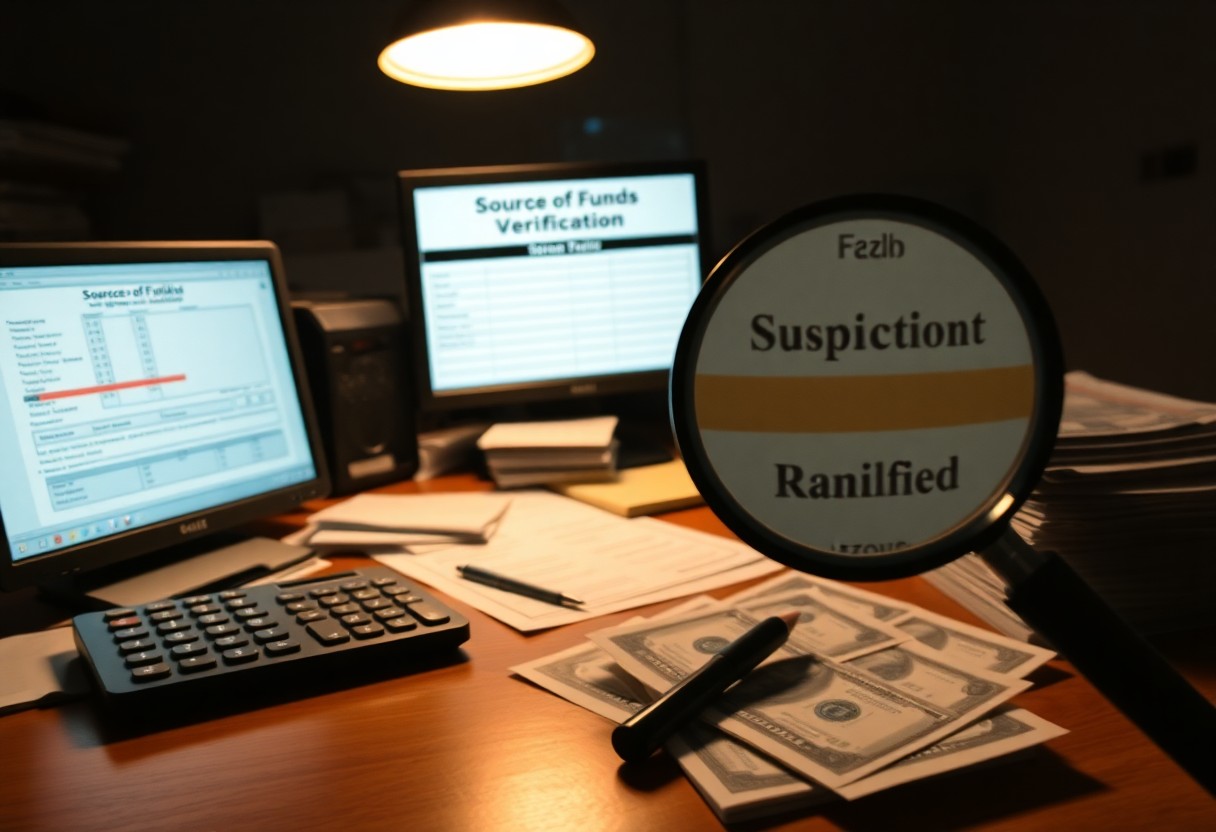
Just as financial institutions strive to uphold integrity and compliance, the process of source of funds verification reveals several overlooked vulnerabilities. These weaknesses can expose organizations to potential risks, including fraud and regulatory non-compliance. Understanding the implications of these shortcomings is imperative for enhancing methodologies and safeguarding against financial crime. This blog post examines into the intricacies of source of funds verification, highlighting key areas where existing practices may fall short and offering insights into more robust solutions.
Key Takeaways:
- Inconsistent documentation can lead to gaps in assessing the legitimacy of funds.
- Automated systems may overlook nuanced patterns of illicit activity in sources of funds.
- Overreliance on traditional verification methods can miss emerging financial risk indicators.
Understanding Source of Funds Verification
Definition and Importance
Source of funds (SoF) verification is the process of assessing the origin of money used in transactions to prevent financial crimes such as money laundering and fraud. This practice is vital for financial institutions and businesses to ensure compliance with regulations and to foster trust in their operations. Without adequate verification, organizations may inadvertently facilitate unlawful activities, resulting in significant legal and financial repercussions.
Regulatory Frameworks
Regulatory frameworks surrounding source of funds verification vary by jurisdiction but generally require institutions to implement comprehensive due diligence procedures. These guidelines, often set by bodies like the Financial Action Task Force (FATF), emphasize risk-based approaches and necessitate regular updates to compliance protocols to adapt to evolving financial crimes.








The United States, for instance, mandates compliance with the Bank Secrecy Act (BSA), which requires financial institutions to establish Anti-Money Laundering (AML) programs that include SoF verification. Meanwhile, the European Union employs the Fourth Anti-Money Laundering Directive, enhancing the scrutiny of financial transactions and requiring detailed documentation of SoF. Institutions must navigate these diverse regulations, ensuring that their verification processes align with both local and international standards to mitigate legal risks.
Common Practices in Verification
Common practices in source of funds verification involve collecting and analyzing documentation that elucidates the origin of funds. This may include bank statements, employment records, tax returns, or sale contracts to ensure transparency and legitimacy.
In practice, an institution may require a client to provide a series of documents demonstrating the flow of funds from their account to the intended transaction. For example, if someone deposits a large sum from a business sale, the institution would scrutinize sale agreements, payment remittances, and corresponding bank statements. Such thorough checks are necessary to construct a clear financial narrative that substantiates the client's claims and mitigates the risk of engaging with illicit sources.
Key Challenges in Current Verification Processes
Limited Access to Financial Data
Access to comprehensive financial data is frequently restricted, hindering the verification process. Institutions often face barriers when attempting to obtain necessary information from third-party services or clients themselves, resulting in incomplete assessments of a client's financial history and the legitimacy of their funds. This limitation can leave institutions vulnerable to financial crime and regulatory penalties.
Inadequate Identification of Beneficial Owners
Many organizations struggle to accurately identify beneficial owners, which complicates compliance with anti-money laundering regulations. This lack of transparency can lead to exposure to high-risk clients, increasing the likelihood of financial fraud within the system.
Inadequate identification of beneficial owners often stems from insufficient data sharing between financial institutions and regulatory bodies. As a result, entities can operate under opaque ownership structures, making it challenging to ascertain true ownership and control. For instance, a shell company may obscure the identities of individuals involved, allowing illicit funds to circulate unchecked. Strengthening regulations around beneficial ownership disclosure is vital in mitigating these risks and enhancing the integrity of financial systems.
Challenges with International Transactions
The complexity of international transactions presents unique verification challenges. Different jurisdictions have varying compliance requirements, leading to inconsistencies in how source of funds are assessed and verified. This gap can expose institutions to significant risks.
International transactions often involve multiple parties across different countries with distinct regulatory frameworks. For instance, a transaction from a high-risk jurisdiction may not undergo the same scrutiny as a domestic transfer, placing institutions at risk of inadvertently supporting money laundering or terrorist financing. To counter this, enhanced cross-border collaboration and standardized verification protocols are vital to protect against potential threats in global finance.
Evasive Clients and Misrepresentation
Clients may be evasive or provide misleading information during the verification process, complicating the assessment of their true financial standing. This behavior can stem from the clients' desire to obscure illicit activity or simply from lack of familiarity with regulatory expectations.
Evasive clients often present a significant hurdle, as they may avoid answering direct questions or supplying requested documentation, leading to incomplete or inaccurate profiles. Cases of misrepresentation typically arise when individuals fabricate their financial backgrounds, using false documents or aliases. For example, a client might present altered bank statements to disguise a history of financial misconduct. Financial institutions must therefore implement rigorous verification measures and ongoing monitoring to counteract these tactics effectively.
Technology's Role in Verification
Use of Artificial Intelligence
Artificial intelligence (AI) significantly enhances source of funds verification by automating data analysis and identifying patterns that may indicate fraudulent activities. Machine learning algorithms can process vast amounts of data in real-time, increasing both the speed and accuracy of assessments while continuously improving their performance as they learn from new information.
Blockchain and Its Implications
Blockchain technology introduces transparency and immutability to financial transactions, offering a decentralized verification process that enhances trust among stakeholders. By providing a public ledger, it enables institutions to trace the source of funds more securely, minimizing the risk of fraud.
With blockchain, each transaction is recorded in a tamper-proof ledger visible to all authorized parties. This transparency can help financial institutions comply with regulatory requirements by providing verifiable proof of funds' origins. Moreover, integrating smart contracts can automate compliance checks and streamline the verification process, reducing operational costs and time spent on manual reviews.
Data Privacy Concerns
The increased use of advanced technologies raises significant data privacy concerns, as handling sensitive financial information can lead to unauthorized access and data breaches. Ensuring compliance with regulations like GDPR and CCPA becomes necessary to protect individuals' privacy and uphold institutional integrity.
As organizations adopt digital verification methods, the collection and storage of personal data intensify scrutiny regarding data handling practices. Balancing the need for thorough verification against individuals' rights can be complex, requiring robust policies and encryption measures to secure data while maintaining user trust and compliance with privacy laws.
Cybersecurity Risks
As verification processes become more reliant on technology, cybersecurity risks also escalate, exposing financial institutions to potential breaches and fraud. Cybercriminals are continuously evolving their tactics, making it crucial for organizations to stay ahead of vulnerabilities.
The rise in cyber threats necessitates a multi-layered security approach, including regular system audits, staff training, and advanced threat detection tools. Financial institutions must invest significantly in cybersecurity measures to safeguard sensitive information and maintain customer confidence in their verification processes, as a single breach can lead to devastating financial and reputational losses.
Human Factors in Verification
Human elements play a significant role in source of funds verification, exposing potential weaknesses that may not be evident through technology alone. The following points highlight critical human factors:
- Training and knowledge gaps among staff can lead to inconsistencies in verification processes.
- Cognitive biases influence decision-making and may affect how verification data is interpreted.
- Pressure from management or internal stakeholders may compromise ethical standards.
- Strong compliance culture can mitigate errors and enhance the verification process.
Training and Knowledge Gaps
Inadequate training for personnel involved in source of funds verification often results in misinterpretation of regulations and policies. Many employees may lack the necessary knowledge to identify suspicious activities, leading to significant compliance risks.
Cognitive Bias in Decision Making
Cognitive biases can skew a verifier's judgment, leading to decisions based on intuition rather than objective analysis. For instance, confirmation bias may cause individuals to overlook discrepancies when they align with preconceived notions of a client's legitimacy.
Examples include situations where verifiers favor information that supports their initial assumptions, disregarding contradictory evidence. This tendency can result in false confidence in a client's credibility, thereby increasing the risk of enabling illicit financial activities undetected. Addressing cognitive biases is vital for improved decision-making processes in source of funds verification.
Pressure and Ethical Dilemmas
Staff members often face significant pressure to approve transactions quickly, which can lead to ethical dilemmas. High-performance expectations may drive employees to bypass established protocols to meet deadlines.
Such pressure can foster a culture where compliance takes a backseat to operational efficiency, potentially allowing unethical practices to proliferate. Employees may rationalize ignoring red flags, knowing that their performance metrics prioritize speed over thoroughness. This environment underscores the need for robust support systems that prioritize ethical decision-making in verification processes.
The Role of Compliance Culture
A strong compliance culture encourages employees to adhere to regulations and promote ethical behavior in verification activities. This culture cultivates awareness of the importance of proper source of funds verification, emphasizing responsibility and integrity.
When organizations prioritize compliance, they empower employees to voice concerns and report suspicious activities without fear of repercussion. Establishing this culture requires ongoing training, leadership commitment, and open communication channels. By fostering a robust compliance mindset, organizations can reduce the risk of human errors and ultimately enhance the effectiveness of their verification processes. Thou shalt recognize that investing in culture is as vital as technology in mitigating human factors in source of funds verification.
Case Studies: Lessons Learned
- Case Study 1: The Danske Bank scandal – Over €200 billion in suspicious transactions between 2007 and 2015, highlighting inadequate verification processes.
- Case Study 2: Deutsche Bank's $10 billion Russian money laundering scheme – Revealed failures in source of funds checks, resulting in hefty fines.
- Case Study 3: The Commonwealth Bank of Australia – $700 million in penalties for failing to comply with anti-money laundering laws.
- Case Study 4: HSBC's 2012 settlement of $1.9 billion for lax controls, showcasing vulnerabilities in fund source verification.
High-Profile Compliance Failures
High-profile compliance failures, such as the Danske Bank scandal, illuminate serious gaps in source of funds verification processes, leading to massive financial discrepancies and regulatory penalties. These cases often stemmed from insufficient due diligence and inadequate technology frameworks, showcasing the dire consequences of poor verification practices for major financial institutions.
Successful Implementation Strategies
Institutions that successfully implemented robust source of funds verification strategies often combined advanced technology with comprehensive training programs, thereby significantly reducing compliance risk. Leveraging AI for data analysis while ensuring employees are well-versed in regulatory requirements has proven effective in enhancing verification processes.
Effective implementation strategies typically include real-time monitoring of transactions, extensive training on compliance requirements, and fostering a culture of accountability within organizations. By integrating technology and focusing on human factors, companies can enhance due diligence and minimize risks associated with source of funds verification.
Comparative Analysis of Different Sectors
The effectiveness of source of funds verification varies significantly across different sectors, impacting overall compliance. The financial services industry, for instance, typically employs more sophisticated verification mechanisms compared to sectors like real estate or gaming, where regulations may be less stringent.
| Sector | Verification Mechanisms |
| Financial Services | Advanced AI, continuous monitoring |
| Real Estate | Basic KYC requirements, inconsistent practices |
| Gaming Industry | Variable regulations, reliance on self-reporting |
Sectors differ widely in their approach to source of funds verification, with financial services setting a high bar for compliance. This disparity often leads to enhanced scrutiny on certain sectors, driving changes in regulatory frameworks to hold all industries accountable for adequate verification practices.
Future of Source of Funds Verification
Emerging Trends and Innovations
Advancements in artificial intelligence and machine learning are reshaping source of funds verification, enabling enhanced risk assessment and fraud detection capabilities. Innovative technologies like blockchain are improving transparency, allowing for real-time tracking of financial transactions. These developments foster a more efficient verification process, reducing manual intervention and increasing accuracy in identifying suspicious activity.
Potential Regulatory Changes
Regulatory bodies are increasingly focusing on enhancing source of funds verification requirements, aiming to mitigate risks associated with money laundering and terrorism financing. Upcoming legislation may dictate stricter compliance measures, necessitating thorough audits of fund origins and enhanced reporting protocols.
As regulators adapt to an evolving financial landscape, potential changes could include the imposition of standardized verification practices across industries, setting minimum thresholds for documentation and verification procedures. Organizations may face heightened penalties for non-compliance, prompting them to invest in advanced verification technologies and compliance frameworks to meet new mandates.
The Impact of Globalization
The acceleration of globalization compounds the challenges of verifying sources of funds as cross-border transactions increase. With varying regulatory environments and financial systems, organizations must navigate a complex web of compliance demands while ensuring consistent verification standards.
This interconnectedness not only elevates the risks of illicit financial activities but also requires businesses to maintain global partnerships and share data effectively. Companies must adopt adaptive verification strategies that consider international regulations, currency fluctuations, and regional compliance practices to safeguard their operations while addressing the demands of a global market.
Integrating ESG Considerations
Incorporating Environmental, Social, and Governance (ESG) factors into source of funds verification is becoming increasingly significant. Stakeholders expect organizations to invest responsibly, prompting a shift toward evaluations of fund origins that align with ESG principles.
As investors seek greater accountability regarding the social and environmental impacts of their investments, firms must develop frameworks that evaluate the compliance of fund sources with ESG standards. This not only aids in risk management but also enhances reputation and stakeholder trust, positioning organizations favorably in a market that increasingly values sustainable practices. Balancing financial due diligence with ESG considerations is crucial for forward-thinking businesses aiming to thrive in a responsible investment ecosystem.
To wrap up
With these considerations, it becomes evident that source of funds verification, while important, is not without its hidden weaknesses. Inconsistencies in documentation, reliance on outdated databases, and limited regulatory oversight can undermine the effectiveness of these processes. Moreover, the potential for identity fraud and circumvention by sophisticated methods highlights the need for enhanced measures and technology integration. Addressing these vulnerabilities is imperative to strengthen financial integrity and ensure compliance in an increasingly complex global landscape.
FAQ
Q: What are the common weaknesses in source of funds verification?
A: Common weaknesses include inadequate documentation, lack of proper tracking of fund origins, reliance on automated systems without human oversight, insufficient due diligence in high-risk jurisdictions, and failure to recognize red flags during the verification process.
Q: How can insufficient documentation impact source of funds verification?
A: Insufficient documentation can lead to an inability to trace the origins of funds, resulting in compliance risks, potential legal issues, and exposure to financial crime without effective detection measures.
Q: Why is reliance on automated systems a potential weakness?
A: Reliance on automated systems can create blind spots, as these systems may not adapt to complex scenarios, overlook contextual nuances, and can generate false positives or negatives, thereby misguiding the verification process.
Q: What role does due diligence play in identifying weaknesses?
A: Due diligence is vital in uncovering hidden risks and potential sources of illicit funds; neglecting comprehensive due diligence can exacerbate verification weaknesses, leading to incomplete assessments.
Q: How can firms mitigate the risks associated with source of funds verification?
A: Firms can mitigate risks by implementing rigorous documentation processes, enhancing employee training on red flags, utilizing a combination of automated and manual checks, and continuously updating their compliance frameworks to adapt to emerging threats.

Ash
I like to keep it short. I am a writer who also knows how to rhyme his lines. I can write articles, edit them and also carve out some poetic lines from my mind. Education B.A. - English, Delhi University, India, Graduated 2017.
Related Posts

mkodo’s GeoLocs launches Fraud Shield to strengthen player risk controls
September 16, 2026

International Alliance strengthens cooperation on telecom and cyber fraud
September 11, 2026



UK gambling websites face privacy scrutiny over cookie consent practices
September 7, 2026

Inpay faces Danish restriction on new online gambling clients over AML
September 4, 2026