

















Belarus iGaming demand jumps as Lukashenko targets Maxline advertising
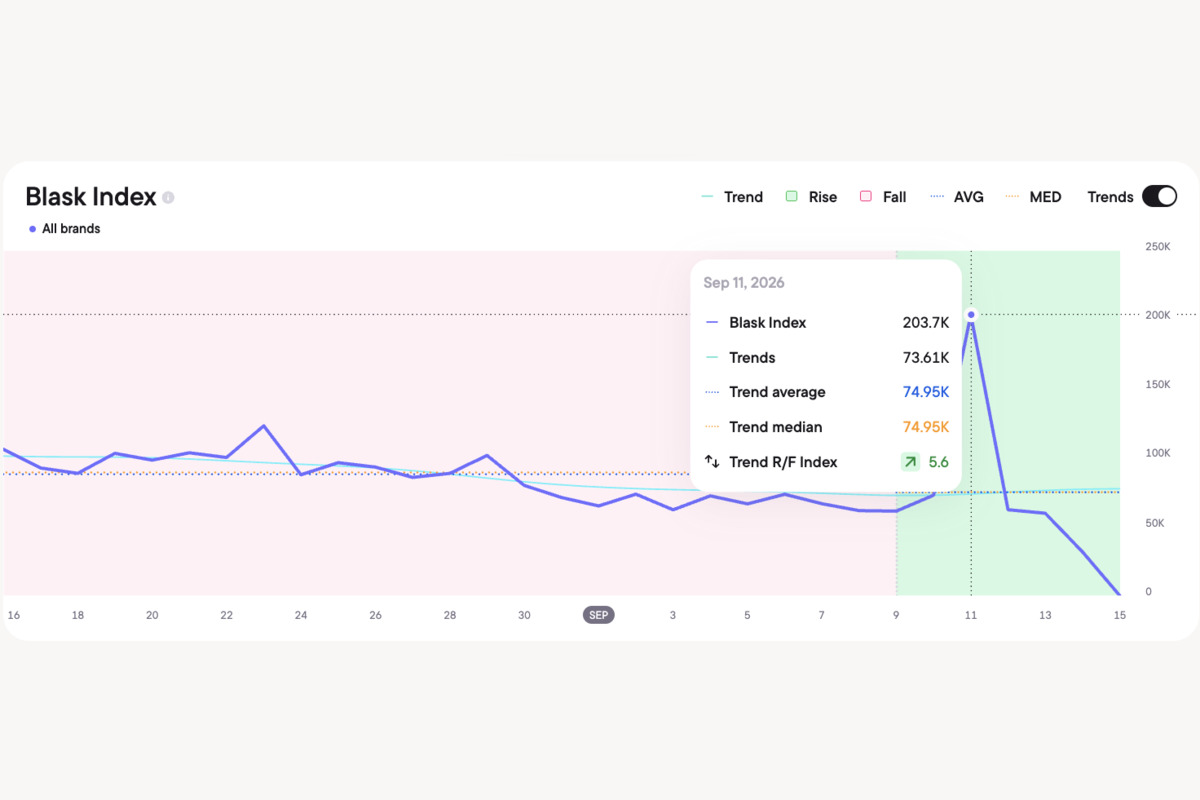
Belarus has entered a more closely watched phase for iGaming advertising after President Aleksandr Lukashenko publicly addressed the visibility of gambling promotions and referred to the country as having “turned into a casino.” The comments coincided with a notable increase in gambling-related search interest recorded by Blask, while advertising practices involving local operator Maxline became a focal point in the wider government discussion.
The development is significant because the latest movement in Belarus appears to combine two separate factors: heightened political attention to gambling advertising and unusually strong public interest around a major sporting event involving Belarusian tennis star Aryna Sabalenka.
Blask reported a 64.7% week-on-week increase for Belarus during the September 7 to 13 reporting period. Its weekly report linked the rise to a government campaign concerning gambling advertising and noted that Maxline's highly recognizable goose imagery had attracted particular attention.







What happened in Belarus
The advertising issue moved into the national spotlight during a government licensing meeting in Minsk on September 10, according to material published by Blask. The company's account states that Lukashenko referred to intrusive advertising connected with Maxline and questioned the extent to which betting and casino-related creative had become visible across the country.
Blask also reported that officials were instructed to involve relevant specialists and examine the issue. At the same time, the company's weekly market report said advertising banners in Minsk were being removed while gambling-related banners and branded vehicles could still be seen in regional areas.
This distinction is important from a legal and factual perspective. The available reporting describes a government review and removal activity rather than establishing that Maxline or any other operator had been found guilty of a legal violation. The discussion was centered on the visibility and appropriateness of gambling advertising rather than a confirmed finding of misconduct.
Maxline maintains an active presence in Belarus' betting and gambling sector. Its official website identifies the operator as a licensed gambling business and provides information concerning betting and gaming services under Belarusian regulation.
iGaming interest rises alongside political attention
The market reaction was visible in search data. Blask's weekly report recorded Belarus among the markets showing the strongest increases during the period, with iGaming demand up 64.7% week on week.
The original market data cited for the story also indicate that daily search demand reached approximately 203.7K on September 11 compared with a typical range of about 60,000 to 80,000. That figure should be treated as a point-in-time reading rather than evidence of a permanent change in consumer behavior because the available reporting does not establish how much of the spike came from individual brands or from particular search queries.
Blask describes its Blask Index as an AI-powered market intelligence measure based on large-scale search data. The company says the index is designed to provide real-time insight into market size and brand performance.
For that reason, a sudden rise in the index can reflect increased attention to a market without necessarily indicating a comparable increase in wagering activity, deposits or revenue. Search behavior can be influenced by news, sports events, regulatory announcements and curiosity about a particular brand.
The role of Aryna Sabalenka
Another major event occurred at almost the same time. Aryna Sabalenka reached the 2026 US Open women's singles final after defeating Jessica Pegula 7-5, 6-2 in the semifinal. The official US Open record confirms that the semifinal took place on September 10 in New York.
For audiences following events from Belarus, the match result was reported on September 11 local time. Sabalenka's progress was particularly significant because she entered the tournament as the two-time defending champion and was seeking a third consecutive US Open title.
That creates an important interpretive issue for the search-demand spike. A major international sporting event involving a leading Belarusian athlete can naturally increase interest in betting-related searches. At the same time, the presidential comments concerning gambling advertising generated substantial public attention.
Available market-level data do not provide enough information to determine precisely how much of the spike came from Sabalenka's semifinal, how much came from the political discussion or how much was driven by other concurrent factors.
The US Open final adds further context
Sabalenka's tournament ultimately ended in the final on September 12. Elena Rybakina defeated her 6-4, 5-7, 6-2 to win the US Open women's singles title. The official tournament record also confirms that Rybakina rose to world No. 1 following the result.
The timing matters because the sharp increase described in the source material was associated with September 11 rather than the date of the final.
That makes the semifinal and the surrounding news cycle particularly relevant when considering possible drivers of search activity. It would nevertheless be inappropriate to assign the entire increase to one event without brand-level or query-level evidence.
Belarus maintains a regulated gambling framework
The wider development also comes against a changing regulatory background in Belarus. The country's Ministry of Taxes and Duties publishes dedicated information covering licensing and other aspects of gambling activity. Its official materials state that significant changes to the gambling framework took effect on March 11, 2026 under Presidential Decree No. 226 and related implementing measures.
The ministry has also published information concerning participation in gambling and the obligations of gambling operators. Its materials address identity verification, account requirements and payments while emphasizing that participation remains subject to Belarusian legal requirements.
The existence of an established licensing regime means that the advertising discussion should be viewed separately from the question of whether operators are permitted to provide gambling services. A government review of advertising visibility does not by itself establish that the underlying licensed activities are unlawful.
Why advertising has become a market issue
Advertising is particularly important in iGaming because visibility can influence brand recognition and user acquisition. Highly distinctive symbols or repeated outdoor exposure can make an operator more recognizable even among consumers who are not actively searching for betting services.
In Belarus, the goose associated with Maxline has become part of the public discussion because of its visibility in advertising, according to Blask's reporting. That does not by itself establish any wrongdoing by the operator. Rather, it illustrates how a recognizable advertising device can become the subject of policy debate when authorities begin examining the scale of gambling promotion in public spaces.
For operators, the development highlights the importance of monitoring not only formal licensing conditions but also advertising standards, placement rules and broader government expectations. Regulatory scrutiny can emerge around public visibility even where the underlying business model remains licensed.
Search demand does not equal gambling revenue
The Belarus example also demonstrates why iGaming market data should be interpreted carefully. Search-based indicators can provide an early view of consumer attention but do not directly measure financial performance.
A search spike may result from consumers looking up an operator, a sporting event, a public statement or even a controversial news story. Those users may never place a bet or open an account.
Blask's own description of the index makes clear that it is focused on search-based market intelligence. This makes the tool useful for identifying shifts in attention while leaving actual commercial outcomes to other measures such as player activity, turnover and revenue.
What the Belarus figures may indicate
The 64.7% weekly increase is more clearly established in Blask's published reporting than any interpretation of the precise daily spike. The weekly result shows that Belarus experienced an unusually active period for iGaming-related search interest, while the timing of the presidential remarks and Sabalenka's US Open run provides several plausible explanations for the movement.
There is no public evidence in the material reviewed that supports attributing a specific percentage of the demand increase to Maxline, to the government's advertising campaign or to tennis betting.
That distinction matters for responsible reporting. Correlation between events and search behavior can identify possible market drivers, but it cannot establish causation without more detailed data.
Conclusion
Belarus' latest iGaming demand movement sits at the intersection of regulation, advertising visibility and sports-driven public attention. Lukashenko's comments placed gambling promotion in the national spotlight while Blask's data showed that interest in the country's iGaming market increased sharply during the same reporting period.
Maxline became prominent in the discussion because of its recognizable advertising, but the available evidence does not establish any finding of unlawful conduct by the operator. The more defensible conclusion is that Belarusian authorities are examining the scale and presentation of gambling advertising while the market is simultaneously experiencing elevated public interest.
The timing of Aryna Sabalenka's US Open run adds another credible factor to the demand pattern. Her semifinal victory generated major attention among Belarusian audiences before her eventual defeat by Elena Rybakina in the final.
For the iGaming sector, the episode demonstrates how quickly search demand can respond to a combination of political developments, advertising debates and major sporting events. The figures provide a useful snapshot of consumer attention, but they should not be treated as direct evidence of gambling revenue or sustained behavioral change.
FAQs
What is the main development affecting iGaming in Belarus?
Belarus has seen increased public and government attention around gambling advertising, alongside a significant rise in iGaming-related search demand.
What did Aleksandr Lukashenko say about Belarus?
According to Blask's reporting, Lukashenko said the country had “turned into a casino” while discussing the visibility of gambling advertising.
Why was Maxline mentioned in the discussion?
Blask reported that Maxline's prominent advertising and recognizable goose symbol had attracted attention during the government discussion about gambling advertising.
Did Belarus ban Maxline's gambling services?
The available reporting does not establish such a ban. The reported government response focused on examining and removing gambling advertising in certain areas.
What did the Blask Index report for Belarus?
Blask reported a 64.7% week-on-week increase in Belarusian iGaming demand for the September 7 to 13 period.
What caused the increase in iGaming search demand?
The available information does not establish a single cause. The government advertising discussion and Aryna Sabalenka's US Open semifinal run were both significant events during the period.
Did Aryna Sabalenka reach the 2026 US Open final?
Yes. She defeated Jessica Pegula 7-5, 6-2 in the semifinal and advanced to the final.
Who won the 2026 US Open women's singles title?
Elena Rybakina defeated Aryna Sabalenka 6-4, 5-7, 6-2 in the final on September 12, 2026.
Does iGaming search demand measure betting revenue?
No. The Blask Index is based on search data and is intended to measure market demand and attention rather than directly report operator revenue.
Is gambling regulated in Belarus?
Yes. Belarus maintains a licensing and regulatory framework for gambling activity, with the Ministry of Taxes and Duties publishing official information on licensing and compliance requirements.

Ash
I like to keep it short. I am a writer who also knows how to rhyme his lines. I can write articles, edit them and also carve out some poetic lines from my mind. Education B.A. - English, Delhi University, India, Graduated 2017.
Related Posts

Alea Brings ‘Luck Decoded’ to SBC Summit Lisbon
September 16, 2026
GGL court defeats expose weaknesses in German gambling enforcement
September 15, 2026

Stake rebrands Stake Engine as Engine for wider iGaming operator access
September 15, 2026
Evoplay launches Piggyfest Bonanza with Oktoberfest themed slot gameplay
September 15, 2026
Playzaar launches its first games exclusively through Hub88 for operators
September 15, 2026
Playnetic expands Swedish reach as Svenska Spel adds more casino games
September 15, 2026
PopOK Gaming launches Piggy Dynasty slot with multipliers and RTP
September 15, 2026

BetConstruct AI to Exhibit Full Ecosystem at G2E Vegas 2026
September 14, 2026
Ace Games enters iGaming with 25+ titles and real-player testing model
September 14, 2026