

















When gambling compliance becomes a competitive advantage
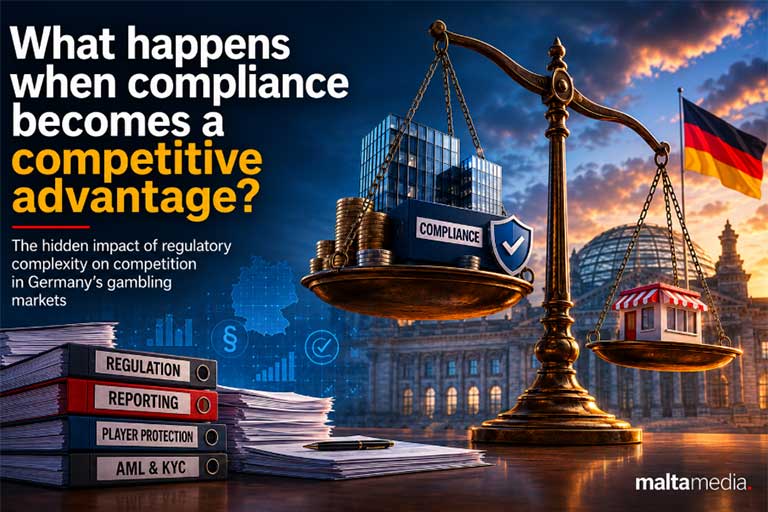
For many licensed gambling operators in Germany, compliance is no longer a department at the edge of the business. It has become part of the operating model itself. Licensing, player protection, advertising controls, reporting duties, technical integrations, data retention, anti-money laundering obligations and responsible gambling monitoring now shape how products are built, marketed and maintained. In principle, that is not a weakness of regulation. A licensed gambling market should not be cheap to enter if the public policy objective is to protect players and keep gambling within supervised channels.
The more difficult question is whether the cost of compliance is distributed evenly across the market. Large operators can usually absorb specialist legal teams, regulatory reporting functions, compliance technology, safer gambling analysts, technical certification and ongoing licensing management as part of their normal structure. Smaller operators, by contrast, may face the same legal obligations with far less internal capacity. The rulebook may be formally equal, but the economic effect is not always equal.
Germany's regulatory framework is largely based on the Glücksspielstaatsvertrag 2021, which created the modern licensing regime for online gambling. The objective was not merely to legalise online gambling, but to channel demand into controlled and supervised offers while preventing addiction, protecting young people and combating illegal gambling. These are legitimate objectives. They are also objectives that require systems, staff, auditability and technical discipline.









From the perspective of large operators, this environment can create a clear strategic advantage. A heavy compliance framework may increase operating costs, but it can also raise barriers for new competitors. Operators that already have capital, technical infrastructure, compliance departments and experience with multi-jurisdictional regulation can adapt more quickly. They may even welcome a more demanding framework if it removes weaker competitors, discourages undercapitalised entrants or makes market access more difficult for smaller brands.
That does not mean large operators have done anything wrong by being well prepared. It simply means that regulation has economic consequences. When those consequences are not examined openly, compliance can become more than a consumer protection tool. It can become a market-shaping force.
Structural issue
The German regulatory model places significant operational obligations on licensed gambling providers. The Joint Gambling Authority of the Federal States (GGL) explains that licensed operators must comply with extensive technical, reporting and player protection requirements under the current framework. These measures are designed to make supervision more effective and to ensure that legal operators provide a safer alternative to illegal markets.
In practical terms, these requirements demand more than goodwill. They require technology, legal interpretation, data flows, internal controls, reporting procedures, incident handling, documentation and constant updating. A licensed operator does not merely need a product that players want to use. It needs a compliance architecture around the product. It needs systems that can demonstrate control, not only systems that claim control.
The official GGL whitelist illustrates the public-facing side of this system. Operators must be able to show that they hold the relevant permission and the whitelist allows consumers to identify legal offers. That transparency is important. Yet it also reinforces the distinction between those with sufficient resources to enter and remain inside the licensed system and those that cannot manage the administrative, technical and financial burden.
The economic issue is not whether compliance should exist. It clearly should. The issue is whether increasing regulatory complexity gradually favours larger operators in a way that policymakers may not have fully intended. In any heavily regulated sector, compliance becomes a fixed cost. Fixed costs are easier to absorb at scale. A large operator can spread legal, technical and compliance expenditure across a wider customer base, multiple brands or broader infrastructure. A smaller operator may have to carry a similar baseline cost with far less revenue.
This can produce a quiet form of market concentration. It does not happen through one dramatic merger or one controversial decision. It happens gradually. Some operators do not enter. Others enter but struggle to scale. Some withdraw from product categories because the compliance cost outweighs the commercial return. Others remain licensed but lose marketing flexibility, product speed or pricing competitiveness because more internal resources are consumed by regulatory maintenance.
Policy challenge
The scale of the supervisory challenge can be seen in the GGL Annual Report 2024. The authority reported supervising more than one hundred licensed providers while continuing enforcement measures against illegal gambling websites and unlicensed operators. The same report described the fight against illegal gambling as a continuing challenge. That matters because compliance burdens in the legal market cannot be assessed in isolation from the illegal market.
If legal operators face high fixed costs, strict product limitations and heavy reporting requirements while illegal operators avoid those obligations, the competitive pressure becomes uneven in two directions. Within the licensed market, large operators may be favoured over smaller licensed operators. Outside the licensed market, unlicensed operators may remain commercially attractive precisely because they do not carry the same burden.
The broader policy objectives behind these requirements are explained by the German Federal Government's gambling policy framework, which emphasises player protection, addiction prevention and the fight against illegal gambling. The question is not whether these goals are legitimate. The question is whether the cumulative compliance burden achieves those objectives in the most proportionate way possible.
There is also a communication challenge. If policymakers and regulators believe that higher compliance costs are an acceptable price for a safer market, that should be explained openly. If market concentration is considered an unavoidable side effect of stronger supervision, that too deserves public discussion. The problem is not necessarily the existence of burden. The problem is burden without a clear public account of its expected economic impact.
Germany's regulatory framework has repeatedly emphasised channelisation, player protection and the fight against illegal gambling. Yet the GGL continues to highlight the ongoing challenge posed by illegal operators, raising broader questions about how compliance costs influence the competitiveness of the regulated market. Those objectives remain valid. Yet they may conflict with each other if the legal market becomes too expensive, too complex or too slow for a broad range of licensed operators to participate effectively.
Final Thoughts and Conclusion
Germany's licensed gambling market cannot be judged only by whether operators comply with formal rules. It must also be judged by what those rules do to the structure of the market. A demanding compliance framework may protect consumers, strengthen supervision and improve public confidence. It may also concentrate advantage among operators that already have scale, capital and regulatory infrastructure.
That is not an argument against compliance. It is an argument for examining compliance as an economic force. In a mature regulated market, rules do not merely control behaviour. They shape who can participate, who can grow, who can survive and who quietly leaves the field. If that process is intentional, it should be acknowledged. If it is unintended, it should be monitored more carefully.
The central question is therefore not whether gambling operators should face strict obligations. They should. The better question is whether Germany has found the right balance between high regulatory standards, market accessibility, licensed competition and effective channelisation. A framework that protects players but slowly narrows the legal market may still require adjustment. A framework that raises standards while allowing diverse licensed competition would be stronger.
Compliance should be a public protection mechanism first. It should not become, by accident, the main competitive advantage of those already large enough to carry their cost.
FAQs
What is Germany gambling compliance?
Germany gambling compliance refers to the legal, technical and operational requirements that licensed gambling operators must follow under Germany's regulatory framework, including player protection, reporting and anti-money laundering measures.
Why is compliance important in the German gambling market?
Compliance helps protect consumers, prevent gambling-related harm, combat illegal gambling and ensure that operators meet regulatory standards established by German authorities.
What is the Glücksspielstaatsvertrag 2021?
The Glücksspielstaatsvertrag 2021 is Germany's State Treaty on Gambling that established the current licensing framework for online gambling and introduced nationwide regulatory standards.
How does compliance affect gambling operators?
Compliance increases operational responsibilities by requiring reporting systems, technical controls, player protection measures, audits and regulatory oversight.
Why may large operators benefit from strict compliance requirements?
Large operators often have greater financial resources, established compliance teams and technical infrastructure, making it easier to absorb regulatory costs than smaller competitors.
Can compliance requirements influence market competition?
Yes. High compliance costs can create barriers to entry, making it more difficult for smaller operators to enter or expand within the regulated market.
What role does the GGL play in Germany?
The Joint Gambling Authority of the Federal States (GGL) supervises licensed operators, enforces gambling regulations and combats illegal gambling activities.
How does compliance support player protection?
Compliance frameworks require responsible gambling tools, monitoring systems, identity verification procedures and safeguards designed to reduce gambling-related harm.
What is market concentration in the gambling industry?
Market concentration occurs when a smaller number of larger operators gain a greater share of the market, potentially due to regulatory, financial or operational advantages.
Does the article argue against compliance?
No. The article supports strong compliance standards but questions whether the economic burden is distributed proportionately across operators of different sizes.

Michael Schmitt
Michael Schmitt is the founder of TRIDER.UK and Editor of Malta Media. He writes about iGaming, gambling regulation, corporate structures, financial services and market integrity, combining investigative journalism with nearly three decades of experience in corporate services and international business.
Related Posts

MERKUR Casino UK appoints Dan Whitlam to strengthen compliance leadership
September 22, 2026
Germany’s gambling blocking system struggles with obvious targets
September 19, 2026
Bet3000 disappeared online. Who made money from it?
September 17, 2026
GGL court defeats expose weaknesses in German gambling enforcement
September 15, 2026

Stake blocks Irish access as GRAI steps up unlicensed betting enforcement
September 14, 2026

Evolution’s Asian trail did not disappear!
September 12, 2026

Germany intensifies enforcement against illegal online gambling operators
September 11, 2026

Follow the tax money: Bet3000 versus Lottoland
September 11, 2026

Evolution Files investigation challenges claims of full clearance
September 9, 2026