













Malta pre-spring travel guide
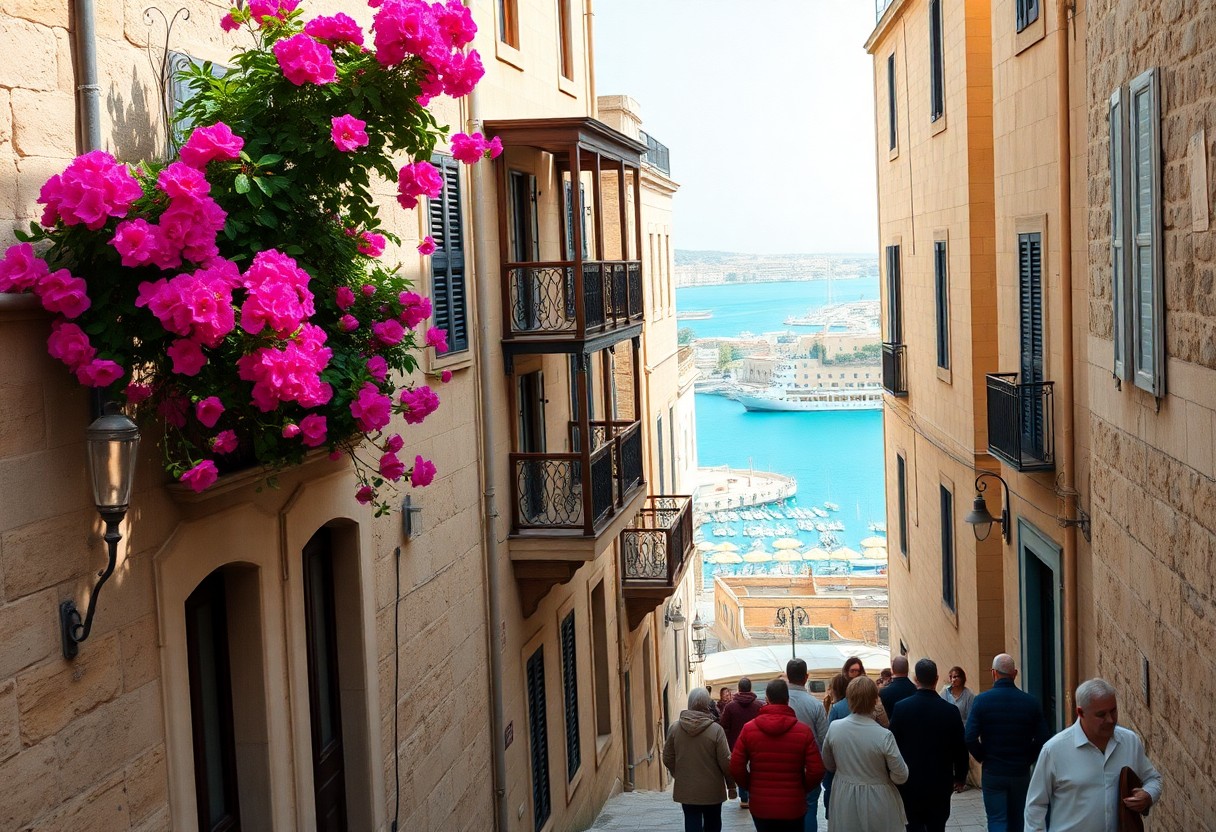
Malta in pre-spring offers mild weather, verdant landscapes and fewer tourists, creating prime conditions to encounter authentic local life-open churches, working harbours, seasonal markets and traditional cafés. Lower prices and accessible walking and bird-watching opportunities reveal rural culture and everyday rhythms, while Carnival and village events provide genuine festivals without high-season crowds, making it an exceptionally rewarding time to visit.
The Allure of Pre-Spring in Malta
Climate and Weather Patterns
February highs average around 15°C with lows near 10°C, while March nudges daytime temperatures to 16-17°C; rainfall tapers from winter peaks to roughly 6-10 wet days in Feb and 5-8 in March, sunshine increases to about 5-7 hours daily and sea temperatures sit near 15-16°C, making coastal walks pleasant though still bracing for swimming.
Local Festivals and Events
Carnival (late January-February) lights up Valletta and Nadur with parades and costumes, and St. Paul’s Shipwreck (10 February) brings solemn processions and band-club activity in towns like Valletta and Marsaxlokk; the almond blossom season also colors countryside trails, offering cultural highlights amid lower tourist numbers.


















Nadur’s Carnival on Gozo remains one of the island’s most distinctive events-boisterous street scenes and local masquerades-whereas Valletta focuses on organized floats and family-friendly spectacles; St. Paul’s Shipwreck festivals combine religious processions, brass-band marches and village feasts, giving pre-spring visitors a concentrated experience of Maltese communal life before the summer crowds arrive.
Tourist Footfall Comparison
Pre-spring sees markedly fewer visitors: hotel occupancy commonly ranges 50-60% versus 90-95% in peak summer, museums and sites record roughly 40-60% fewer daily visitors, and flights/prices reflect off-peak availability, so major attractions are far less crowded than July-August.
Tourist Footfall Comparison
| Metric | Pre-Spring vs Summer |
|---|---|
| Hotel occupancy | ~50-60% vs ~90-95% |
| Site crowding | ~40-60% fewer visitors than summer |
| Flight & room rates | Lower and more flexible vs peak surcharges |
| Transport & queues | Shorter waits; easier inter-island ferries |
Heritage sites and museums typically report about half the daily attendance in February compared with August, so timed-entry attractions like the Ħal Saflieni Hypogeum and St. John's Co‑Cathedral are easier to book and visit without long waits, while restaurants and boat operators still run many services but with calmer schedules.
Cultural Heritage of Malta
Historical Significance
Megalithic temples such as Ħaġar Qim and Mnajdra date from c.3600-2500 BCE, predating the Egyptian pyramids, while the Hypogeum of Ħal-Saflieni (c.4000-2500 BCE) offers underground burial architecture unique in Europe. Later layers include Phoenician, Roman and Arab traces, then the Knights of St. John whose 16th-century rule reshaped politics and urban life after the 1565 Great Siege, leaving a dense palimpsest visible across sites and museums.
Architectural Marvels
Valletta’s grid and bastioned fortifications owe much to architects like Francesco Laparelli and Girolamo Cassar; Baroque churches and auberges punctuate streets built from warm globigerina limestone. St. John’s Co-Cathedral houses Caravaggio’s signed masterpiece, while coastal forts-Fort St. Elmo and Fort Rinella-illustrate military engineering from the 16th to 19th centuries.
Several megalithic temple complexes (Tarxien, Ġgantija in Gozo) and Valletta’s UNESCO listing (1980) highlight continuity from prehistoric ritual to early modern urbanism. Conservation campaigns now tackle stone erosion-consolidation, desalination and traditional lime mortars-while adaptive reuse has turned auberges into museums and cultural venues. Visitors can trace construction techniques: corbelled tombs with orthostats, baroque altarpieces carved by local masters, and British-era casemates converted into galleries, providing tangible case studies of layered architectural practices.
Traditional Maltese Cuisine
Fenek (stewed rabbit) stands as Malta’s signature dish, often braised in wine or rabbit ragu, while pastizzi-flaky pastries filled with ricotta or mushy peas-serve as staple street food. ġbejniet (small sheep or goat cheeses), bigilla (broad-bean paste) and ftira (Maltese flatbread sandwiches) reflect island produce and rustic preparation methods passed down through generations.
Sun-baked tomatoes, capers, olives and local herbs shape seasonal menus; seafood dominates coastal towns-glass-shelled swordfish and lampuki (dolphin fish) are market regulars in autumn. Culinary influences span Sicily and North Africa to British colonial links, visible in recipes and ingredients. Food festivals and village festas showcase slow-cooked stews, bakery traditions and village delis; tasting at a family-run bakery or Marsaxlokk fish market offers direct insight into regional variations and continuity of food craft.
Exploring Valletta
The Capital City Overview
Founded by the Order of St. John in 1566 and inscribed as a UNESCO World Heritage site in 1980, Valletta occupies roughly 0.8 km² and houses about 6,000 residents; its compact grid of streets packs Baroque churches, 16th-18th-century fortifications and a concentration of museums that reward wandering on foot within a few hours.
Key Attractions
St. John’s Co-Cathedral (home to Caravaggio’s only signed work), the Grandmaster’s Palace, Fort St. Elmo’s National War Museum, the Manoel Theatre and the lively Valletta Waterfront form a walkable loop; cultural highlights include richly carved interiors, siege-era displays and regular performances that animate the city year-round.
Visitors should time a visit to see Caravaggio’s “The Beheading of Saint John the Baptist” in situ and to catch the Saluting Battery’s daily cannon firings at noon and 16:00; Fort St. Elmo’s exhibits contextualize the 1565 Great Siege with artifacts and multimedia, while the Grandmaster’s Palace showcases state rooms and the armoury-allow 2-4 hours to sample these core sites without rushing.
The Beauty of the Barracca Gardens
Perched above the Grand Harbour, the Upper Barrakka Gardens offer sweeping views across the Three Cities-Vittoriosa, Senglea and Cospicua-making them a favored spot for sunset photography, casual ship-spotting and a brief respite from Valletta’s stone streets.
Originally laid out by the Knights in 1661, the terraces feature classical statues, flagstones and viewpoint balustrades; the linked Saluting Battery below maintains ceremonial firings, and the gardens’ kiosks and benches create practical vantage points for watching ferries and cruise liners enter the harbour while absorbing the city’s layered maritime history.
The Enchantment of Mdina
The Silent City: An Overview
Within Mdina’s limestone walls live roughly 300 residents, narrow alleys and near-total vehicle exclusion, which together create the famed silence visitors notice immediately. Passageways framed by Baroque façades lead to small piazzas and bastions offering sweeping views over the central plain, making it feel like a preserved stage set rather than an ordinary town.
Key Historical Sites
Mdina Gate (rebuilt 1724 by Charles François de Mondion), St. Paul’s Cathedral and its adjoining museum, Vilhena Palace (early 18th century), and Palazzo Falson (a 13th-century house-turned-museum) form the core attractions, each showing different layers from Phoenician and Roman remains to Baroque renovations.
Mdina Gate’s Baroque portal opens onto an urban plan reset in the 1720s; inside, the Cathedral-largely reconstructed after the 1693 earthquake-displays silver liturgical pieces and paintings by Mattia Preti. Vilhena Palace, commissioned by Grand Master António Manoel de Vilhena in the 1720s, now houses the National Museum of Natural History, while Palazzo Falson preserves a private collection of furniture, arms and rare books that illustrate noble domestic life over five centuries. Walk the bastions to see defensive stonework and uninterrupted views toward the Dingli cliffs and the Mediterranean horizon.
Culinary Experiences in Mdina
Dining in Mdina blends informal cafés with refined hotel restaurants; Fontanella Tea Garden on Battery Street is famous for cakes and panoramic terraces, while small bistros serve Maltese staples such as fenek (rabbit stew), gbejna (cheeselets) and ftira flatbread alongside local wines and olive oils.
Menus often emphasize seasonal island produce-citrus, capers, local goat cheese-and typical mains range roughly €12-€30, with tasting menus at palace hotels commanding higher rates and limited seating. For a focused experience, try Fontanella’s terrace at sunset for views and desserts, then book ahead for any vaulted-hall dining rooms inside converted palaces, where intimate tasting menus showcase regional techniques and long-preserved family recipes.
Coastal Adventures
Stunning Beaches and Seaside Villages
Golden Bay, Mellieħa Bay and Għajn Tuffieħa offer broad sandy stretches and panoramic cliffs, while smaller bays like Għar Lapsi and St. Peter’s Pool deliver dramatic limestone platforms for sunbathing and cliff swimming. Marsaxlokk’s colourful luzzu boats and Sunday fish market showcase local life, and coastal footpaths between Dingli Cliffs and Wied il-Għasri on Gozo provide 5-10 km routes with uninterrupted sea views.
Water Activities and Sports
Windsurfing and kitesurfing pick up in exposed spots such as the north coast, while sheltered bays like St. Paul’s and Mellieħa are ideal for sailing lessons and stand-up paddleboarding. Daily boat trips to Comino’s Blue Lagoon depart Cirkewwa in roughly 20-30 minutes, and kayak tours through sea caves often run 2-4 hour itineraries with local guides.
Most activity operators are based in Sliema, St. Julian’s, Birżebbuġa and Mgarr (Gozo), offering beginner courses and equipment rental: expect kayak hire around €20-50 for multi-hour trips and PADI courses from local dive shops if you want to combine skills. Sheltered waters suit instruction-sail schools use 2-3 hour lesson blocks-whereas advanced wind- and kite-surfers travel to exposed headlands for stronger gusts and open-water runs.
Scuba and Snorkeling Hotspots
Cirkewwa’s reefs, the Blue Hole and Inland Sea in Gozo, and the caves around Comino are top snorkeling and dive sites, with visibility commonly 20-30 metres in early spring. Dive operators mark over 50 popular sites across Malta and Gozo, ranging from shallow reefs to dramatic walls and wrecks that accommodate both snorkelers and technical divers.
Guided dives frequently target the Blue Hole (Dwejra) and the Inland Sea for arch and tunnel navigation, while Cirkewwa offers reef systems and wall dives accessible from shore. Popular wreck dives include the well-known scuttled artificial reefs off Gozo; spring visibility and fewer boats mean better chances to see groupers, barracuda and resident nudibranchs. Most shops provide guided two-tank trips and try-dive sessions for non-certificated visitors.
Local Practices and Traditions
The Maltese Language
Maltese, descended from Siculo-Arabic with heavy Italian and English loanwords, is spoken natively by roughly 520,000 people on the islands and is written in the Latin alphabet with characters like għ and ż. You’ll hear “Bongu” (good morning) and “Merħba” (welcome) in markets and cafés, and signage is bilingual-Maltese and English-so basic phrases quickly unlock warmer interactions with locals.
Customs and Social Norms
Village festas and family ties shape social life: dozens of major festas run from late spring through summer, and Sundays commonly center on family meals around 1-3 pm. Casual handshakes and two-cheek kisses among acquaintances coexist with formal address-use titles and surnames until invited otherwise-and modest dress is expected in churches and during religious processions.
At a festa expect brass bands, nightly fireworks displays often around 10-11 pm, and street stalls selling pastizzi and ħobż biż-żejt; locals routinely reserve pavement seats outside parish churches for processions, and tipping 5-10% in restaurants is common practice. Public transport can be crowded after major events, so plan return trips or book taxis in advance.
Traditional Crafts and Artisans
Filigree silverwork, hand-blown Mdina-style glass, and bobbin lace (bizzilla) remain visible crafts, with dozens of small workshops across Valletta, Mdina, and Ta' Qali. Luzzus-the brightly painted fishing boats in Marsaxlokk-showcase boatbuilders' skills, and artisan stalls sell pieces ranging from €15 glass ornaments to filigree earrings priced €20-€100.
Workshop visits are often available: Ta' Qali Crafts Village hosts cooperative stalls and live demonstrations, Mdina Glass offers glassblowing viewings, and Marsaxlokk boatyards let visitors watch repairs and painting. Many artisans are family-run for generations, so buying directly supports local livelihoods and sometimes comes with repair or custom options if you return the next season.
Off the Beaten Path: Gozo and Comino
Overview of Gozo’s Attractions
Victoria’s Citadel dominates the island and offers panoramic views, while the Ġgantija Temples (circa 3600-3200 BC) are UNESCO-listed and predate the pyramids. Ramla Bay’s rare red sand and Xlendi’s cliffs appeal to swimmers and climbers, Ta’ Pinu draws pilgrims, and Dwejra’s rocky coastline – site of the former Azure Window – remains a top dive and photography area on Gozo’s compact 67 km² territory.
The Blue Lagoon Experience
Comino’s Blue Lagoon features shallow, turquoise water typically 1-6 metres deep and excellent clarity; boats from Ċirkewwa or Marfa take roughly 15-20 minutes. Early arrivals (before 10:00) find calmer water and better visibility for snorkeling, while mid-spring visits capture warm water and far fewer charter boats compared with July-August peak season.
Access options range from scheduled ferries and sea taxis to private boat hires; ferries are the cheapest choice while private charters allow flexible timing and quieter anchor spots. Facilities on Comino itself are minimal – expect a small kiosk and limited toilets – so bring water, shade, and reef-friendly sunscreen. Snorkelers should explore the lagoon fringes and nearby caves for wrasse, octopus and seabed visibility often exceeding 20 metres on calm days; swimmers should use buoyed areas and be mindful of boat traffic when currents strengthen in the afternoon.
Cultural Insights into Gozo
With roughly 37,000 residents, Gozo preserves strong village traditions: festa culture, għana folk singing, lace-making (bizzilla) and small-scale farming remain visible. The island’s slower pace and local markets in Victoria and Għarb showcase ġbejna cheese, local wine and boat-building heritage, creating an intimate contrast with mainland Malta’s busier tourist hubs.
Festas peak June-August with processions, brass bands and fireworks that can draw entire villages nightly; notable examples include Nadur and Xagħra. Archaeological sites like Ġgantija offer layered cultural context, while Ta’ Pinu remains an active pilgrimage site with regular liturgies. For immersive stays, choose family-run farmhouses or agritourism B&Bs, rent an e-bike to reach remote bays, and time visits outside August to catch authentic local life, markets and weekday rituals without the high-season crowding.
Culinary Journeys of Malta
Signature Dishes and Ingredients
Fenek (rabbit stew), pastizzi (flaky ricotta or mushy-pea pastries), and ftira topped with bigilla or tuna define everyday Maltese eating; gbejniet cheese-made from sheep or goat milk-is served fresh, peppered or dried, while local olive oil, capers and wild broad beans shine in late winter and early spring.
Wine Regions and Tastings
Maltese wine comes from small estates on Malta and Gozo, with indigenous grapes like Gellewża (red) and Girgentina (white) used alongside international varieties; guided tastings at producers such as Marsovin and Delicata highlight these varietals and local blends.
Cellar visits often explain Malta’s viticultural history-Marsovin (est. 1919) and Delicata (early 20th century) showcase stone-lined cellars and barrel aging, while Meridiana on Gozo focuses on boutique single-vineyard bottlings; expect guided flights comparing Gellewża, Girgentina and Chardonnay or Cabernet blends, paired with gbejniet and salted anchovies for contrast.
Food Festivals in Pre-Spring
Seasonal events like Carnival (February) and the Valletta Baroque Festival (Jan-Feb) bring pop-up stalls and chef collaborations, with street food, local pastries and early-spring produce featured across city squares and waterfronts.
Weekend markets in Marsaxlokk and Valletta intensify before spring, often accompanied by themed tastings and cooking demos from restaurants testing new menus; festivals focus on ingredients in season-broad beans, wild greens and fresh cheese-plus chef-led masterclasses that give visitors hands-on experience with traditional recipes such as bragioli and kapunata.
Navigating Malta’s Transport Options
Public Transport Overview
The bus network, run under the Tallinja brand, connects Valletta, Sliema, St. Julian’s, Mdina and coastal towns with services typically every 10-30 minutes on main corridors; many routes run later into the evening outside winter. A reloadable Tallinja card reduces fares and unlocks day or weekly caps, while the Malta-Gozo ferry is a 25-minute crossing that makes island-hopping straightforward for day trips.
Car Rentals and Accessibility
Driving on the left is mandatory and most rental firms require drivers to be 21+ with a valid licence; automatic cars often cost 10-25% more than manuals. Narrow streets, steep lanes and limited Valletta parking mean a car helps reach rural bays and inland villages, but urban access is frequently simpler by bus or ferry.
Major international operators (Avis, Europcar, Sixt) plus local agencies base fleets at Malta International Airport (MLA) and Sliema; booking 2-4 weeks ahead secures lower rates in pre-spring. Insurance options include Collision Damage Waiver with an excess-expect a refundable deposit on the payment card-and consider adding Super CDW to cut excess to near zero. Typical limits: 50 km/h in towns and about 80 km/h on main roads, so plan routes that avoid rush-hour Sliema-Valletta bottlenecks. Petrol stations are frequent, but diesel is slightly rarer; manuals remain cheaper and more common. Use a compact vehicle for narrow lanes, inspect tyres and bodywork before signing, and keep an eye on restricted zones and paid parking in tourist hubs.
Walking Tours and Biking
Valletta, Mdina and the Three Cities lend themselves to guided walks of 1.5-3 hours covering museums, bastions and narrow alleys; many operators offer themed tours (history, food, WWII). Biking is better on Gozo and coastal promenades, with e-bike rentals increasingly available in Sliema and Victoria, though traffic and gradients limit cycling in central Malta.
Self-guided options work well: a typical 2-hour Valletta loop hits Upper Barrakka Gardens, the Saluting Battery, St. John’s Co-Cathedral and waterfront views without backtracking. On Gozo, routes from Victoria to Xlendi or Ramla Bay are 10-20 km with sustained climbs-e-bikes dramatically widen accessibility for less fit riders. Helmets are legally required for scooters in Malta and strongly advised for cyclists; booking a local guide for a themed walk reveals lesser-known sites like merchant houses and hidden chapels that maps often miss.
Accommodations: Where to Stay
Luxury Resorts and Hotels
The Phoenicia in Valletta, Corinthia Palace near Mdina and Hilton Malta in St. Julian's represent Malta's high end, offering multiple restaurants (3-6), full-service spas, indoor/outdoor pools and concierge-led tours. Many have private transfer options and event spaces, making them ideal for travelers wanting central locations with on-site dining and easy access to Valletta, Sliema and the northern coast.
Boutique and Budget-Friendly Options
Small boutique hotels (5-30 rooms) in Valletta, Mdina and the Three Cities deliver design-forward stays, while guesthouses and hostels in Sliema and St. Julian's often price dorms at €18-€35 and private rooms from €45-€90 in pre-spring. Owners frequently include breakfast and local tips, giving authentic neighbourhood access without resort price tags.
Book two to four weeks ahead during pre-spring to secure the best rates-many properties lower prices 20-40% vs. peak summer. Check proximity to main bus routes (Valletta-Sliema runs every 15-30 minutes) and confirm cancellation policies; family-run guesthouses commonly provide luggage storage, maps and bike rentals that add value for short stays.
Unique Stays: Farmhouses and Airbnbs
Converted rural farmhouses on Gozo (Xagħra, Nadur) and stone cottages on the Dingli Plateau and Marsaxlokk offer terraces, gardens and sea views, often in 2-4 bedroom layouts. Airbnbs range from cliffside studios in Marsaxlokk to spacious villas near Ramla Bay, ideal for groups wanting self-catering flexibility and local immersion.
Note that many rural farmhouses lack central heating-hosts usually provide portable heaters or wood-burning stoves-so check listings for winter-ready amenities. Also confirm parking availability and distance to the nearest bus stop; for groups of 4-8, whole-house rentals commonly cost €100-€250 per night in shoulder season, making them cost-effective compared with multiple hotel rooms.
Balancing Relaxation and Adventure
Spa and Wellness Options
Luxury hotels such as Corinthia Palace and The Phoenicia, plus independent wellness centres, offer thalassotherapy pools, thermal suites and Maltese sea-salt scrubs, with many running affordable pre-spring packages; quieter treatment rooms and weekday availability mean you can book signature massages, facials or Lomi-Lomi sessions without the summer surcharge.
Outdoor Activities for the Adventurer
Hiking the Dingli Cliffs (peaks near 253 m), tackling sections of the Victoria Lines trail (~12 km total) and sea-kayaking from Wied iz-Żurrieq to nearby coves are ideal in pre-spring’s average highs of 15-17°C; operators run coastal boat trips to the Blue Grotto and guided mountain-bike routes across Majjistral Nature Park when conditions are calm.
For specifics, choose a 3-8 km loop at Dingli for cliff-top panoramas and wildflowers, or plan a day to walk a segment of the Victoria Lines between Mosta and Mellieħa; local guides will provide helmets and route maps, dive shops in St. Julian’s and Gozo offer dry-suit dives and snorkel trips, and windproof layers plus layered clothing are recommended for changing coastal gusts.
Quiet Spots for Reflection
Mdina’s narrow lanes, Valletta’s Upper Barrakka Gardens with Grand Harbour views, and the shady lawns of San Anton Gardens offer serene escapes; pre-spring footfall is low, benches are plentiful, and early mornings deliver near-silent streets perfect for slow photography or reading with expansive sea vistas.
To maximize solitude, visit Mdina before 10:00 on a weekday, walk the less-traveled paths at Buskett Gardens or find a cliff-side bench near Għajn Tuffieħa for sunset; public buses connect most sites, but renting a scooter or car gives access to remote coves and allows you to time visits around softer light and quieter periods.
Engaging with the Local Community
Volunteering Opportunities
Short-term options range from one-day beach cleanups (often 20-100 volunteers) to heritage-restoration stints running 2-12 weeks; common placements include community centres, animal shelters and conservation projects. Sign-ups are usually handled by local councils or the national volunteering portal, and many NGOs ramp up activity in Feb-Apr to prepare sites for the tourist season, making pre-spring an excellent window to contribute and meet locals working on long-term initiatives.
Connecting with Locals
English and Maltese are both spoken, so using a few Maltese phrases like bonġu or grazzi opens doors; frequenting cafés such as Caffè Cordina in Valletta, the Marsaxlokk Sunday market, or band-club rehearsals often leads to invitations to family meals or village gatherings in towns of a few hundred to a few thousand residents.
Attend language-exchange meetups in Valletta or St Julian’s (groups of 10-30 people), volunteer for a church choir rehearsal, or join a casual football game on a Sunday to build sustained friendships; locals value consistent participation, and helping with a single band rehearsal or market stall can turn into repeated social invitations and deeper cultural exchange.
Participating in Community Events
Carnival (Valletta and Nadur in Feb), St. Paul’s Shipwreck (Feb 10), and smaller village festas provide firsthand access to band marches, fireworks displays and communal meals; pre-spring scheduling means events are less crowded than peak summer, yet still lively, with many festas drawing 500-2,000 attendees and nightly band performances.
Check municipal event calendars before arriving, arrive early for processions to observe preparations, and consider volunteering with a band club or festa committee to gain behind-the-scenes access; practical tips include wearing comfortable shoes for long streetside standing, modest attire for church events, and cash for food stalls serving rabbit stew (fenek) and traditional sweets.
Safety and Health Considerations
General Safety Tips
Pickpocketing and petty theft are the main hazards in tourist hotspots like Valletta, Sliema and Mdina; stay alert on crowded buses and ferries.
- Keep bags zipped and use cross-body packs
- Prefer licensed taxis or apps and check the meter
- Avoid poorly lit alleys after midnight
Thou carry a photocopy of your passport and save local emergency numbers in your phone.
Health Care Resources
Mater Dei Hospital in Msida is the primary A&E center for the islands and operates 24/7; dial 112 for emergencies. Private clinics and English-speaking GPs are widespread in tourist zones, and community pharmacies (chemists) can supply common medications and advice.
Bring your European Health Insurance Card or UK GHIC if eligible to access state services; otherwise secure travel insurance that covers evacuation and pre-existing conditions. Keep prescriptions in original packaging with a brief medical summary-most doctors and pharmacists speak English, which simplifies consultations and prescriptions.
Preparing for Emergencies
Program 112 into your phone and note your accommodation address for quicker responses; keep a basic first-aid kit and a 7-10 day supply of prescriptions. Carry a portable charger when exploring rural coastal trails and ensure someone knows your route before long walks.
Sign up for your embassy’s travel alerts for Malta, carry some euros for off-hour transfers, and check sea conditions before ferry trips-pre-spring weather can cause rough crossings. Follow lifeguard flags on beaches, stick to marked cliff paths, and store offline maps and emergency contacts to streamline rescue or medical assistance if needed.
To wrap up
Now pre-spring offers the best balance of mild weather, thinner crowds, and local rhythms-festivals, market life and preserved traditions are more accessible before peak tourism, though those seeking full summer activities may prefer later months; for travelers prioritizing authenticity, cultural engagement, and manageable travel conditions, pre-spring is often the optimal choice.
FAQs
Why is pre-spring a good time to visit Malta?
Pre-spring offers mild temperatures, fewer tourists and lower travel costs while still providing access to cultural sites, festivals and outdoor activities.
What is the weather like in Malta during February and March?
Daytime temperatures range from about 15°C to 17°C, rainfall decreases compared to winter and sunshine hours gradually increase.
Are tourist attractions open in pre-spring?
Yes, major attractions, museums, churches and heritage sites remain open and are easier to visit due to reduced crowd levels.
Is Malta crowded before the summer season?
No, pre-spring sees significantly fewer visitors, with lower hotel occupancy and shorter queues at popular sites.
What festivals can visitors experience in pre-spring?
Carnival celebrations, St. Paul’s Shipwreck festivities and local village events offer cultural insight without peak-season congestion.
Can you swim or enjoy the sea in pre-spring?
The sea is cooler at around 15–16°C, suitable for coastal walks, snorkeling with wetsuits and diving rather than casual swimming.
Is pre-spring suitable for walking and outdoor activities?
Yes, mild temperatures make it ideal for walking tours, hiking, bird-watching and exploring coastal and rural landscapes.
Are prices lower in Malta during pre-spring?
Flights, accommodation and tours are generally cheaper, with more availability and flexible booking options.
Is public transport reliable outside peak season?
Malta’s bus network and ferries operate year-round, with manageable schedules and fewer delays due to lower demand.
Which areas are best to visit in Malta during pre-spring?
Valletta, Mdina, Gozo, Marsaxlokk and coastal regions offer cultural depth, scenic beauty and authentic local experiences.

Paula Nancy
Hello and Welcome to my profile. I'm a UK based entrenched full-time Blogger, Journalist, columnist and a certified writer with many years of sound writing experience. If you need a high-quality and original content, I'm here to provide you with the best writing services.
Related Posts
Year round travel in Malta
May 12, 2026
Spring Adventures In Malta
May 11, 2026
Malta Early Spring Travel Boom
May 9, 2026
Budget airlines lift Malta tourism
May 8, 2026
Spring visitors spend more in Malta
May 7, 2026

Malta airport traffic rises in spring
May 6, 2026

Malta hotel occupancy trends in spring
May 5, 2026
Malta attracts new spring travelers
May 4, 2026
Malta tourism tests power grid
May 2, 2026