

















Stake rebrands Stake Engine as Engine for wider iGaming operator access
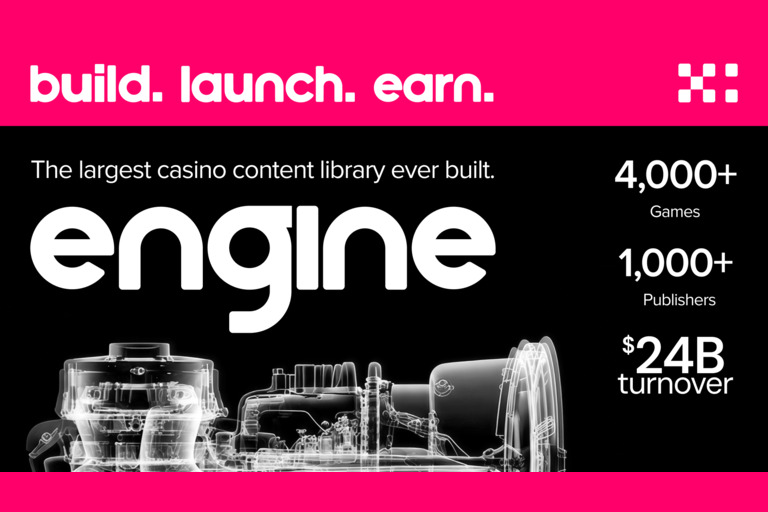
Stake has announced the rebranding of its Stake Engine platform as Engine and is opening the technology and its creator ecosystem to operators across the wider betting and gaming industry. The move marks a significant expansion of a development model that was initially designed around content created for Stake.
The company said games developed through Engine have generated more than $23 billion in total turnover from over 9.7 billion bets placed to date. Stake also said the platform now brings together more than 1,000 individual game creators with more than 250 new titles being produced each week.
The rebranding changes the commercial positioning of the platform as well as its distribution ambitions. Rather than serving primarily as a route for publishing exclusive content on Stake, Engine is being presented as a broader technology and content ecosystem through which participating operators can access games through a single integration.








Stake expands Engine beyond its original model
Stake Engine was developed as a remote gaming server and game development environment intended to reduce the technical and commercial barriers associated with creating casino content.
The original model allowed independent developers and studios to build games using the platform before publishing those titles to Stake's audience. Stake's current Engine materials describe a development environment that combines game creation tools, testing capabilities analytics and deployment functions.
With the transition to Engine, Stake is extending that model beyond its own operator ecosystem. The company said content created through the platform will be available to operators across the iGaming industry through a single integration.
That change gives the platform a different role within the online casino supply chain. Instead of focusing solely on helping creators reach one operator, Engine is positioned to connect creators with a broader network of potential distribution partners.
The commercial implications could be important for both sides of the relationship. Developers gain an opportunity to reach additional audiences while operators can potentially access a continuously expanding pipeline of original casino content without negotiating separate technical arrangements for every individual game.
A creator-led pipeline at growing scale
Stake said more than 1,000 game creators are now part of the Engine ecosystem. It also reported that more than 250 new titles are being produced each week.
That pace places substantial emphasis on volume and continuous experimentation. In conventional game development structures, new casino releases can require extensive planning, technical resources and commercial coordination before reaching an operator's lobby.
Engine is intended to make that process more accessible by giving creators a common set of development and publishing tools. The model can also enable smaller teams to participate in content production without having to build an entire remote gaming infrastructure independently.
For operators, the potential value lies in access to a larger flow of content. A high-frequency development pipeline can provide more opportunities to test new concepts, game mechanics themes and formats while keeping casino portfolios regularly refreshed.
The business model therefore depends not only on the number of games produced but also on the ability to assess, approve distribute and commercially support those games at scale.
Single integration could simplify operator access
One of the central elements of the announcement is the proposed single-integration model.
In practical terms, operators normally need to consider technical integration processes when adding third-party casino content. Depending on the supplier relationship, this can involve separate game feeds reporting arrangements operational processes and commercial agreements.
Engine is designed to reduce that complexity by providing a consolidated route into its creator ecosystem. Instead of treating each creator as a completely separate commercial and technical relationship, the platform places the distribution function within the Engine structure.
This could be particularly relevant for operators seeking to broaden their casino portfolios without adding significant integration overhead.
The model may also allow operators to explore a wider range of original concepts from smaller creators. Those studios can otherwise face challenges in gaining visibility because the largest operators often have limited resources for managing numerous individual suppliers.
Stake said operators will also retain the substantial majority of revenue generated under the model according to the industry report covering the announcement. The commercial structure is therefore intended to make participation attractive to operators while preserving a route to monetisation for creators.
Standardised contracts and settlement
Stake also highlighted a standardised contractual approach for Engine participants.
The company said each operator and creator relationship will use a single standardised contract while Engine handles settlement across creators through a monthly invoice.
From an operational perspective, the approach is intended to reduce administrative friction. Operators do not necessarily need to maintain separate settlement processes for every creator participating in the Engine ecosystem.
For developers, centralised settlement can provide a more consistent framework for receiving payments generated by approved games.
A standardised model can also make the platform easier to scale because additional creators can potentially be added without requiring an entirely new commercial framework for each participant.
The exact contractual terms applicable to individual operators or creators may vary according to market requirements and business arrangements. As with any gaming supply relationship, regulatory responsibilities and legal obligations remain relevant in the jurisdictions where games are distributed.
Provably fair mechanics remain central to the proposition
Stake said games distributed through Engine will use “provably fair mechanics,” allowing game outcomes to be independently verified.
The terminology is particularly relevant to Stake's established approach to transparent game mechanics. However, the precise implementation of fairness technology can differ between game types and technical systems.
For operators considering Engine content, game-level verification processes, technical standards and applicable market requirements remain important considerations. In regulated jurisdictions, gambling software and hosted gaming services can be subject to specific licensing and technical obligations.
This is also why the distinction between a platform's technical claim and a regulator's requirements is important. Describing a system as independently verifiable does not by itself remove the need for jurisdiction-specific compliance procedures.
Engine's expansion therefore represents both a commercial opportunity and a technical responsibility. As its games become available to more operators, the platform will need to support different regulatory environments and operational requirements.
Ed Craven outlines Engine's next phase
Ed Craven, Co-Founder of Stake, described the rebranding as an important development in the platform's evolution.
“Engine has already proved that a creator-led community can create some truly fantastic, quality games, at scale. But what initially started as a way of removing the barriers to entry to game development has now grown into a content development Engine with enormous potential. Our evolution into Engine marks a new chapter in that growth journey.
“We're building on that solid foundation that we've created and taking the Engine model beyond Stake. We want creators to be able to build new and exciting games and broaden that reach to audiences across the industry. And for operators, this means access to a wealth of new and exciting original content and tools that they can use to build creator ecosystems of their own.
“With 1,000 creators on board and hundreds of games being added to the pipeline every week, we believe that this will fundamentally change how casino content is created and distributed going forward.”
His comments underline the strategic objective behind the rebrand. Engine is no longer being framed simply as infrastructure supporting Stake's own content strategy. Instead, Stake is positioning it as a platform connecting development, technology and distribution at a broader industry level.
What the expansion means for operators
For casino operators, the most immediate attraction is likely to be access to content rather than the rebrand itself.
A larger creator network can give operators more options when building differentiated casino lobbies. Original content may help operators experiment with game categories and player preferences without relying entirely on established third-party portfolios.
The single-integration approach could further reduce the technical burden of evaluating a large number of potential game suppliers.
There is also a potential commercial benefit in having one central relationship across a large creator ecosystem. Contract management settlement reporting and content administration can become increasingly complex as the number of suppliers grows.
Engine is effectively attempting to bring those functions into one framework.
However, operators would still need to evaluate each game's regulatory eligibility technical performance market availability and suitability for their specific customer base. Integration convenience does not remove the need for due diligence.
Implications for independent creators
The expansion could be equally significant for small and independent game developers.
Creating casino content traditionally requires more than software development. Developers also need testing infrastructure technical deployment tools distribution relationships commercial agreements and access to operators.
A platform that combines several of those functions can reduce the resources required to move a concept from development into commercial distribution.
Stake's reported scale also gives creators a potentially large ecosystem in which to compete. With more than 1,000 creators involved, however, the challenge will increasingly shift from simply gaining access to distribution to creating games that can achieve sustainable visibility and player engagement.
The weekly production volume cited by Stake suggests a highly competitive environment in which successful titles may need distinctive mechanics strong presentation and consistent technical performance.
A broader competitive direction for iGaming content
The rebrand comes at a time when operators increasingly depend on fast-moving content pipelines and flexible technology infrastructure.
Game aggregation and platform-based distribution have become important parts of the wider iGaming ecosystem because operators must balance portfolio diversity with integration costs operational efficiency and regulatory requirements.
Engine is taking that concept in a creator-focused direction. The platform combines a development community with distribution infrastructure and a commercial framework designed to support a high volume of games.
Its future performance will depend on whether the same model that generated strong activity within Stake can translate effectively across multiple operators and markets.
The reported $23 billion in turnover and more than 9.7 billion bets provide a substantial historical performance figure for games developed through the platform according to Stake. The next stage will test whether that scale can be converted into a broader B2B proposition.
Regulatory considerations remain important
As Engine expands toward third-party operators, regulatory considerations are likely to become more prominent.
Different markets impose different requirements covering gambling software licensing technical standards game fairness testing responsible gambling measures and reporting.
For example, regulated operators may need to ensure that gambling software and hosted gaming arrangements comply with the applicable requirements in each market. In some jurisdictions, software suppliers and game hosts can be subject to separate regulatory obligations.
This means Engine's ability to scale successfully will depend not only on its technology and creator network but also on the extent to which its distribution framework can accommodate market-specific compliance requirements.
The platform's stated focus on verifiable mechanics may support transparency, but operators remain responsible for determining whether content is suitable for the jurisdictions in which they offer gambling services.
Conclusion
Stake's decision to rebrand Stake Engine as Engine signals a broader ambition for a platform that has evolved significantly from its initial role as a development environment serving Stake's own casino ecosystem.
The combination of more than 1,000 creators, more than 250 new titles reportedly entering production each week and billions of dollars in historical game turnover gives the platform substantial scale as it moves toward a wider operator-facing model.
The key change is not simply the removal of the Stake name from the platform. It is the shift from a largely operator-specific content pipeline toward a structure intended to connect creators with a broader selection of gaming businesses through one integration.
For operators, that could mean easier access to original content and a more centralised commercial relationship. For creators, it could provide a wider route to market while reducing some of the infrastructure and distribution barriers associated with launching casino games independently.
The strategy nevertheless brings additional responsibilities. As Engine reaches beyond Stake, questions surrounding licensing, technical compliance, game verification and jurisdictional suitability will become increasingly important.
The rebrand therefore represents an ambitious next step in Stake's development ecosystem. Its long-term significance will depend on whether Engine can turn its existing creator scale and development momentum into a sustainable multi-operator platform while maintaining the technical and regulatory standards expected by the wider iGaming market.
FAQs
What has Stake changed about Stake Engine?
Stake has rebranded Stake Engine as Engine and is expanding the platform beyond its previous focus on content created for Stake.
What is Engine?
Engine is a remote gaming server and development ecosystem designed to support the creation, testing, publishing and distribution of casino games.
Will Engine content be available to other iGaming operators?
Stake has announced that games created through Engine will be made available to operators across the wider iGaming industry through a single integration.
How many creators are involved with Engine?
Stake said the Engine ecosystem includes more than 1,000 individual game creators.
How many new titles are being produced through Engine?
Stake said more than 250 new titles are being produced each week through its creator ecosystem.
How much turnover have Engine games generated?
According to Stake, games developed through Engine have generated more than $23 billion in total turnover from over 9.7 billion bets.
What does the single-integration model mean for operators?
The model is intended to give operators access to content from the Engine creator ecosystem through one technical integration rather than separate integrations for each participating creator.
How will creator settlement be handled?
Stake said Engine will use a standardised contract structure and handle creator settlement through a monthly invoice.
What does “provably fair mechanics” mean in the Engine context?
Stake says games distributed through Engine will use “provably fair mechanics,” allowing game outcomes to be independently verified.
Will operators still need to meet regulatory requirements?
Yes. Operators remain responsible for complying with the licensing, technical and regulatory requirements applicable in each jurisdiction where their gambling services are offered.

Lela
I have over 10 years' experience proofreading and editing where spelling and grammar were paramount. This includes newspaper publication and designing advertisements. I personally write all my articles.This allows me to do in-depth research and provide premium content.
Related Posts

Cubeia launches Roulette as its first classic table game for Originals
September 15, 2026
Winpot signs Light & Wonder deal to expand its casino content in Mexico
September 15, 2026
Evoplay launches Piggyfest Bonanza with Oktoberfest themed slot gameplay
September 15, 2026
Peter & Sons expands Canadian reach with Tonybet in Ontario and Alberta
September 15, 2026
Playzaar launches its first games exclusively through Hub88 for operators
September 15, 2026
Playnetic expands Swedish reach as Svenska Spel adds more casino games
September 15, 2026
PopOK Gaming launches Piggy Dynasty slot with multipliers and RTP
September 15, 2026
Ace Games enters iGaming with 25+ titles and real-player testing model
September 14, 2026

Stake blocks Irish access as GRAI steps up unlicensed betting enforcement
September 14, 2026